Free written scope consultation - allowances, timeline, and change-order rules on paper before a single trade is scheduled
Styles & brands we work with
- Kitchen remodeling
- Bathroom remodeling
- Home additions & ADU
- Roofing
- Windows & doors
- Driveway & pavers
- Fence
See the difference
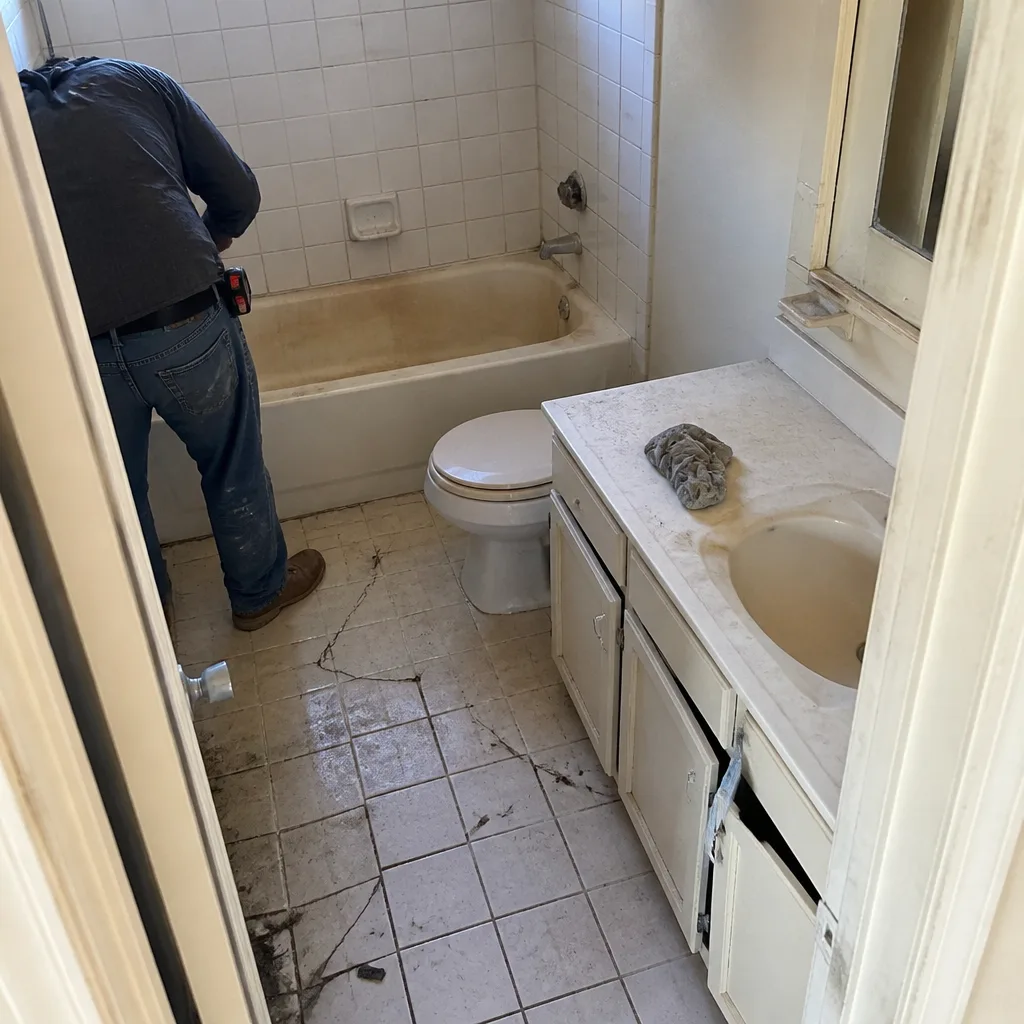 Before
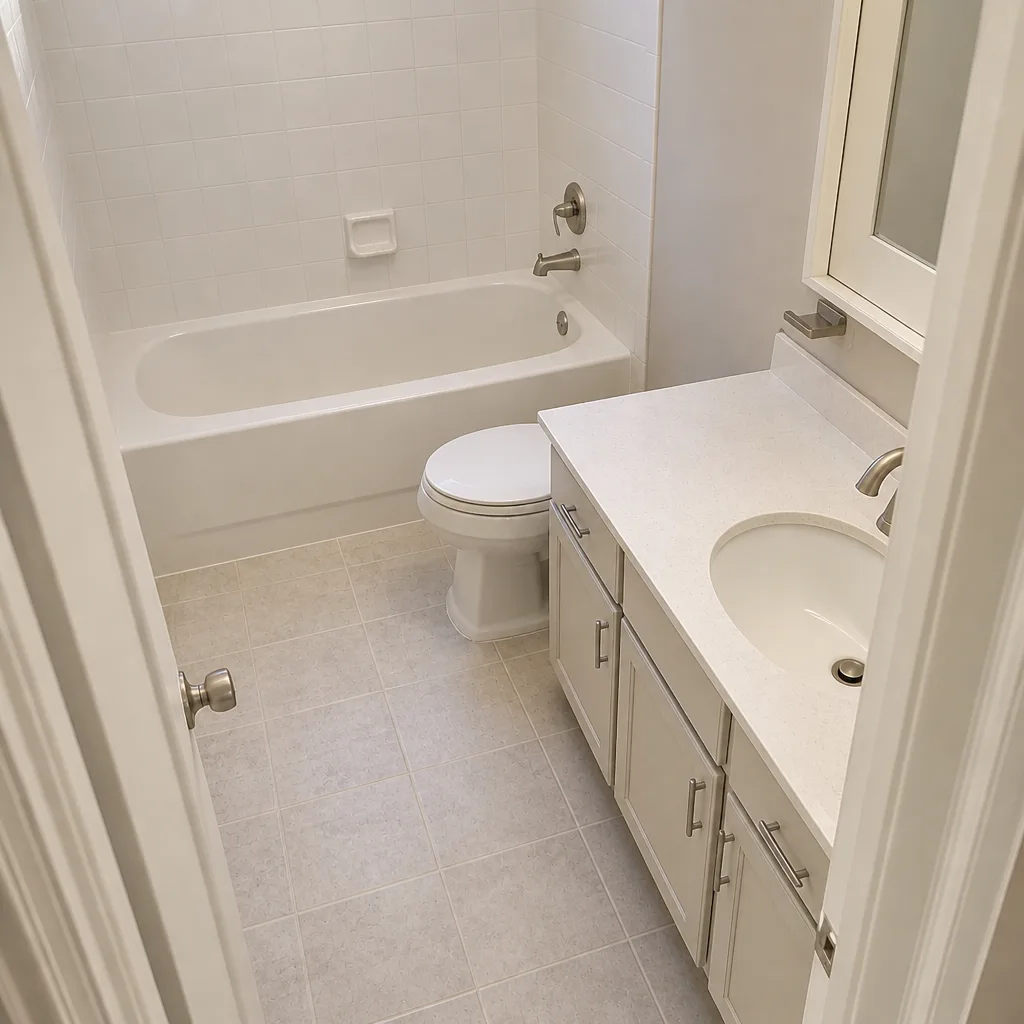 After
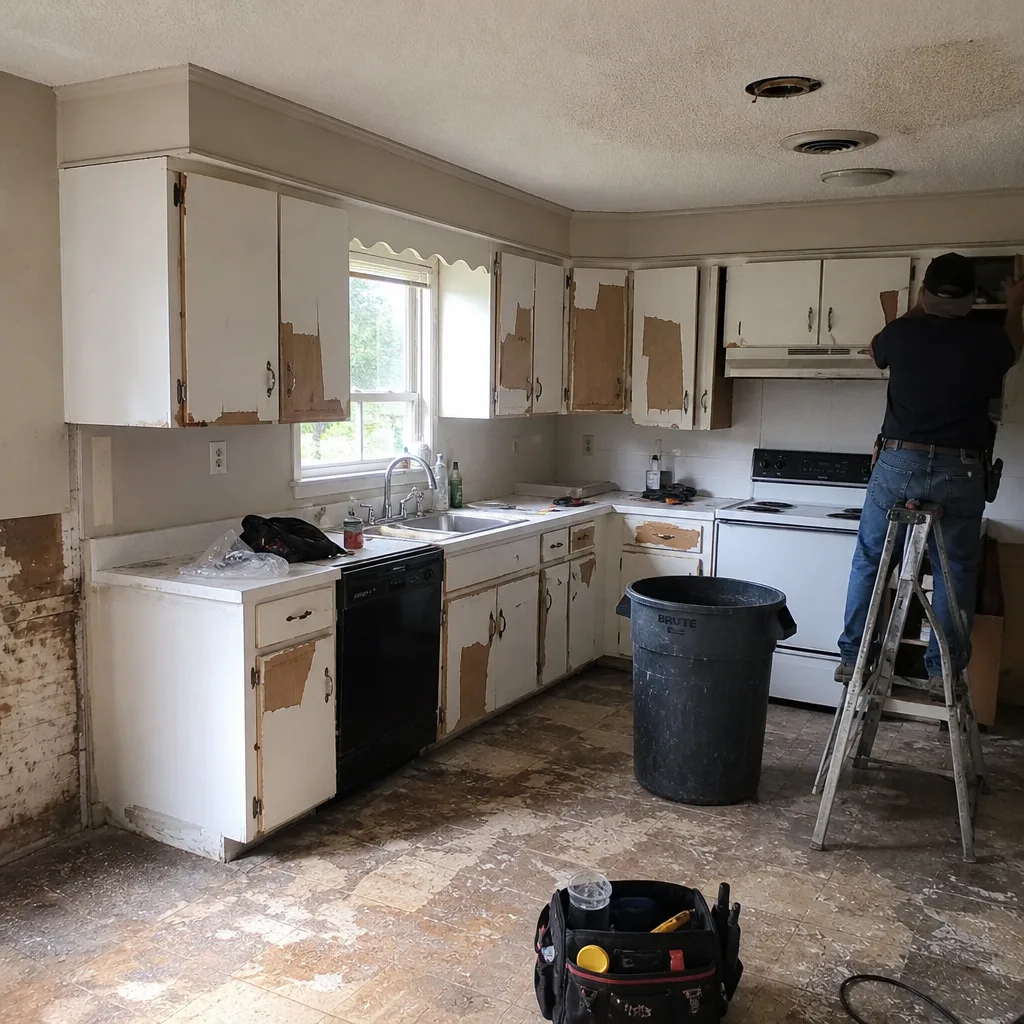 Before
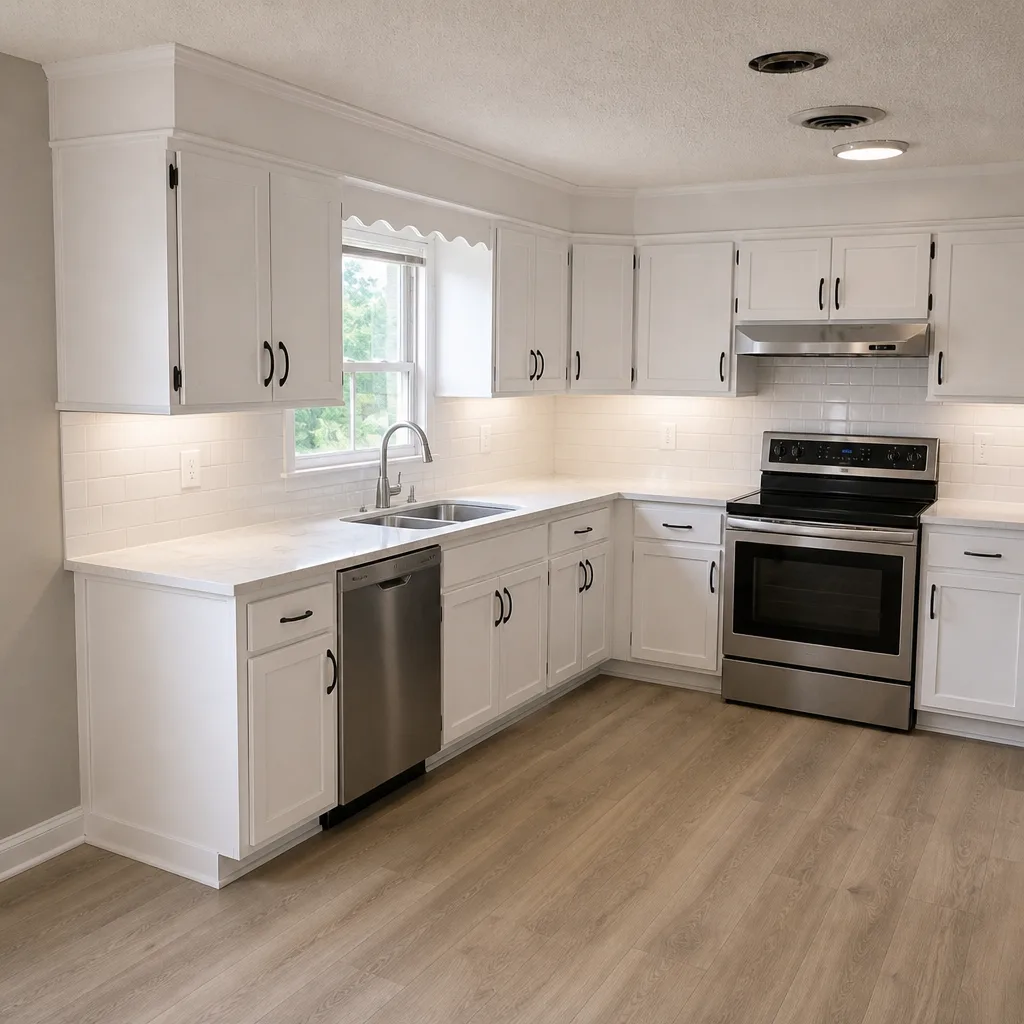 After
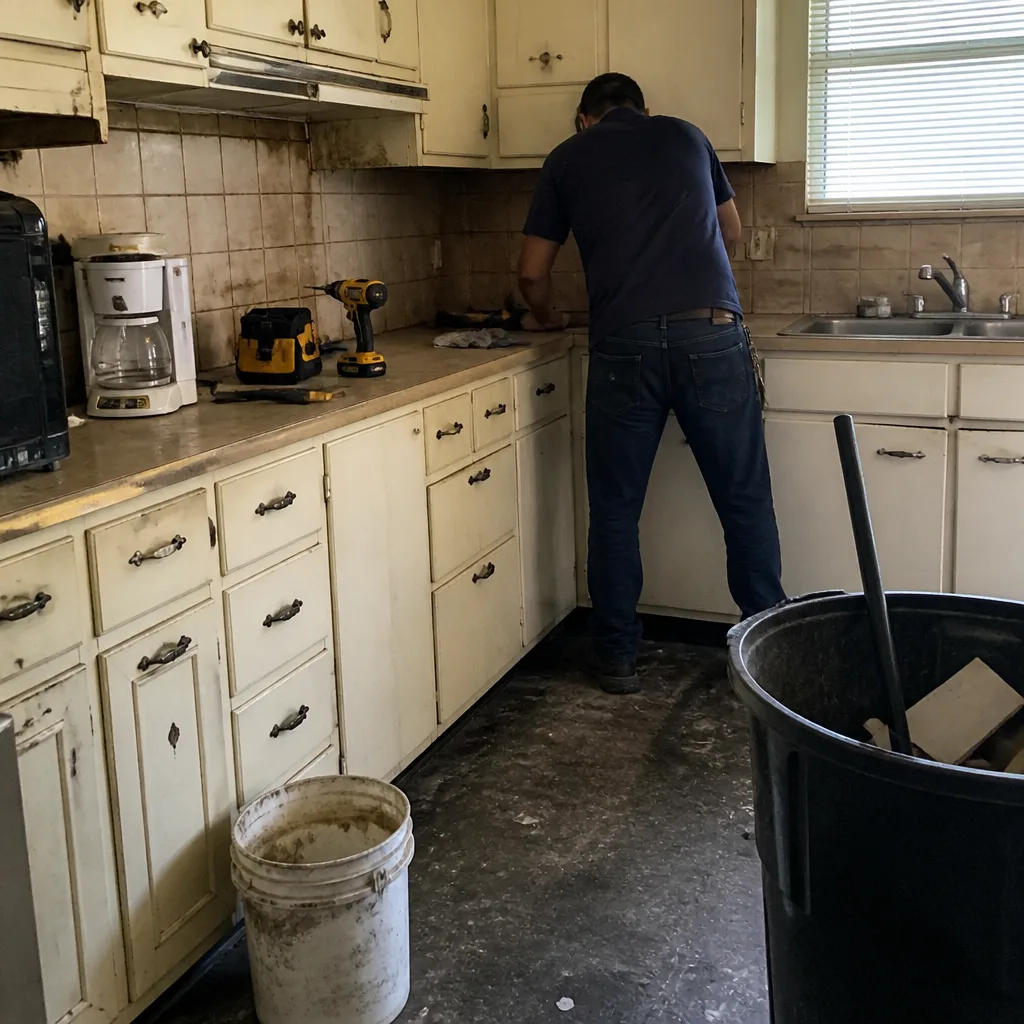 Before
 After
Here’s the comparison page, built around the blackland clay rough-opening angle.
New Construction vs. Replacement Windows in Allen, TX: Which One Your House Actually Needs
Choose replacement windows only if the rough opening behind your brick is still square, plumb, and level within 3/16″. Choose new-construction windows if it isn’t. In Allen, that frame has been sitting on blackland clay for 25 to 30 years, and the clay has been moving the whole time. An insert dropped into a racked opening looks correct on the day it’s installed and starts leaking air and water within a few seasons. We check the opening before we sell you a window. Call (888) 343-9048 and we’ll tell you which way your house leans before you spend a dollar.
The technical difference, in plain terms
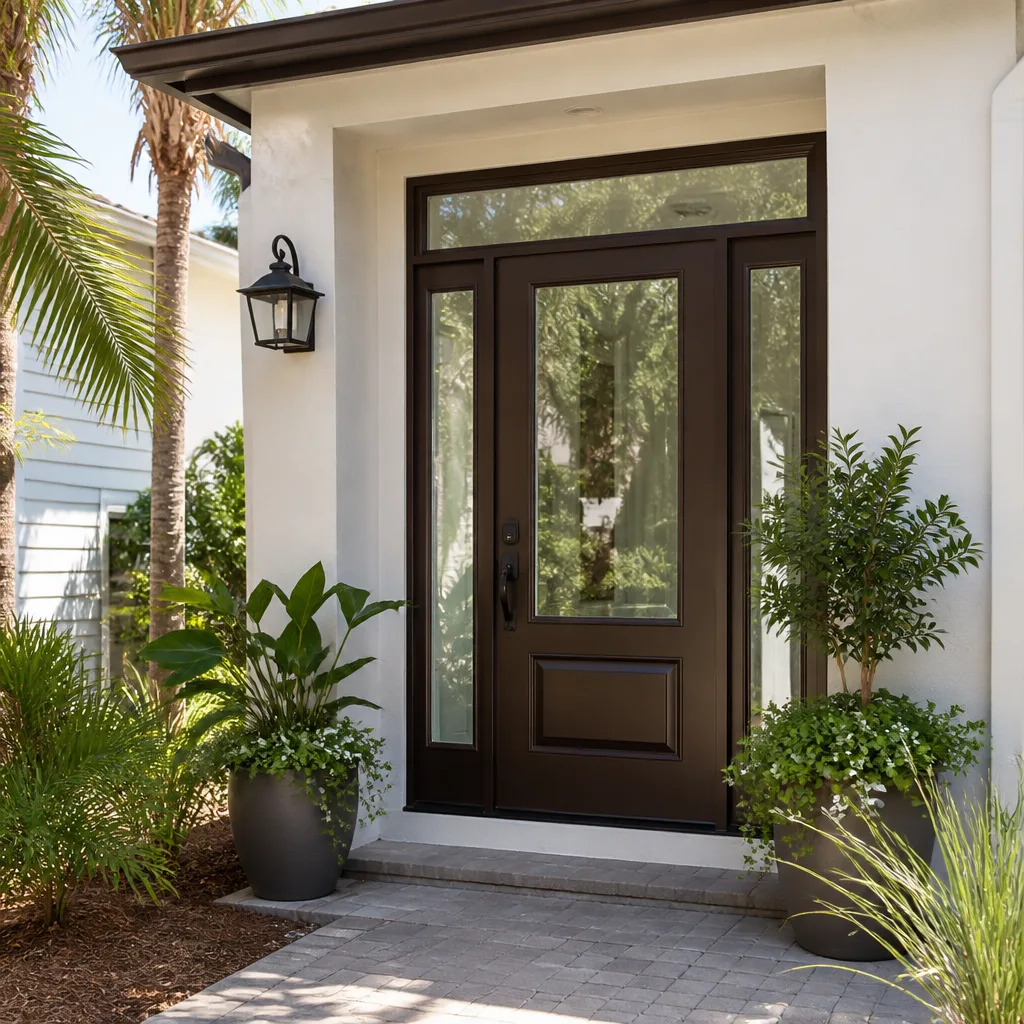
A new-construction window carries a nail fin (also called a flange) around its perimeter. That fin fastens to the rough framing, which means the exterior cladding has to come off, at least around the opening, so the window can be set and flashed properly. Water gets managed at the fin, behind the siding or brick, the way it was designed to.
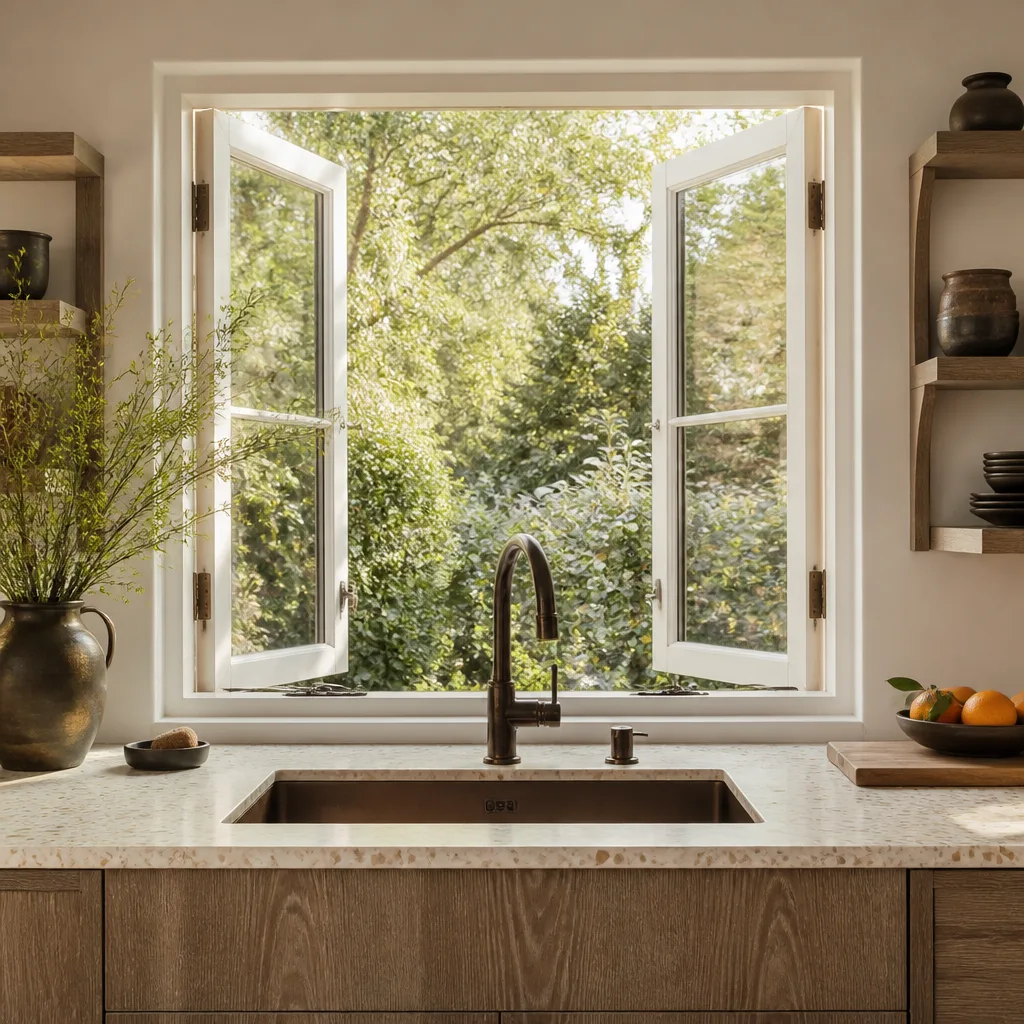
A replacement window, often called an insert, is built smaller than the opening. It slides into the existing frame and fastens to it, with no cladding disturbed and no nail fin. For the right house, it’s faster, cheaper, and completely sound. For the wrong house, it’s a weather seal bolted onto a problem.
Most comparison pages stop there. The scope question is real, but it isn’t the one that decides your project in Allen.
Why 25 years of blackland clay changes the answer
Allen sits on expansive blackland clay, the same soil that has every foundation in Collin County on a slow seasonal ride. It swells when it’s wet and shrinks when it’s dry, and it doesn’t move uniformly under a house. That uneven movement works its way into the wood framing above the slab. Studs rack. Headers deflect. An opening that was dead square when the framers finished it in 1997 can be off by a quarter inch or more today.
Drop an insert into that opening and the new unit inherits the defect. You’ll see uneven gaps at the jambs, weatherstripping that’s compressed on one side and loose on the other, and a sash that doesn’t sit flush. Then the first hard spring storm pushes water against a seal that was never true to begin with. That’s how you get a window that looks fine on day one and leaks by year three.
This is second-generation renovation territory. Allen was largely built out in one 1990s to 2000s growth wave, so the housing stock is almost all builder-grade subdivision construction on small lots, and the original windows are all hitting the same age at once. In Watters Crossing and Twin Creeks, we’re regularly replacing first-generation units where the opening has moved enough that an insert would have sealed in the problem.
The diagnostic step most contractors skip
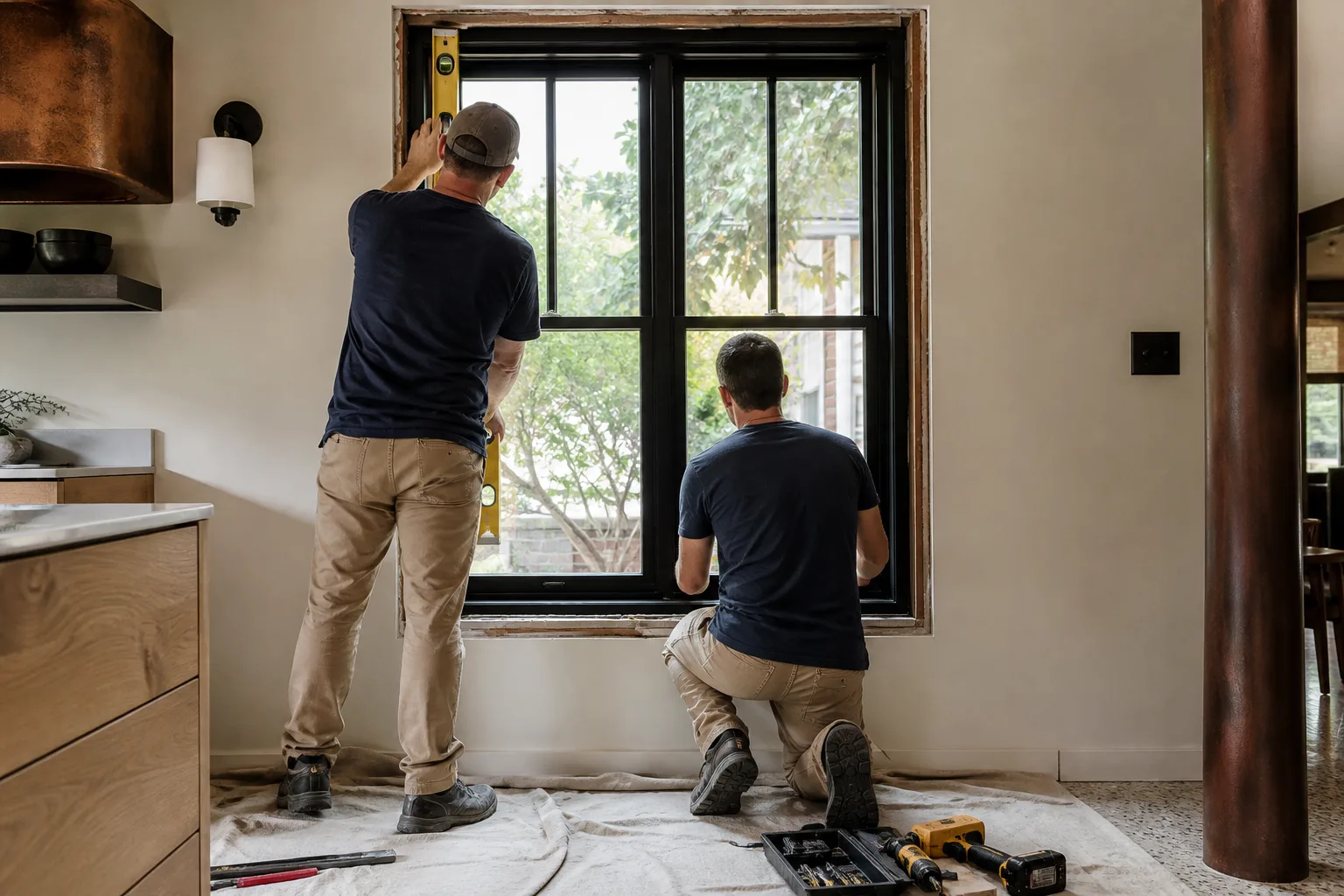
Before Groundwork Construction Co. of Allen recommends one product over another, we check the opening itself: square corner to corner, plumb with a level, and level across the sill. It takes minutes and it decides the job.
- Within 3/16″ on all three checks: an insert is a legitimate choice. The frame is true, the new unit will seal, and you’ll save money on labor and exterior repair.
- More than 3/16″ out of square, plumb, or level: the frame has racked. An insert will look right and perform wrong. We recommend full-frame, new-construction installation, which lets us re-square the opening with the fin set against corrected framing.
- Rot, soft wood, or failed flashing at the sill: full-frame regardless of measurement. An insert covers that up instead of fixing it.
Any contractor who quotes a window without putting a level on the opening is guessing. Ask them what the opening measured. If they can’t tell you, that’s your answer about the bid, not just the window.
Brick veneer is why full-frame is feasible here
Homeowners assume a new-construction window means tearing into masonry. In most Allen homes it doesn’t. The exteriors are brick veneer over wood framing, not full-thickness brick, so the brick is a skin, not structure. A full-frame swap needs careful removal of the brick around the opening and re-mortar of the soldier course above it, but it doesn’t require masonry demolition or an engineer. Treated right, the finish work reads as original.
That’s the part most out-of-town crews miss. Allen’s permitting and inspection process is stricter than what crews are used to on the newer edges of McKinney or Frisco, and the HOA architectural review in subdivisions like Bethany Ridge often wants exterior changes approved before the city permit is even issued. A crew that skips that step costs you weeks. We build it into the schedule.
Andersen and Marvin: not every line comes in both formats
Here’s a question most homeowners can’t answer without help, and it matters. Premium manufacturers don’t always offer the same window line as both a new-construction unit and a replacement unit. One line may be fin-only. Another may come as an insert with a pocket frame. If you’ve picked a specific Andersen or Marvin product, knowing which format it’s built in tells you which installation method you’re actually getting, before the order goes in.
That’s where a curated brand bench earns its keep. We work with Andersen and Marvin because their lines cover both formats, so we can match the product to the opening instead of forcing the opening to fit the product. Same reason we use KraftMaid and Cambria in kitchens and GAF and CertainTeed on roofs: quality you can specify, not whatever was on the shelf. See how this fits our full Windows & Doors work.
Cost comparison in Allen
Replacement windows typically run $500 to $1,200 per opening installed in this market. Full-frame new-construction windows generally run $850 to $2,000 per opening once brick removal, re-mortar, and flashing are counted. Whole-house projects here land in these ranges:
| Project type | Typical Allen range | Best fit |
|---|---|---|
| Replacement window installation | $4,500-$15,000 | Sound, square framing; budget-minded upgrade |
| Impact window installation | $8,000-$25,000 | Hail exposure, upgraded glass package |
| Full-frame new-construction swap | Quoted per opening | Racked framing, sill rot, failed flashing |
Those are honest ranges, not a teaser. Your number depends on opening count, glass package, and how much exterior repair the brick needs. Groundwork gives you upfront pricing, so the number we quote is the number you pay. Projects over $10,000 get $1,000 off, and 0% financing for 18 months is available if you’d rather spread it out.
Every installation carries our 730-Day Done Right Promise. If it’s not done right, we make it right. That’s a written guarantee, and it’s one of the longest workmanship commitments in residential construction. It matters most on windows, where a bad install doesn’t show up for a year or two.
What to expect on install day
Technicians arrive background-checked and in uniform. Our technicians have up to 12 years of experience, and we put a level and a tape measure on every opening before anything gets ordered. Most replacement jobs finish in a single visit. Full-frame swaps take longer because of the brick work, but the sequence is planned before we start, not figured out on your driveway.
This is a full-scope job from foundation to finish line, which means the window crew isn’t handing you off to a separate mason when the soldier course comes out. One contractor, one point of accountability. If you’re on the fence about the bigger picture, our home page lays out every service line, and the Allen service area page covers how we work across the city.
Key takeaways
- New-construction windows use a nail fin and attach to framing; replacement windows slide into the existing frame.
- In Allen, the deciding factor is whether the rough opening is still square within 3/16″ after decades of clay movement.
- Brick veneer makes full-frame swaps feasible here without masonry demolition.
- Not every Andersen or Marvin line is available as both a fin unit and an insert, so pick the format first.
- Expect $4,500-$15,000 for a whole-house replacement and $8,000-$25,000 with impact glass.
FAQs
Yes, when the rough opening is square, plumb, and level within 3/16″. An insert in a true opening performs as well as a full-frame unit and costs less because the exterior stays intact. In an out-of-square opening, replacement windows can’t seal properly and will leak within a few seasons.
Full-frame new-construction windows in Allen generally run $850 to $2,000 per opening installed, including brick removal, re-mortar, and flashing. Whole-house replacement work runs $4,500-$15,000, and impact glass pushes that to $8,000-$25,000. Call (888) 343-9048 for an exact quote; estimates are free.
Only for full-frame units, and only around each opening. Allen’s brick veneer is a skin over wood framing, so a full-frame swap needs careful removal and re-mortar of the soldier course above the window, not masonry demolition. Replacement windows don’t touch the brick at all.
Yes. We measure every opening for square, plumb, and level before recommending a product, and we check the sill for rot and failed flashing. If the frame is more than 3/16″ out, we recommend full-frame. Call (888) 343-9048 and we’ll walk you through what we find.
Get a straight answer on your windows
If you’d rather have it looked at than guess, Groundwork Construction Co. of Allen offers a no-pressure assessment in Allen. We’ll measure the openings, tell you which installation fits, and quote it in writing. Call (888) 343-9048 for your free estimate. Live person, any hour.
Written by the team at Groundwork Construction Co. of Allen, serving Allen, TX.