Last updated November 18, 2026






Free written scope consultation - allowances, timeline, and change-order rules on paper before a single trade is scheduled
Bathroom Remodeling Warning Signs Every Homeowner Should Know
If a tile setter skips the waterproofing membrane at the shower floor transition, you won’t see the water damage in the subfloor for about 18 months. But the sign that it was coming was visible on day three of the install. We’ve walked into Allen homes where the failure was already baked in before the grout cured, and the homeowner had no idea because nobody told them what to watch for. That’s the gap this guide closes. By the end, you’ll know the quote red flags, the on-site tells during active construction, and the post-completion symptoms that show up in the first 90 days, so you can demand corrections while you still have leverage instead of starting a legal fight a year later.
Quick Answer
The biggest bathroom remodeling warning signs are vague scopes of work, no mention of permits, payment schedules that demand large upfront draws, and no written warranty. On site, watch for missing backer board in wet zones, thin or skipped waterproofing membrane, and uneven mortar beds. After completion, grout cracking, caulk separating, sticking doors, and condensating exhaust fans within the first 90 days mean the work is already failing.
Styles & brands we work with
- Kitchen remodeling
- Bathroom remodeling
- Home additions & ADU
- Roofing
- Windows & doors
- Driveway & pavers
- Fence
Table of Contents
- Quote and Contract Warning Signs Before the Job Starts
- The Permit Trap: Why “We Don’t Need One” Should End the Conversation
- On-Site Red Flags During Active Construction
- Waterproofing: The Failure You Can’t See Until It’s Expensive
- Post-Completion Signs in the First 90 Days
- How to Spot a Contractor Who Won’t Back Their Work
- Allen Code and Climate Factors That Expose Bad Work
- What a Written Post-Completion Guarantee Actually Tells You
Quote and Contract Warning Signs Before the Job Starts
Most bathroom remodels that go wrong were doomed at the estimate. The physical failures get the attention, but the paperwork is where the real trouble hides. If you can’t read the scope and understand exactly what’s included, the crew can’t build to it either, and you’ll spend the back half of the project arguing about what “standard installation” means.
Here’s what we tell Allen homeowners to check line by line before signing anything:
- Unusually low bids. In the Allen market, a full gut bathroom typically runs $18,000 to $35,000 depending on size and finishes. A bid that lands 40% below the others isn’t a deal. It’s a scope with the waterproofing, backer board, and permit fees quietly deleted.
- Vague scopes of work. “Tile shower” tells you nothing. You want square footage, membrane brand and system, backer board type, and the exact transition details spelled out.
- No mention of permits. Plumbing relocation and electrical changes need permits in Allen. A contractor who waves this off is either unlicensed or planning to skip inspection.
- Large upfront draws. A deposit of 30% to 50% is normal for materials. A demand for 70% before demolition starts is a cash-flow red flag, not a commitment signal.
- No written warranty language. If the contract says nothing about workmanship coverage, there is no workmanship coverage. Verbal promises evaporate.
Ask for a written, line-item scope and a payment schedule tied to milestones, not calendar dates. If the contractor pushes back on either, that’s your answer. For homeowners weighing a full-scope partner, Groundwork Construction Co. of Allen home lays out how the process works from first estimate to final walkthrough.
The Permit Trap: Why “We Don’t Need One” Should End the Conversation
When a contractor tells you a bathroom remodel doesn’t need a permit, treat it as the single clearest warning sign in the entire project. Allen follows standard Texas plumbing and electrical code, and any relocation of drains, supply lines, or circuits during a remodel requires permitting and inspection. There are narrow exceptions for cosmetic work, but a full remodel isn’t cosmetic.
Here’s what skipping the permit actually costs you:
- Inspection gaps. No inspector means no third party verifying the drain slope, the shower pan, or the GFCI placement near the vanity. Those are the failures that show up as mold and shock hazards later.
- Resale trouble. Unpermitted work surfaces during a buyer’s inspection and has to be disclosed. In Allen’s competitive market, that’s a negotiation hit or a lost sale.
- Insurance exposure. If a supply line behind an unpermitted wall fails and floods the first floor, your insurer can push back on the claim.
- No paper trail for warranty claims. You can’t prove who did what, when, which makes any workmanship claim harder.
Ask the contractor to list which permits they’ll pull and who schedules the inspections. A confident answer is a good sign; a dismissive one is a reason to walk. We pull permits and pass inspections on every Allen project because the paper trail protects you, not us. The same discipline applies across the trades, whether it’s a Driveway & Pavers in Allen install or a structural change during an addition.
On-Site Red Flags During Active Construction
Once demolition starts, the warning signs shift from paperwork to the jobsite itself. You don’t need to be a builder to catch most of them. Walk the site every couple of days and look at what’s actually being installed, not what’s stacked in the garage.
Watch for these during the framing and prep stage:
- No moisture barrier on exterior walls. Bathroom walls need a vapor retarder before tile or drywall goes up. If they’re closing walls without one, the wall cavity becomes a condensation trap in North Texas summers.
- Greenboard in the shower instead of cement backer board. Greenboard is moisture-resistant drywall. It is not a shower substrate. It will fail.
- Framing that isn’t shimmed or plumb. If the studs behind the shower aren’t straightened, the tile will never sit flat and the caulk joints will open within a season.
Watch for these during the tile and finish stage:
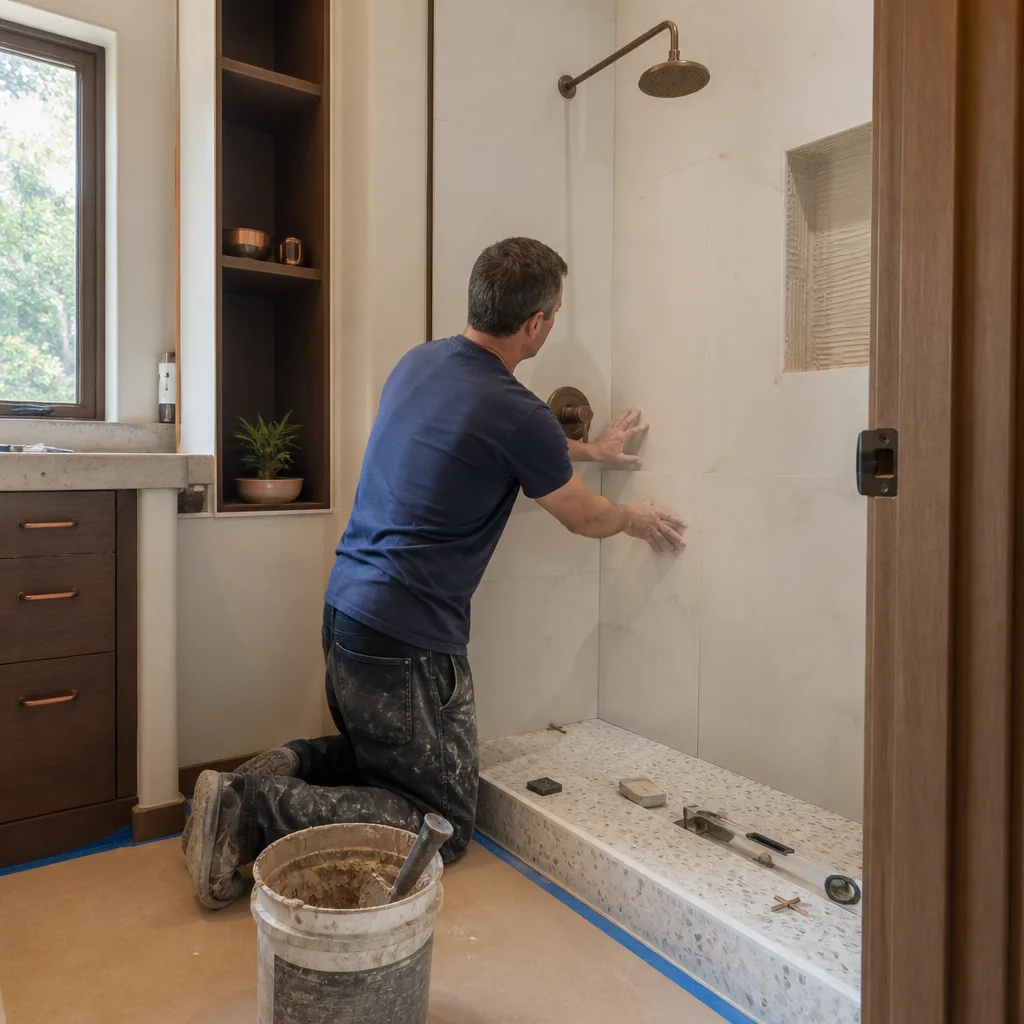
- No backer board in wet zones. The shower surround, the tub deck, and the floor within two feet of the tub all need cement board. Skipping it is the most common shortcut we find in Allen remodels.
- Uneven mortar beds. Run a level across the shower floor. Standing water that doesn’t drain to the weep holes within a few hours is a slope problem.
- Thin or spot-bonded tile. Tap a tile with a screwdriver handle. A hollow ring means the thin-set didn’t achieve full coverage.
- Grout applied before the membrane cures. You can’t always see this, but a rushed schedule that compresses waterproofing, tile, and grout into one day is a sign the cure times are being skipped.
Document everything with phone photos and dated notes. If you see something, ask the lead on site to explain it in writing. A good crew welcomes the question. A defensive one tells you plenty.
Waterproofing: The Failure You Can’t See Until It’s Expensive
In our experience, waterproofing is where bathrooms quietly fail. The materials are cheap relative to the rest of the job, and they’re entirely hidden by the time the tile goes up. That combination makes them the easiest thing to skip and the most expensive thing to redo.
The two systems you’ll see in Allen bathrooms are a roll-on liquid membrane and a sheet membrane, often a bonded fabric system. Both work when installed correctly. Both fail when installed thin, patchy, or without the proper transition at corners and drains.
What correct waterproofing looks like:
- Membrane applied to the full shower floor, up the walls at least to showerhead height in wet zones.
- Fabric reinforcement at every corner change and at the drain flange.
- A thickness that meets the manufacturer’s spec, which typically means multiple coats with cure time between them.
- A flood test on the shower pan, at least 24 hours with the drain plugged, before tile goes down.
- A recorded inspection sign-off from the local authority having jurisdiction, where applicable.
Ask the contractor whether they flood-test the shower pan. If the answer is “we always get it right,” ask again. The flood test is the one moment you can verify the pan holds water before it’s buried under tile. A contractor who skips it is telling you they don’t want the answer. When the subfloor eventually rots, the repair often runs $4,000 to $9,000 to pull tile, replace the pan, and rebuild. The tell that it was coming was on day three, and nobody flagged it.
Post-Completion Signs in the First 90 Days
The first three months after a bathroom remodel finishes are your highest-signal window. Good work settles into place. Bad work starts announcing itself. Here’s what to watch for and what each symptom tends to mean.
- Grout cracking at floor and wall seams. Some hairline cracking is normal in the first month as the house settles. Cracks that widen or repeat along the same line usually mean movement in the substrate, often a missing or loose backer board.
- Caulk separating at the tub or shower base. Latex caulk can shrink slightly as it cures. Fresh separation at the floor transition within weeks often means the joint was never properly cleaned or the caulk was applied over a wet surface.
- Doors sticking or binding. A bathroom door that suddenly sticks in the Allen humidity is usually a moisture problem, not a hinge problem. Excess moisture in the room points to an exhaust fan that isn’t moving enough air or a wall that’s absorbing water.
- Exhaust fan condensating or dripping. If the fan is dripping or accumulating water on its housing, the ductwork is likely short, uninsulated, or venting into the attic rather than outside. That dumps moisture into the attic, which is a bigger problem in our summer heat.
- Water pooling at the shower base. Standing water that doesn’t reach the drain within a couple of hours means the slope is wrong. Left alone, it fails the grout, then the membrane, then the subfloor.
- Musty smell you can’t trace. A persistent damp smell with no visible leak often points to moisture trapped behind tile. Get it investigated before it becomes structural.
Start a running log at the final walkthrough. Write down the date each symptom shows up. That log is your leverage if something needs to be made right, and it tells you a lot about how the contractor will respond.
How to Spot a Contractor Who Won’t Back Their Work
The clearest signal that a contractor will stand behind their work is a written post-completion guarantee. Not a verbal promise, not a line in a marketing brochure, but a warranty in the contract with a specific coverage period and a stated process for making things right. If you can’t find it in writing, it doesn’t exist.
Run this checklist before you hire:
- Written warranty in the contract. Ask to see the actual warranty language, not a logo on a brochure. How long does it run? What does “workmanship” cover? How do you file a claim?
- A physical business address. A contractor who only operates from a phone number and a website has nowhere to send a service request and nowhere to serve a legal notice. A verifiable business address is a basic stability check.
- A current insurance certificate. Ask for a certificate of insurance naming you or the property as an interested party. Call the carrier directly to verify it’s active. Anyone can email you a PDF.
- Local references you can call. Ask for two or three recent Allen addresses and call them. Ask what the contractor did when something went wrong, not whether they were happy with the finish.
- A definite procedure for callbacks. “We’ll make it right” is not a procedure. “Call this number, we schedule within X days, we repair or replace at no cost” is.
- A live person answering the phone. If you can’t reach anyone before you write the check, good luck reaching them after.
When you see a contractor who checks every box here, the risk profile flips. You’re no longer hoping for quality; you’re hiring a contractor who has every reason to deliver it.
Allen Code and Climate Factors That Expose Bad Work
Allen has a particular set of conditions that punish shortcuts faster than most. Our summers routinely push past 100 degrees for weeks, and the swing between severe summer heat and winter ice events moves a lot of moisture through a house. Bathrooms sit at ground zero for that moisture, which is why the work we see fail in Allen tends to fail faster than in milder climates.
A few local specifics worth knowing:
- Exhaust ducting. Exhaust fans in Allen homes must vent to the exterior, not the attic. Venting into the attic in a 100-degree summer turns the attic into a sauna and cooks the roof deck. We check this on every bathroom we rebuild.
- Foundation movement. North Texas clay soils shift with moisture, and that movement telegraphs into tile and grout. A bathroom built directly on a slab without proper substrate prep will show cracks along the same stress lines as the foundation.
- Permits and inspections. Allen enforces plumbing and electrical permitting for remodels. A contractor who knows the local inspection schedule and the inspector’s likely questions is a contractor who knows the local rules.
- Attic access and venting. Older Allen neighborhoods often have limited attic access above bathrooms, which is exactly where lazy ductwork runs happen. Ask to see how the fan is ducted before tile goes up.
None of this is exotic. But homeowners who know their local conditions spot bad work faster, and that’s exactly the leverage you want during a remodel. For projects that touch the exterior envelope around a bathroom bump-out, the same material standards that matter on a roof, like a GAF or Owens Corning system, apply to the whole build.
What a Written Post-Completion Guarantee Actually Tells You
A workmanship warranty is the single best filter you have when choosing a contractor. It tells you what the contractor thinks of their own confidence in the work. A one-year warranty is the industry default, and sometime it’s the only thing offered. A 730-Day Done Right Promise, which is what we back every Groundwork bathroom with, gives you two full years to catch the failures that don’t surface in month three.
Here’s what a strong guarantee should cover and how it should work:
- Coverage period long enough to catch real failures. Two years is a working raincoat. One year is a towel.
- A defined scope. Workmanship warranty should cover installation failures, not material defects that are handled separately by the manufacturer. Both should be in writing.
- A no-cost remedy. If something fails under the guarantee, the contractor absorbs the cost to make it right. If they don’t, the guarantee is decoration.
- A real contact path. You should know exactly who to call and what the response timeline is.
- It’s transferable or at least documented. If you sell the house inside the coverage window, a written warranty stays with the home and adds value at resale.
We offer the 730-Day Done Right Promise because we can afford to. Two years is enough time to catch almost everything that matters, which means homeowners get real accountability instead of a shrug. And when a homeowner calls, a live person answers 24/7, not a voicemail box. That’s a small thing on the front end and a very large thing on the back end.
Common Mistakes to Avoid
- Hiring on price alone. The low bid is almost always the bid with the waterproofing removed. In Allen, the spread between a real bid and a cheap one is usually the cost of the membrane, backer board, and permit fees.
- Skipping the flood test on the shower pan. It takes 24 hours and costs nothing. Skipping it means you find out the pan leaks through the ceiling below.
- Paying a large draw before demo. Milestone payments protect you; calendar payments protect the contractor. Draws should follow completed work.
- Trusting a verbal warranty. “Call me if anything goes wrong” is not a warranty. Get the warranty in the contract, with dates and a procedure.
- Not asking about vent ducting. Exhaust fans vented into the attic are a common shortcut in North Texas. It rots the roof deck and adds moisture the bathroom has to fight.
- Letting the schedule compress the waterproofing cure. A tile job compressed into one day skips the time the membrane and thin-set need. Rushed work shows up as cracks and hollow tiles.
- Not photographing the jobsite at each stage. Photos taken during the build are your best evidence if a wall or floor has to be opened up to fix something later.
See the difference
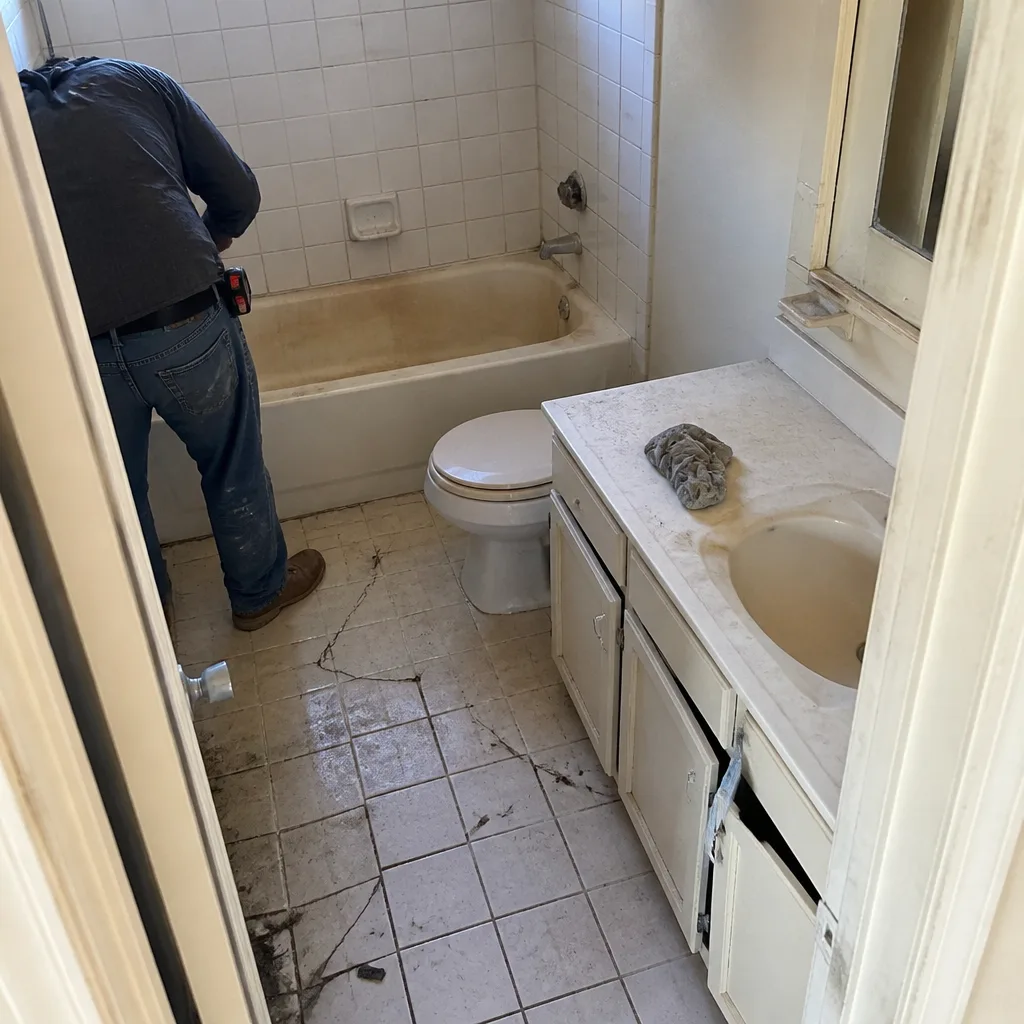 Before
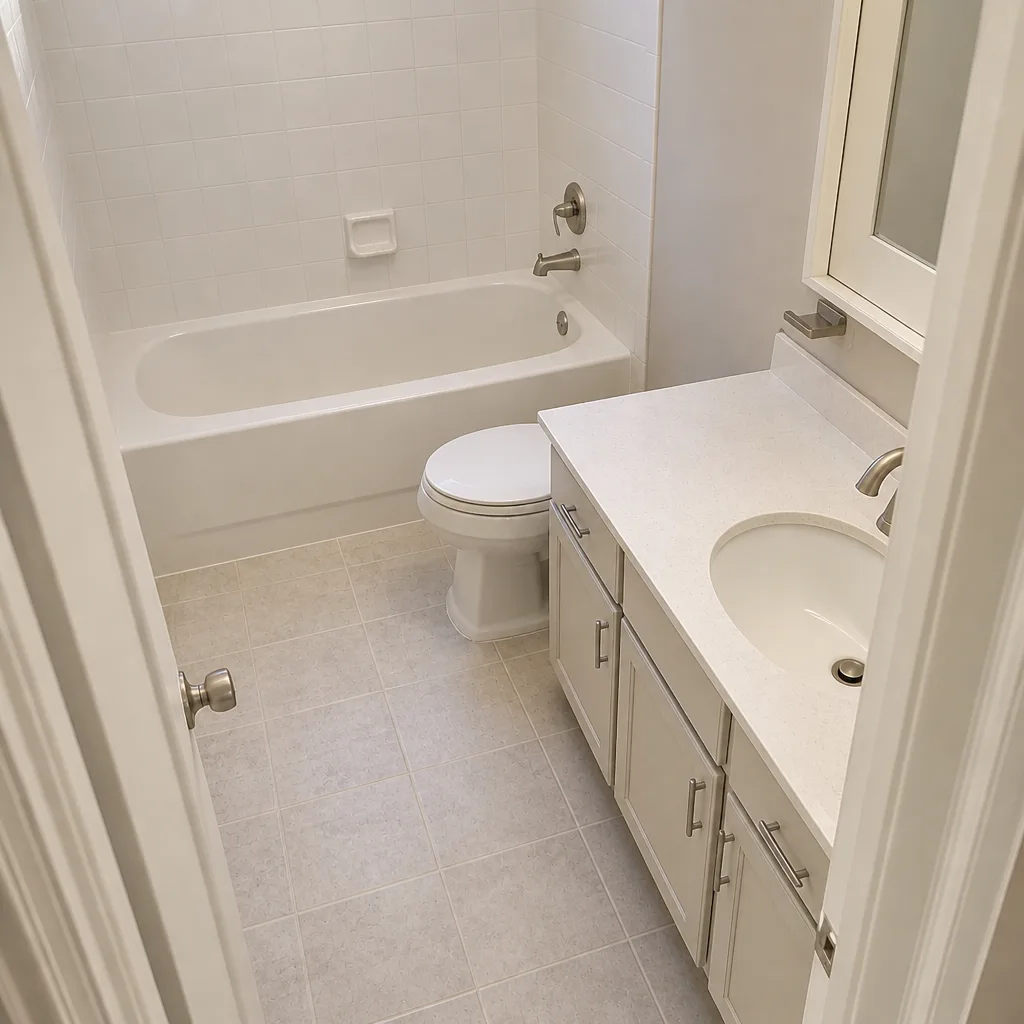 After
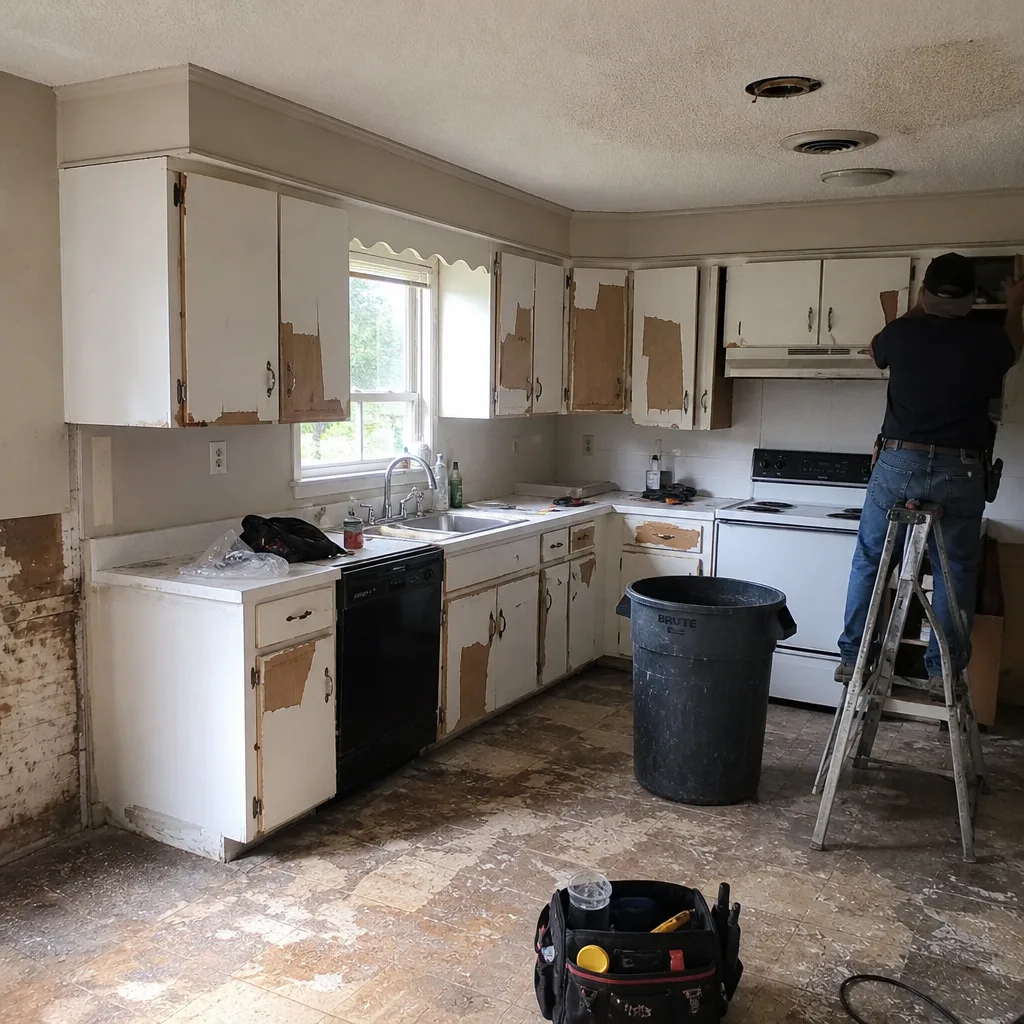 Before
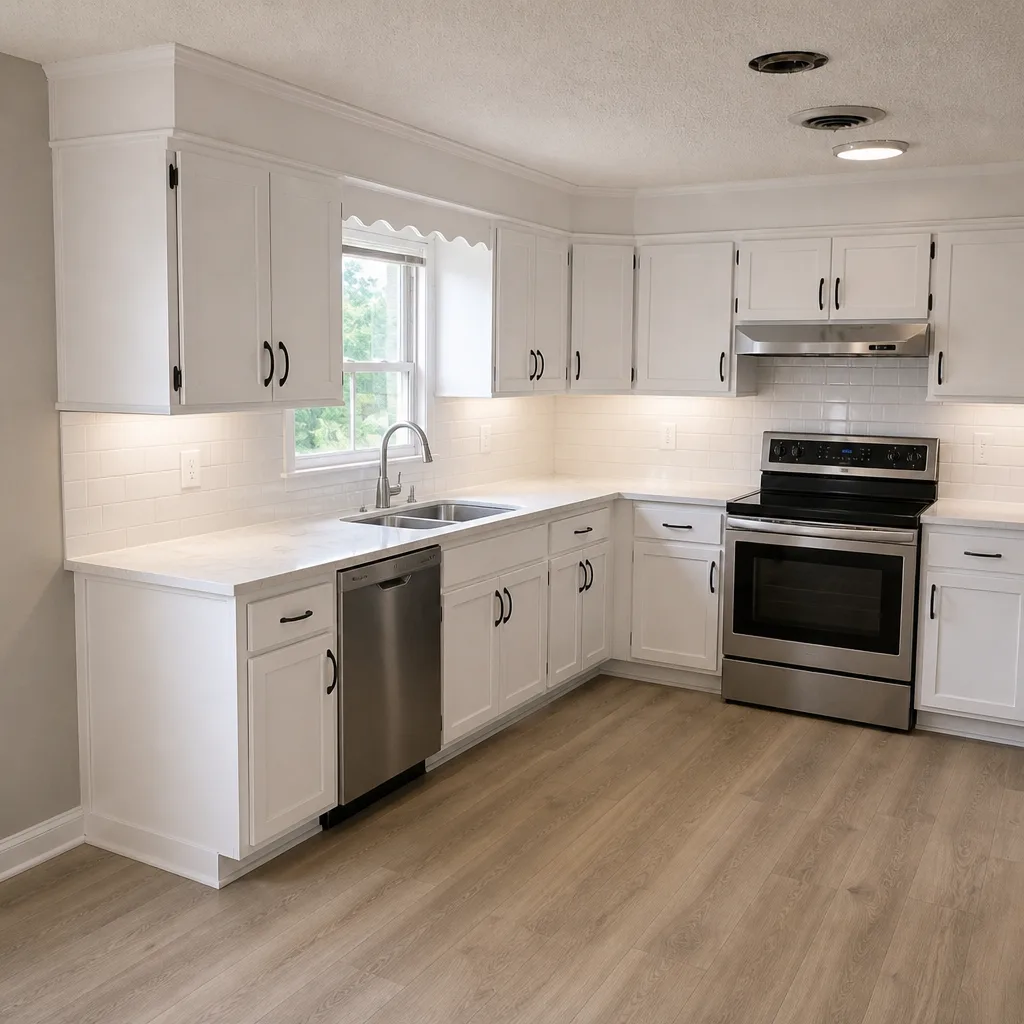 After
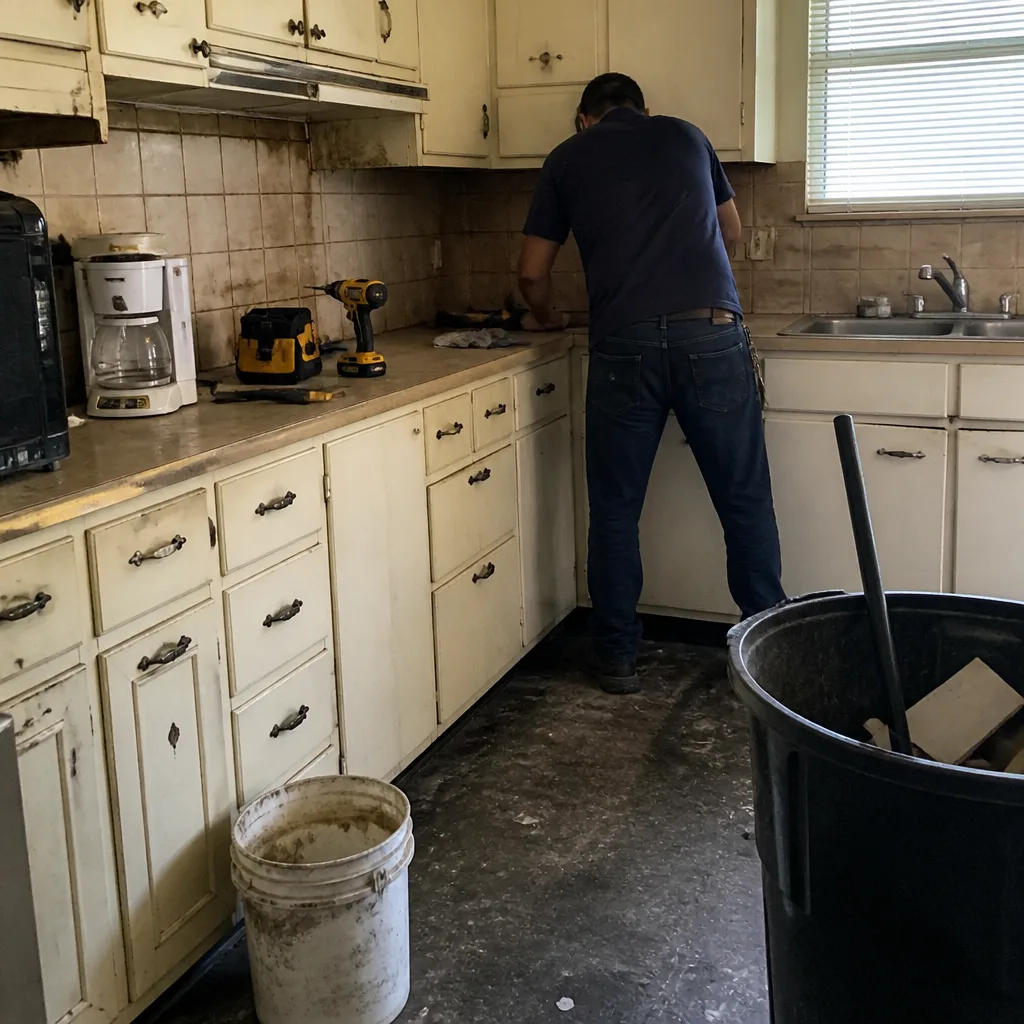 Before
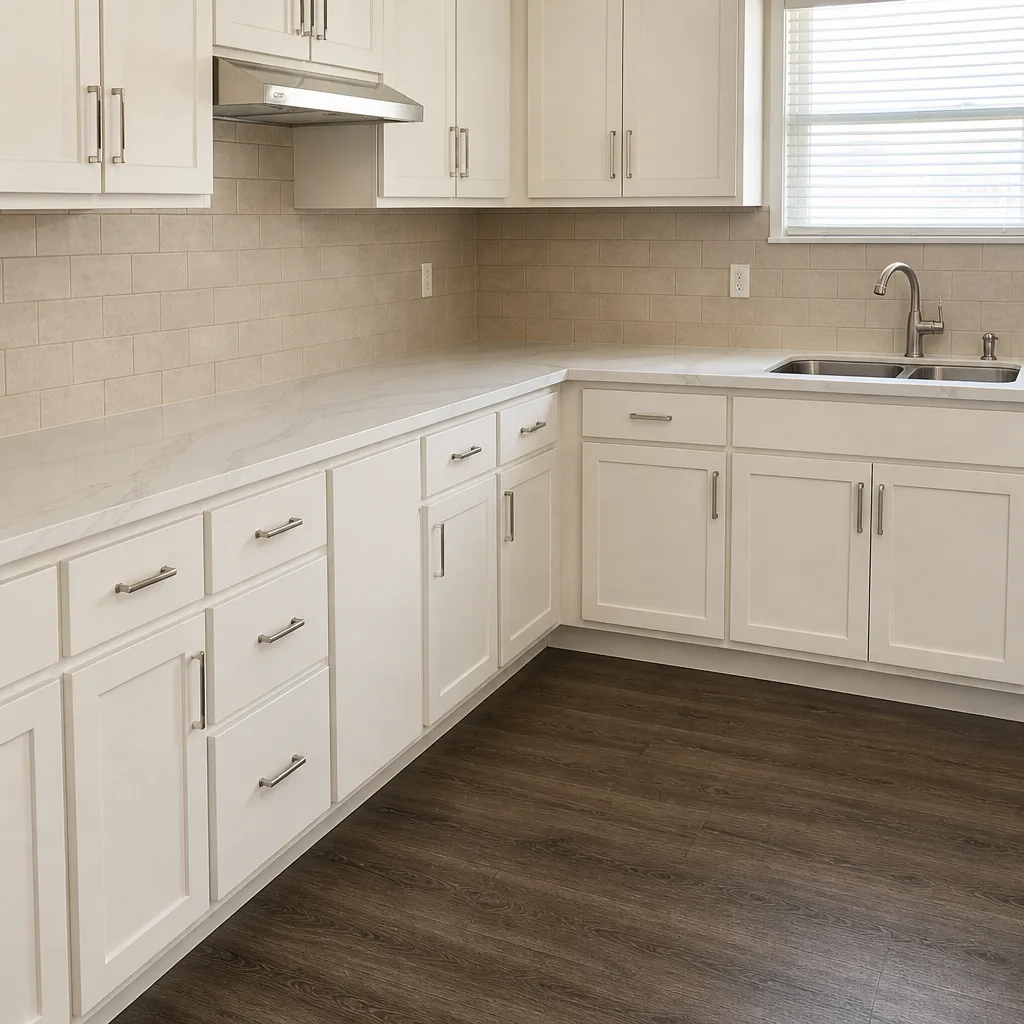 After
When to Call a Professional
Some bathroom work is a genuinely reasonable weekend project: swapping a vanity faucet, replacing a towel bar, re-caulking a tub that’s already fully dried out. The moment the work touches waterproofing, plumbing relocation, electrical, or the shower pan, it needs a licensed, insured professional. That means the full gut remodel, the tub-to-shower conversion, the curbless shower, the layout change that moves the drain. We’ve seen those fail as DIY projects in Allen often enough to know the cost of a redone shower runs several times the price of hiring it correctly in the first place. If you’re trying to sort out whether a project is worth doing yourself, the answer is usually no once the membrane or the plumbing is in play. For a project worth doing right, Groundwork Construction Co. of Allen offers free estimates in Allen. Call (888) 343-9048 to schedule yours.
Frequently Asked Questions
A full gut bathroom remodel in Allen typically runs $18,000 to $35,000, depending on square footage, finish grade, and whether plumbing or electrical is being moved. A cosmetic refresh that keeps the layout can land lower in the $8,000 to $15,000 range. The biggest cost hiders are layout changes and tile selection, both of which can swing the total significantly. Call (888) 343-9048 for an exact quote. Estimates are free.
The most common warning sign is a waterproofing system that’s thin, patchy, or not flood-tested before tile goes down. It’s the failure nobody sees until the subfloor rots, but it’s visible during the build if you know to ask. A close second is a contractor who skips the permit, which means no inspection is verifying the plumbing and electrical behind the walls. Either one is a reason to stop and ask questions in writing.
A full bathroom remodel in Allen typically takes four to eight weeks from demolition to final walkthrough, depending on scope. A cosmetic refresh may finish in two to three weeks. Tile work adds time because mortar, membrane, and grout each need to cure between stages. If a contractor quotes seven days for a full gut remodel, that’s a sign the cure times are being compressed.
Yes, if the project involves moving plumbing, adding or relocating electrical, or modifying structural elements. Allen enforces plumbing and electrical permitting for those changes, and the work is inspected. Purely cosmetic work, like replacing a vanity top without touching the plumbing, may not require one. Ask any contractor to put the permit scope in writing before you sign.
The 730-Day Done Right Promise covers workmanship failures for two full years from project completion. If something we installed fails because of how it was installed, we make it right at no cost to you. Material defects are covered separately by the manufacturer warranty on products from partners like Kohler, KraftMaid, and James Hardie. If you’re not sure whether an issue is a workmanship or material matter, call (888) 343-9048 and we’ll sort it out.
With upfront pricing, the number you see is the number you pay. The only reason a price should change mid-project is if the homeowner requests a scope change or if something is uncovered behind the walls that couldn’t have been seen before demolition. Any legitimate change should come to you as a written change order before the work happens. If a contractor starts a job without a written scope and a fixed price, expect surprises. Call (888) 343-9048 for a free estimate with a line-item quote in writing.
The Bottom Line
Bathroom remodeling warning signs almost always show up before the job is finished, and the homeowner who knows what to look for catches them while corrections are still cheap. The clearest early signals live in the paperwork: vague scopes, no permits, big upfront draws, no written warranty. On site, watch the waterproofing, the backer board, and the shower pan flood test. After completion, grout cracks, separating caulk, sticking doors, and a dripping exhaust fan in the first 90 days mean the work is already telling you something. A two-year written guarantee is the strongest filter you have. If you’d like a free estimate in Allen, Fence Installation in Allen and Home Additions & ADU in Allen share the same process and the same guarantee. Call (888) 343-9048 to schedule yours.
Written by the team at Groundwork Construction Co. of Allen.