Free written scope consultation - allowances, timeline, and change-order rules on paper before a single trade is scheduled
Styles & brands we work with
- Kitchen remodeling
- Bathroom remodeling
- Home additions & ADU
- Roofing
- Windows & doors
- Driveway & pavers
- Fence
See the difference
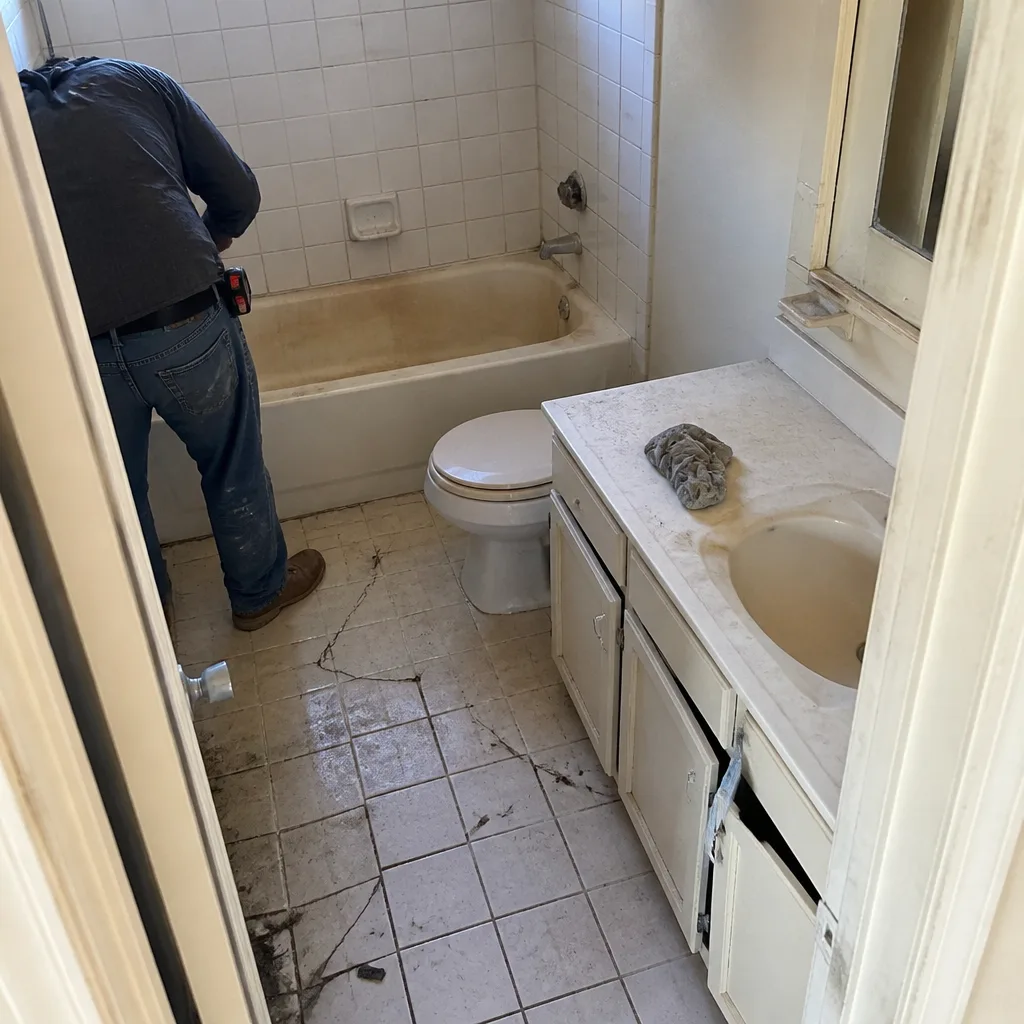 Before
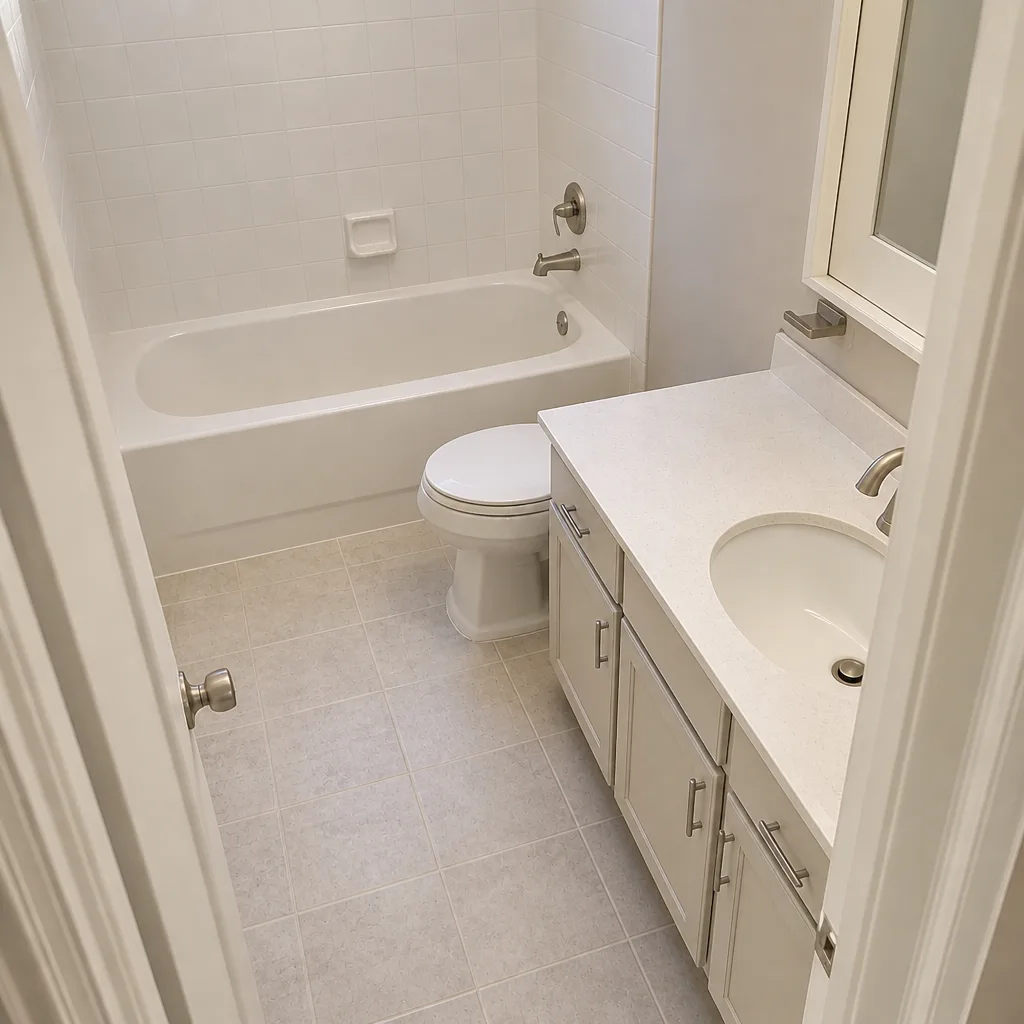 After
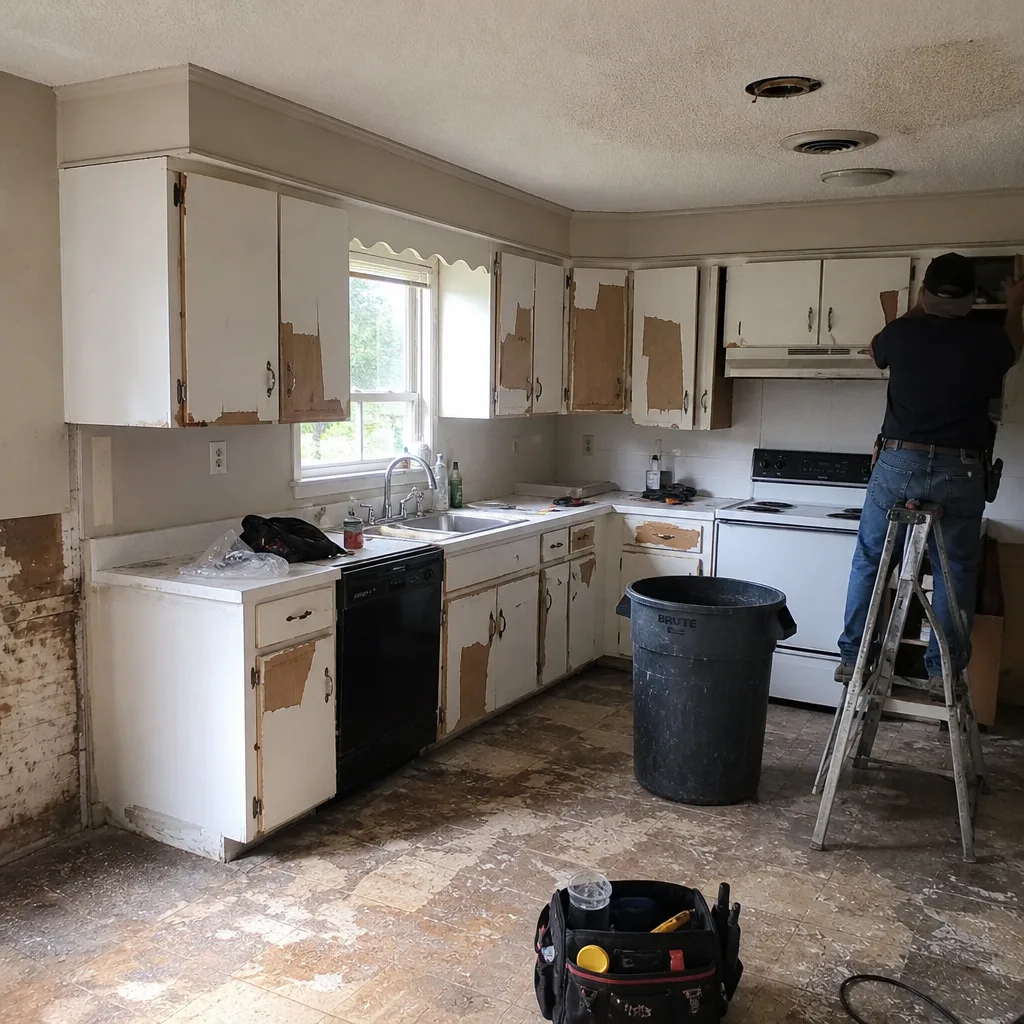 Before
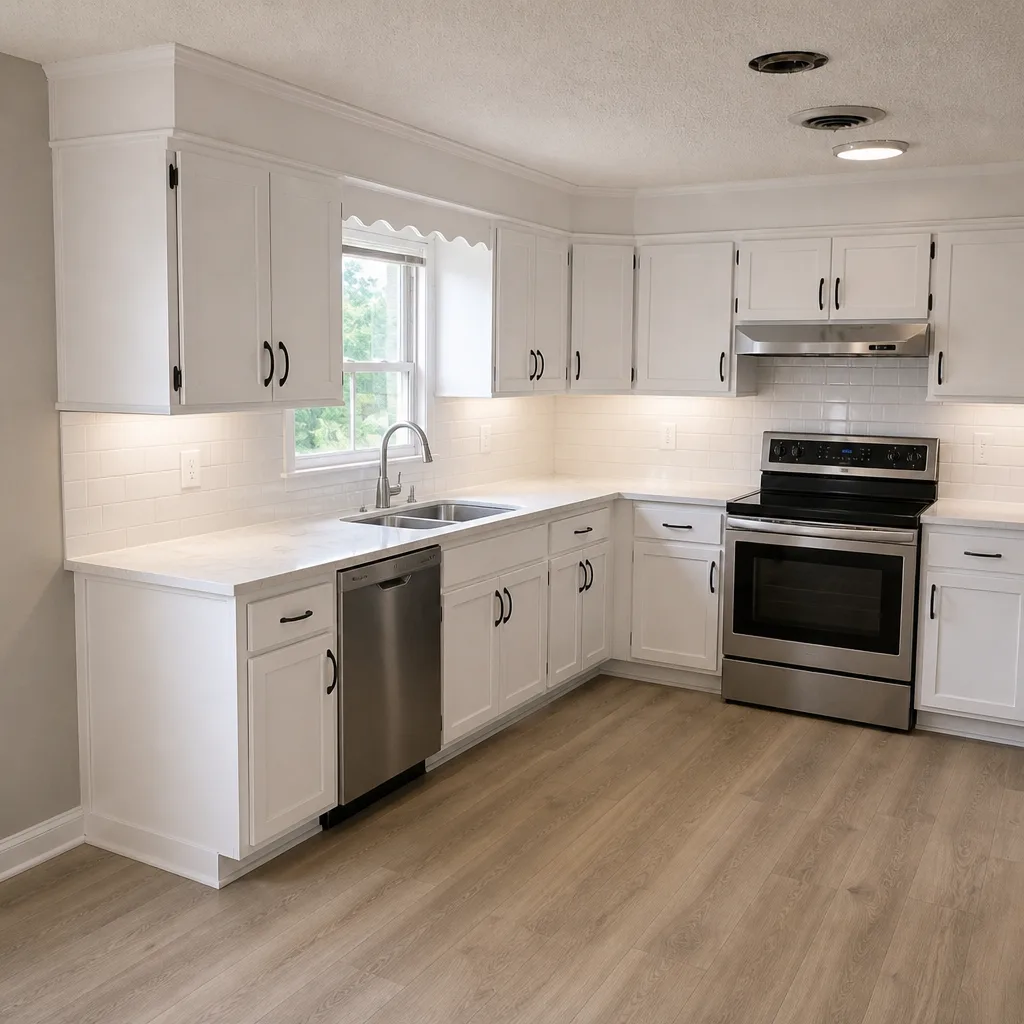 After
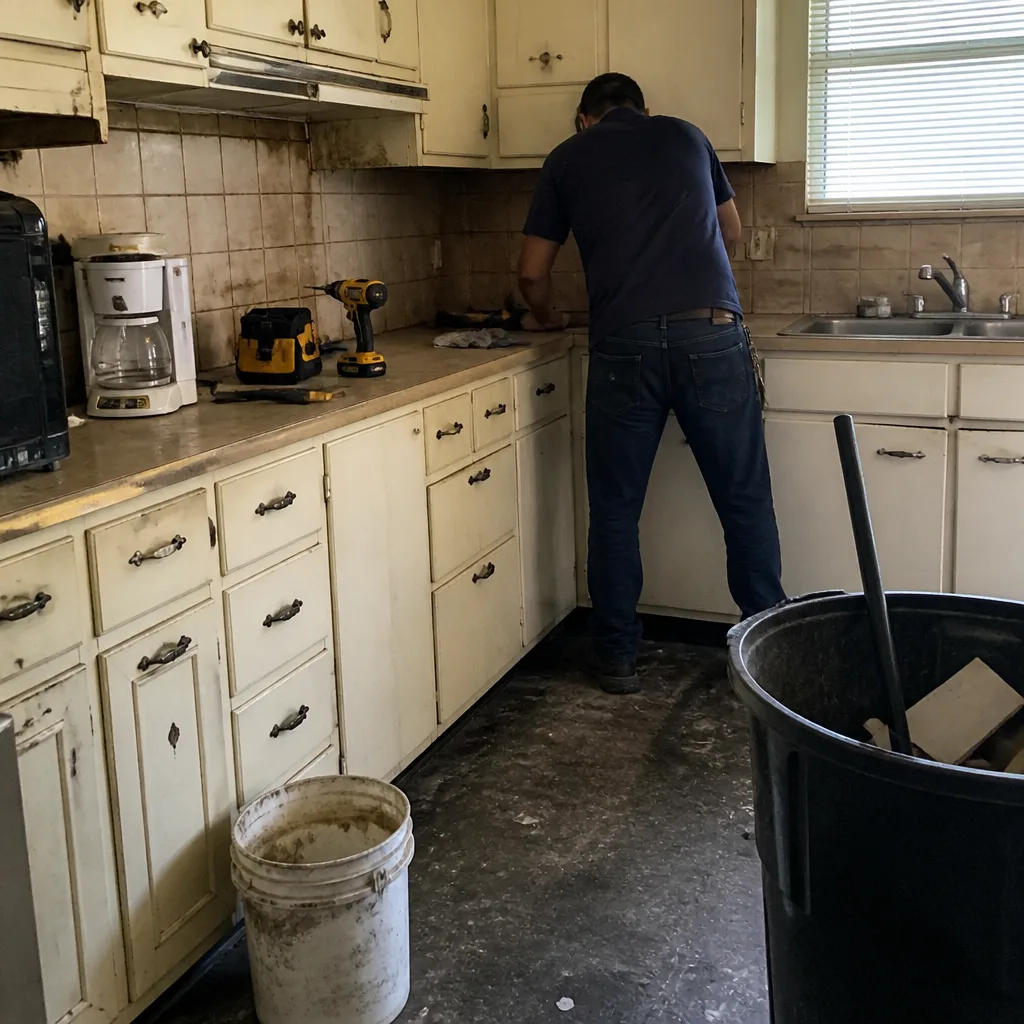 Before
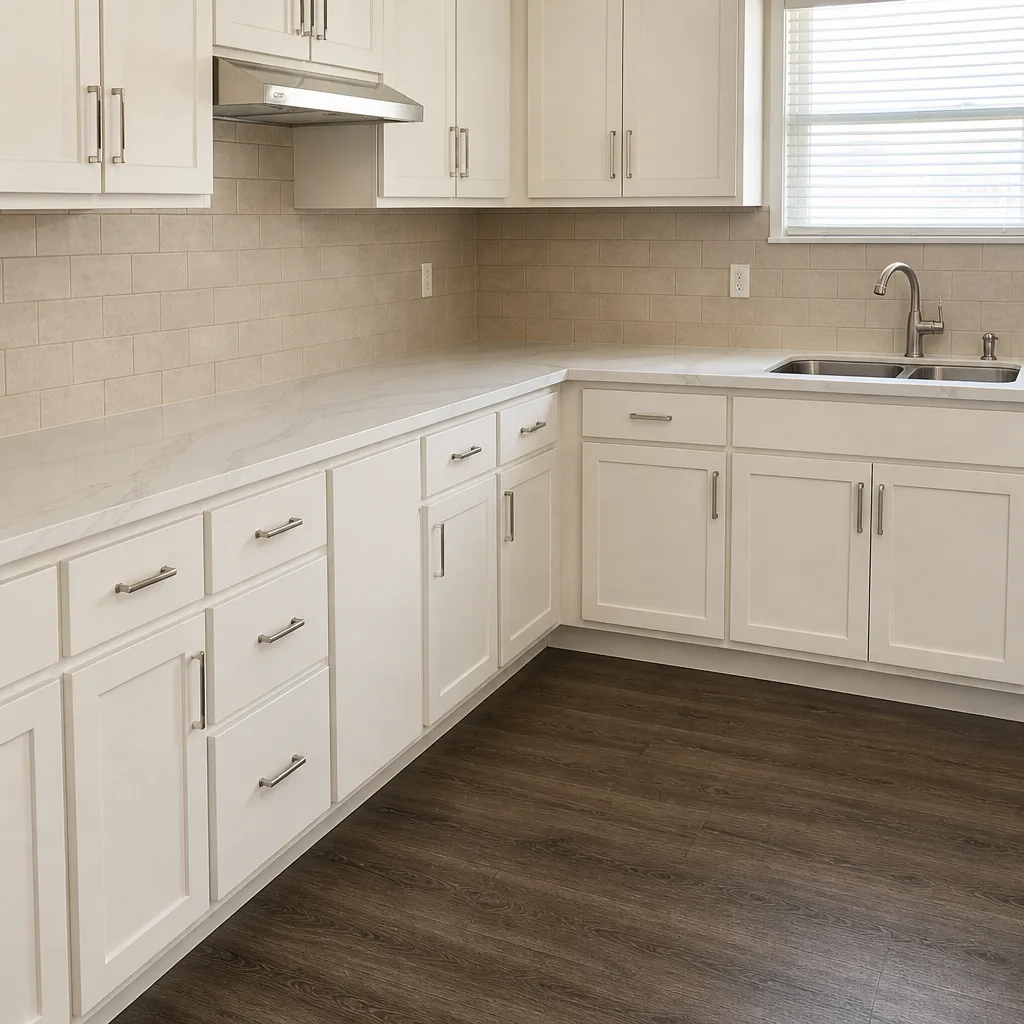 After
Stamped Concrete vs Pavers in Allen, TX: What Actually Holds Up
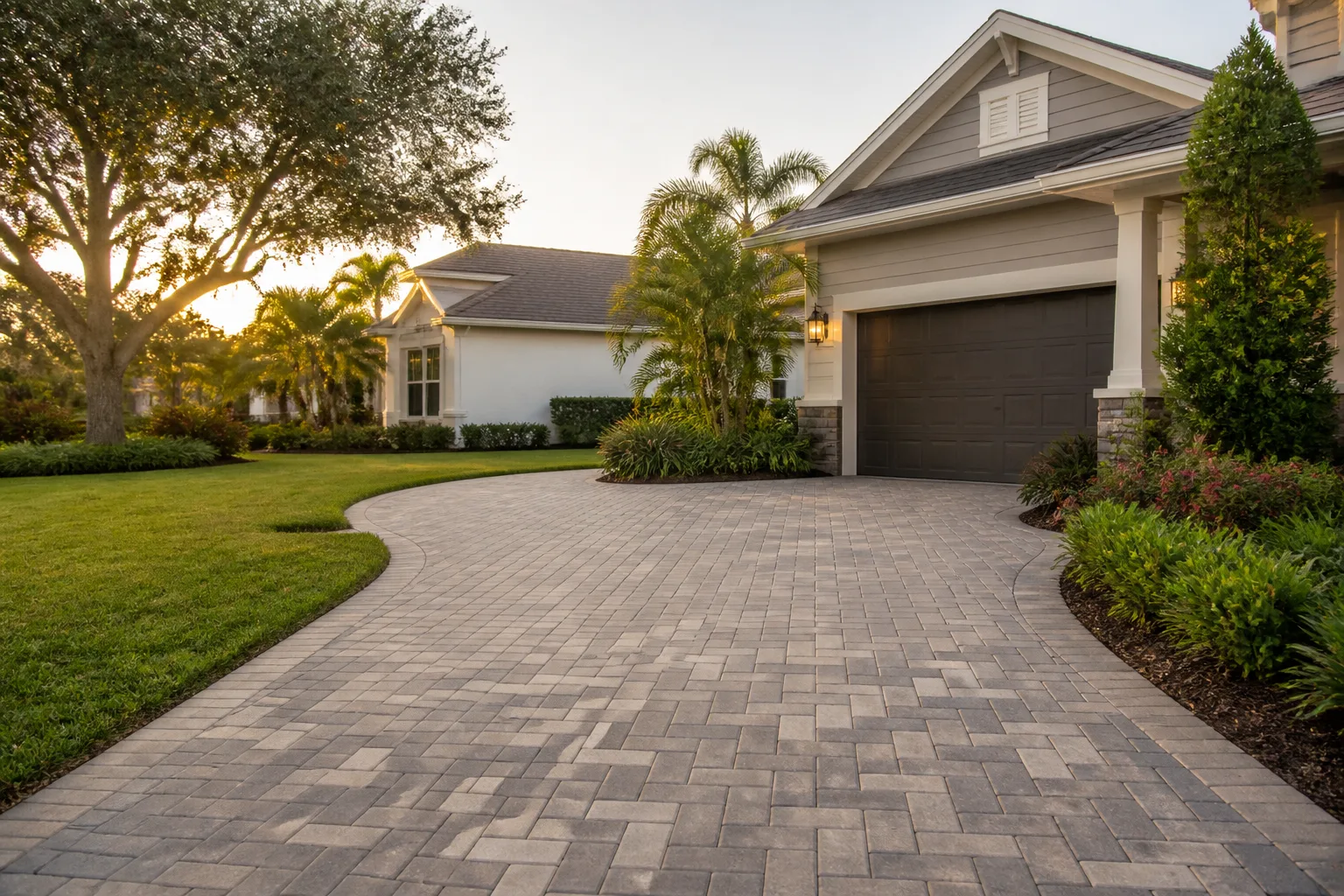
Choose pavers unless your budget is the deciding factor and you’re willing to commit to re-sealing every few years. Stamped concrete looks sharper on the day it’s poured. Pavers look far better seven years in – after two North Texas drought cycles, a handful of hail seasons, and a few summers of punishing UV. That gap is the real cost comparison, and it’s the one most bids leave out. Call (888) 343-9048 for a free, no-pressure estimate and we’ll talk through both options for your lot.
Allen’s housing stock shapes this decision more than most homeowners expect. Nearly every subdivision here – Watters Crossing, Twin Creeks, Bethany Ridge and the rest – was built out in a single 1990s-to-2000s wave on blackland clay. That clay moves. It expands when it’s wet and contracts when the summer dries it out, and it works on every hardscape attached to the house. Add in hail-prone springs and a sun that bleaches anything without pigment through its full depth, and the surface you choose needs to survive a lot more than foot traffic.
Groundwork Construction Co. of Allen is a full-scope construction partner, and we install both surfaces. Our technicians have up to 12 years of experience, and every project is covered by our 730-Day Done Right Promise – if it isn’t done right, we make it right. That guarantee means something more when the material itself decides how the surface ages.
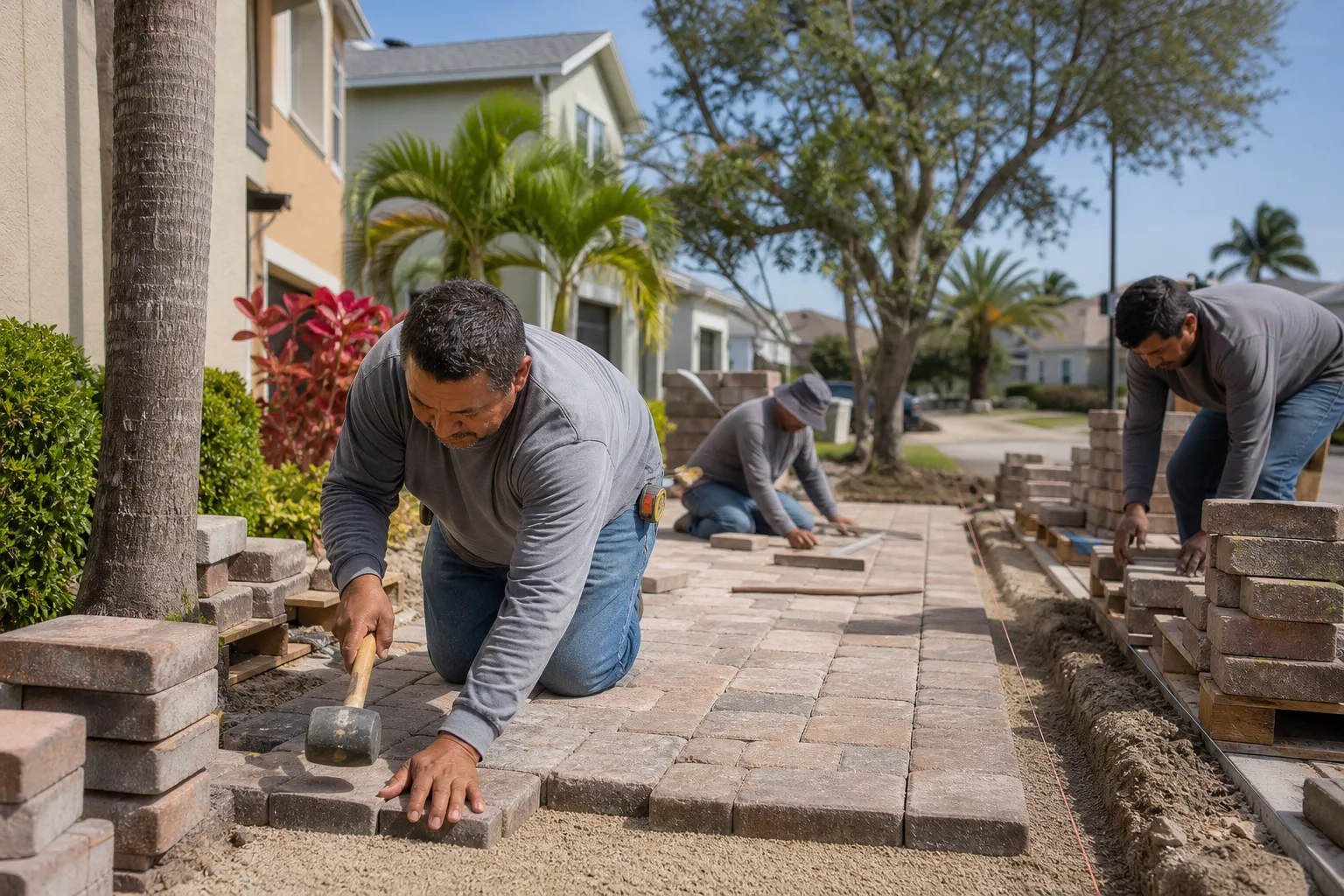
What should I compare before choosing stamped concrete or pavers?
Compare color retention, crack repair, drainage, and HOA risk – not just the day-one price. Each one plays out differently in Allen’s clay-and-sun environment.
UV fade and color retention
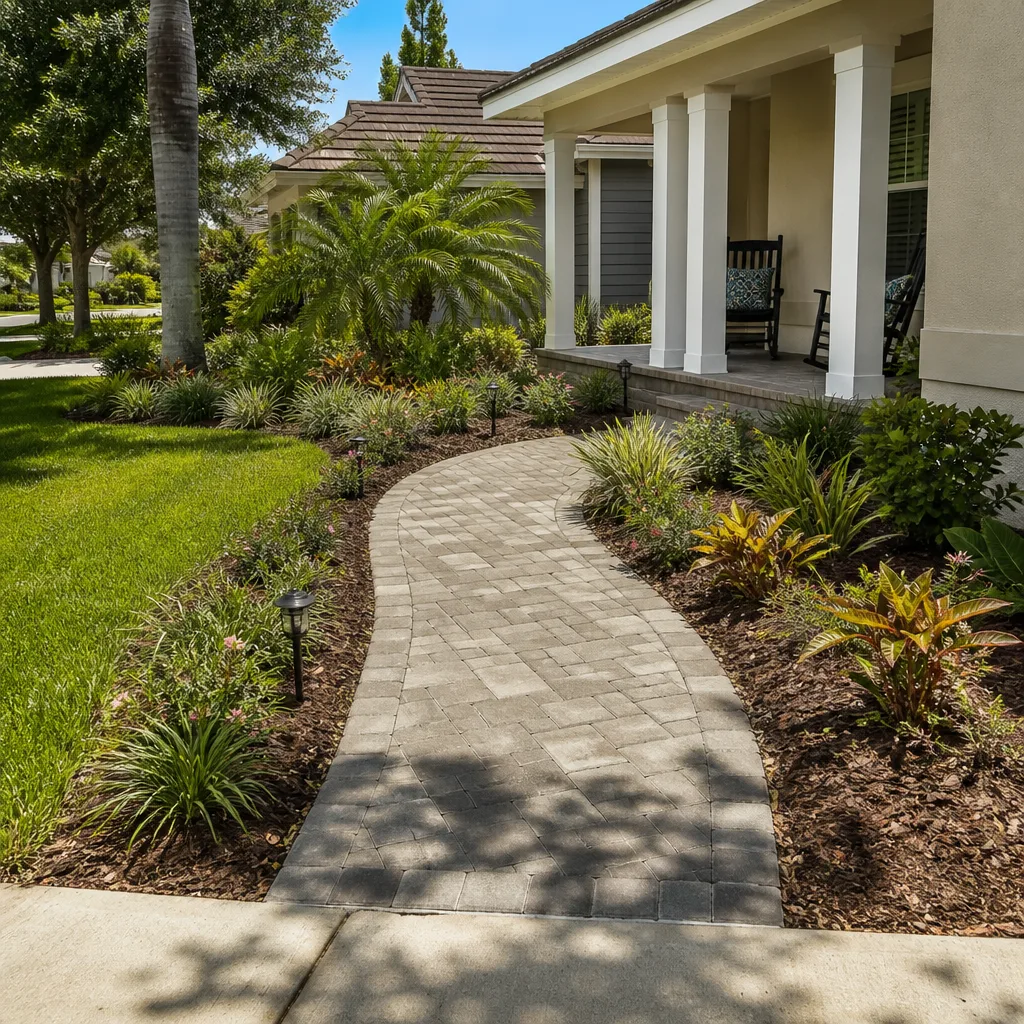
Stamped concrete gets its color from a surface hardener and a sealer. In Allen’s sun, that sealer breaks down fast. Plan on re-sealing roughly every 2 to 3 years to keep the finish looking like it did the day it was installed. Skip it, and UV degradation turns a slate-gray stamped finish chalky within about four years – not a warranty failure, just how the material behaves here. Pavers are colored through the full depth of each unit, so they don’t fade the same way. Wear shows up slowly and evenly, and a power wash brings back most of the original look.
Crack repair, side by side
- Stamped concrete: a hairline crack runs straight across the decorative pattern. There’s no invisible patch. The section has to be ground out, filled, and re-stamped to blend – and a color match years later is never perfect.
- Pavers: a settled or displaced unit is lifted out, bedding sand is reset, and a new unit goes back in – under an hour, with no visible evidence a repair happened.
On clay soil that shifts, this is the single biggest reason we lean pavers for driveways and patios attached to Allen homes.
Drainage on a small Allen lot
Most Allen lots are tight, and a good chunk of the backyard runoff ends up near the foundation. Properly installed interlocking pavers with permeable joint sand let water drain between the units, cutting runoff and pooling. Stamped concrete is essentially impervious – every drop has to slope away through careful grading, and if the pour settles, water pools against the slab. That’s a foundation concern, not just a puddle to step around.
The HOA factor
This one catches people years after the work. Allen’s HOA architectural-review boards evaluate how the finished surface looks, not just what material it is. A faded or patched stamped concrete patio or driveway can generate a compliance letter long after installation, even though it passed review in year one. Well-kept pavers keep the approved appearance indefinitely, which keeps you out of that conversation entirely. Review boards in these 1990s-to-2000s subdivisions already require pre-approval for roof color and fence height before a permit goes through – appearance is a live issue here.
Stamped concrete vs pavers: the honest comparison
| Factor | Stamped Concrete | Pavers |
|---|---|---|
| Up-front cost (Allen) | Lower (concrete driveway $4,500-$12,000) | Higher (paver driveway $7,000-$18,000) |
| Color over 5-7 years | Fades unless re-sealed every 2-3 years | Color runs through the unit; stable |
| Crack / damage repair | Section re-stamped; visible | Single unit swapped in under an hour |
| Drainage on small lots | Impervious; needs careful slope | Permeable joints reduce runoff |
| HOA risk over time | Fading/patches can trigger compliance letters | Retains approved look |
| Best fit | Tight budget, low-traffic, willing to maintain | Long-horizon owners, driveways, patios on clay |
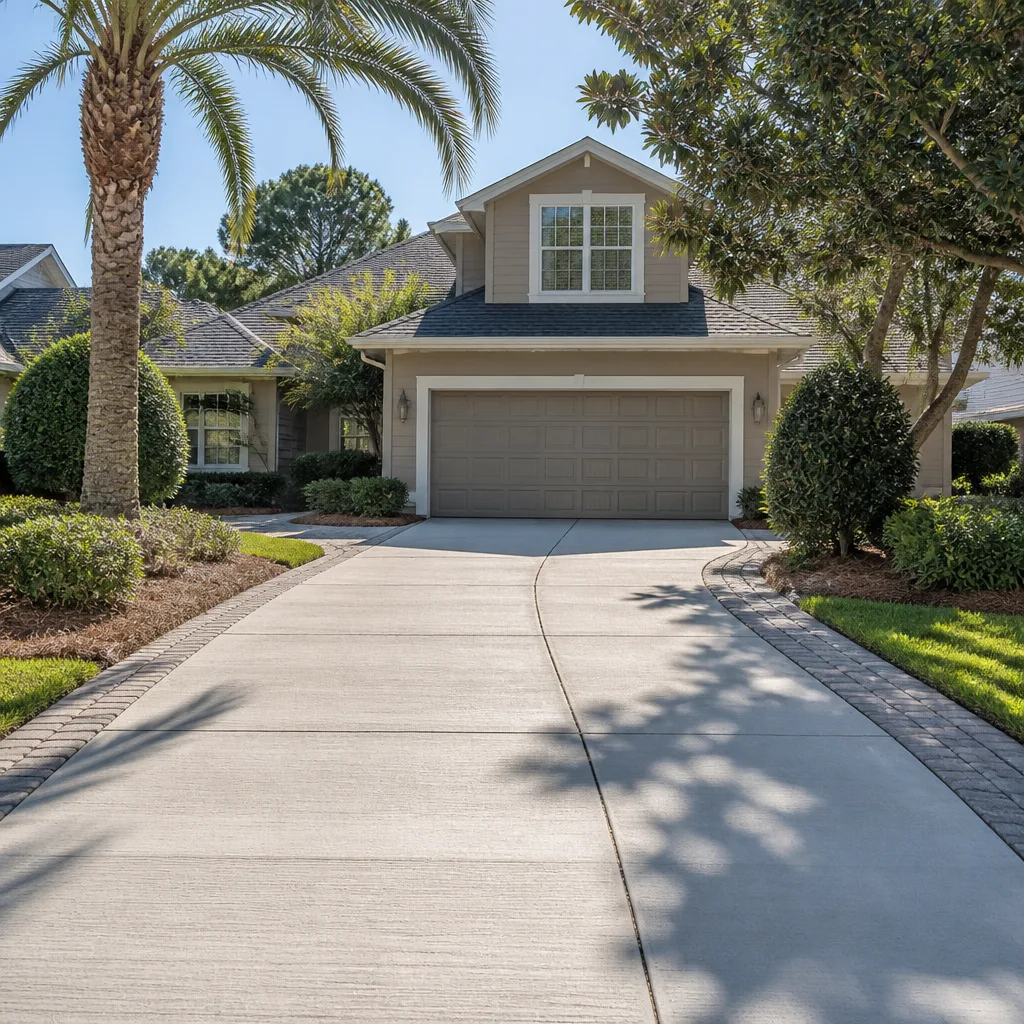
Our recommendation: for a driveway or patio on an Allen clay lot that you plan to own for years, pavers. For a small decorative area on a strict budget where you’ll stay on top of re-sealing, stamped concrete can work. For most of the work we see on our Driveway & Pavers service page, the long view wins.
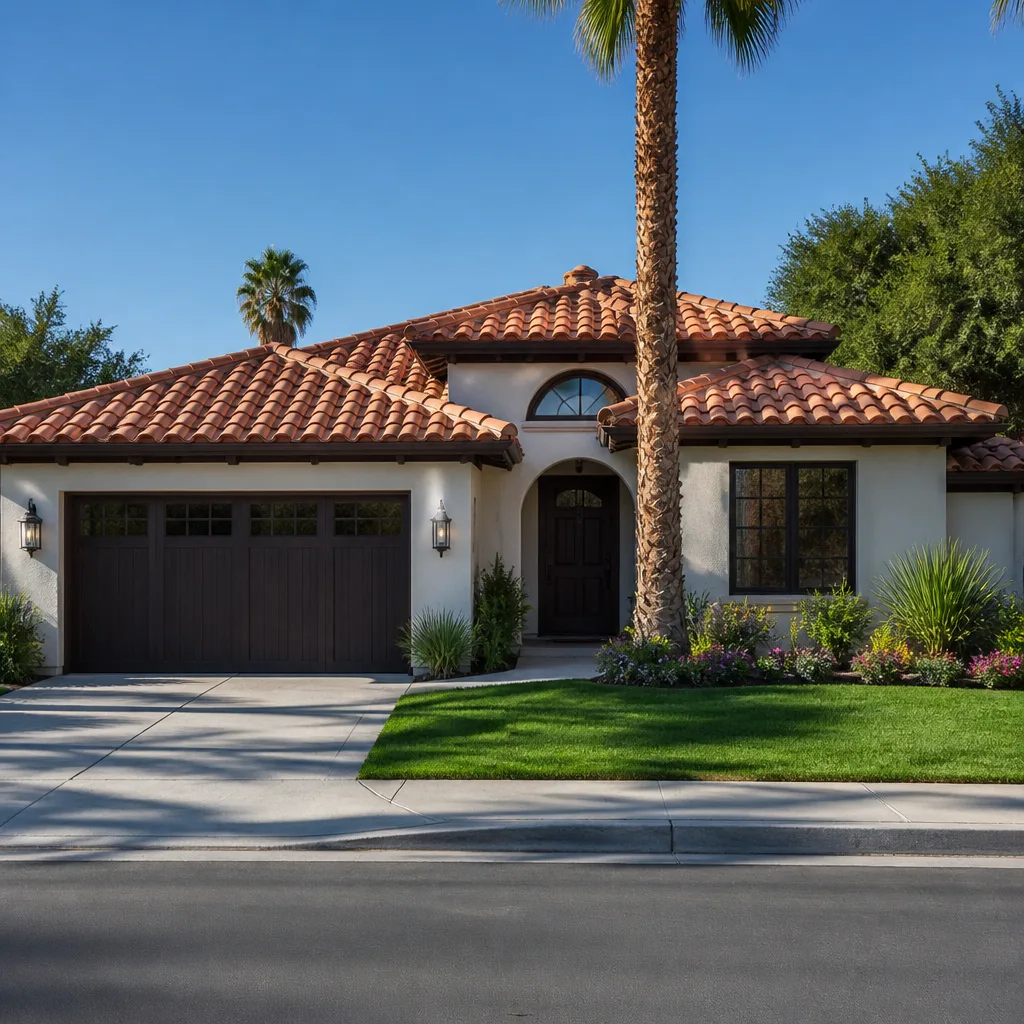
What does each option cost in Allen?
A paver driveway in Allen runs $7,000-$18,000; a concrete driveway – stamped or otherwise – runs $4,500-$12,000. A paver patio lands around $3,500-$11,000. Sealing alone for the concrete option is $250-$700, and it’s a bill you’ll see every couple of years.
That per-year sealing cost is what erodes the stamped concrete savings. Add a re-stamp repair or two over ten years on shifting clay, and the up-front gap narrows or disappears. Because we work with top-tier product brands – Belgard and comparable premium paver lines – our selections are specified for North Texas climate performance, not just what the supplier has in stock. Pricing is upfront, the number you see is the number you pay, and 0% financing for 18 months plus $1,000 off projects over $10,000 makes the paver route realistic for a lot of Allen budgets. Start with the home page to see how this fits our full-scope service.
FAQs
Yes, up front – stamped concrete usually runs 30 to 40 percent less than pavers for the same square footage. But stamped concrete in North Texas needs re-sealing every 2 to 3 years to hold its color, so the lifetime cost gap is much smaller than the first bid suggests. Call (888) 343-9048 for an exact quote on your project – estimates are free.
Yes, mainly because paver color goes through the full depth of each unit while stamped concrete relies on a surface hardener and sealer that UV breaks down. In Allen’s sun, an unsealed stamped finish can turn chalky in about four years; pavers just keep looking like pavers. Call (888) 343-9048 to talk through materials for your lot.
It can be repaired, but not invisibly – the cracked section has to be ground, filled, and re-stamped, and a color match years later is never perfect. A misplaced paver, by contrast, gets lifted and reset in under an hour with no visible mark. For a sense of how we handle both, see our service overview. Call (888) 343-9048 to have it looked at.
Usually yes, and pavers often hold that approval longer. Allen HOA architectural-review boards judge the finished appearance over time, so a faded or patched stamped surface can trigger a compliance letter years later while well-kept pavers keep the approved look. Call (888) 343-9048 and we’ll help you build the submittal.
If you’d rather have it looked at, Groundwork Construction Co. of Allen offers a no-pressure assessment in Allen – we’ll walk the lot, check the grading, and give you a straight recommendation with upfront pricing. Call (888) 343-9048 for a free estimate.
Written by the team at Groundwork Construction Co. of Allen, serving Allen, TX.