Last updated November 18, 2026








Free written scope consultation - allowances, timeline, and change-order rules on paper before a single trade is scheduled
Bathroom Remodeling Troubleshooting: Common Problems and How to Fix Them
Grout cracking in a newly remodeled shower within the first year isn’t a grout problem. It’s almost always a substrate or waterproofing failure that the grout is simply making visible. Fix the grout and ignore the cause, and you’ll be back in the same spot inside 18 months, usually with a soft spot in the framing that wasn’t there the first time. That’s the pattern we’ve watched repeat across Allen bathrooms for years, and it happens because waterproofing is the one step of a remodel nobody gets to see. It’s sealed behind tile before the homeowner walks the finished room. This guide connects the symptoms you can see to the installation failures you never got to watch, room by room, so you can diagnose what’s actually wrong and know whether you’re looking at a warranty call or a new project.
Quick Answer
Most bathroom problems that show up after a remodel trace back to one of four failures: a waterproofing system that was installed wrong or skipped, ventilation that’s undersized or vented into the attic, a wax ring disturbed by new floor height, or a material that wasn’t rated for a wet environment. Grout cracks, efflorescence, musty smells, lifting floor tile, and peeling paint on the wall behind the shower are all symptoms, not causes. The fix starts with finding the source, not with re-caulking over it.
Styles & brands we work with
- Kitchen remodeling
- Bathroom remodeling
- Home additions & ADU
- Roofing
- Windows & doors
- Driveway & pavers
- Fence
Table of Contents
- The Symptom-to-Cause Map: Read Your Bathroom Like a Contractor
- Shower Pan Liner vs. Topical Waterproofing: Which Did You Get, and Has It Failed?
- Cracking Grout and Efflorescence: What Your Tile Is Telling You
- Ventilation Failures That Get Misdiagnosed as Tile Problems
- The Rocking Toilet: Why New Tile Height Breaks Wax Rings
- Lifting Floor Tile and Hollow-Sounding Stone
- Warranty Call or New Project? How to Tell the Difference
- How to Document a Problem So a Contractor Takes It Seriously
The Symptom-to-Cause Map: Read Your Bathroom Like a Contractor
When we walk into a bathroom with a complaint, we’re not looking at the complaint. We’re looking for the pattern behind it. A single crack over a corner bead is one thing. Cracks that follow a straight line along a shower curb are a different animal, and they point to a completely different failure. The map below is how a trained eye sorts it out in about five minutes.
- Grout cracking along a curb, bench, or niche: movement or water intrusion at the substrate, usually a pan that was never pre-sloped or a backer board that swelled.
- White chalky powder (efflorescence) on grout or stone: moisture is migrating through the assembly and depositing minerals on the surface as it dries. The water has to be coming from somewhere behind the tile.
- Musty smell that returns after cleaning: trapped moisture in a wall cavity, under a floor, or in a shower pan that can’t drain. Often paired with no visible leak at all.
- Peeling or bubbling paint on the wall opposite or beside the shower: moisture vapor pushing through drywall from the wet side. This is the classic “wrong side of the wall” tell.
- Floor tile lifting or popping, hollow sound underfoot: a bond failure. Sometimes a thinset problem, sometimes a deflection problem, sometimes water getting under the edge of the tile.
- Toilet rocking or a wobble at the base: the flange height didn’t match the new finished floor, so the wax ring never seated correctly.
None of these are cosmetic. Every one of them is a message from the layer you couldn’t see during construction. In Allen, where slab-on-grade construction is the norm and summer humidity can sit above 60% for weeks, moisture trapped in a wall assembly doesn’t get the dry winter air that would help it escape. That means a small waterproofing defect here tends to announce itself faster than it would in a drier climate. It’s why we treat the map above as a checklist rather than a curiosity.
If you’re still in the planning stage and want to understand how these pieces fit together before demolition starts, our Groundwork Construction Co. of Allen home page lays out the full scope of what we build.
Shower Pan Liner vs. Topical Waterproofing: Which Did You Get, and Has It Failed?
There are two mainstream ways to waterproof a shower, and knowing which one you have changes how you diagnose a leak. The first is a traditional PVC or CPE pan liner: a sheet of waterproof membrane laid under the mortar bed and turned up the walls a few inches, with a clamping drain at the bottom. Water that gets past the tile and grout travels down through the mortar bed to the liner and out the weep holes in the drain. It’s a proven system. It also depends on a pre-sloped pan underneath it. If the pan is flat, water sits on the liner instead of draining, and that standing water becomes the musty smell and the efflorescence.
The second is topical waterproofing: a liquid-applied membrane or a bonded sheet membrane applied directly behind the tile over cement backer board or a foam board. Water never gets past the tile in theory, because the membrane is right there. When it’s installed to spec with proper thickness, seam overlap, and reinforcement at corners, it performs well. When a corner gets a thin coat or a seam gets skipped, the failure shows up in exactly the same spot a failed liner would.
How to guess which system you have
- Look at the drain. A clamping ring with visible weep holes and a thick mortar bed usually means a liner system. A thin, flat drain grate set close to the tile surface often points to topical.
- Check the curb. A liner system has a liner wrapped over the curb under the tile. Topical has membrane or backer board under the tile. You won’t see this from the finished surface, but the contractor’s invoice and photos from the build will tell you.
- Ask for the build photos. Any reputable installer photographs the waterproofing before tile goes down. That record is the single most useful diagnostic tool you’ll ever own.
Here’s the part that matters for troubleshooting: a liner failure and a topical failure produce almost identical symptoms. Efflorescence, a musty smell, grout cracking at the curb, and a soft spot at the base of the wall are the shared tells. The difference is in the fix. A failed topical membrane can sometimes be repaired at the failed seam by removing a limited field of tile. A failed liner usually means the pan comes out, because you can’t reach it any other way. That’s why, when we tear into a shower in Allen, we test for moisture in the framing before we commit to a repair approach.
If you’re planning a full bathroom build, the same installation discipline applies to the rest of the home. Our Home Additions & ADU in Allen work uses the same waterproofing standards, because a wet room added onto a house deserves the same care as the original one.
Cracking Grout and Efflorescence: What Your Tile Is Telling You
Grout is not waterproof. It’s a wear surface, and it’s slightly permeable. That means every crack in a shower floor is an open door for water to get behind the tile. Once water is behind the tile, three things happen: the thinset softens over time, the substrate (drywall or cement board) starts to move or swell, and minerals in the water migrate to the surface as the assembly dries, leaving the white crusty deposits called efflorescence.
So when we see repeated grout cracking in the same place, we’re not looking for a better grout. We’re looking for movement or moisture. The two questions are: is the substrate moving, and is water getting in?
- Cracks at the inside corners of the shower: the corners are where two planes of substrate meet, and they move independently. Grout in a corner is a bet that they won’t. Caulk is the correct joint, in a flexible 100% silicone or a high-quality urethane, not a rigid grout.
- Cracks along the top of the curb: the curb takes foot traffic, and if the liner under it wasn’t pre-sloped or if the backer board wasn’t attached correctly, the curb flexes and the grout cracks. This one almost always means a redo of the curb at minimum.
- Cracks in a straight line across a large floor: often a crack-isolation (uncoupling) membrane was skipped under the tile. On a slab, that’s a matter of time as the slab moves with the seasons.
- Efflorescence on the lower courses of shower tile: this is water exiting through the tile face. It is nearly always a sign the pan can’t drain or the waterproofing has a defect.
What you should not do: scrape the grout and re-grout the same crack, or paint a “grout sealer” over the top. Sealing slows the rate of water intrusion but doesn’t fix a leak behind the tile. In our experience, the grout-repair loop runs about 12 to 18 months before the problem surfaces as something harder to hide, often a soft plate of drywall on the other side of the wall or a stain on the ceiling below. If you’re already in that loop, it’s time for a moisture assessment, not another tube of sealer.
Ventilation Failures That Get Misdiagnosed as Tile Problems
The most common bathroom problem in Allen that gets blamed on tile is actually a fan. An undersized exhaust fan, a fan that vents into the attic instead of outside, or a fan that runs for two minutes after a shower all leave moisture in the air. That moisture condenses on the coolest surface in the room, which is usually the exterior wall or the wall behind the shower, and it starts working on paint, drywall, and the base of the tile wall.
Symptoms that point to a ventilation problem
- Paint peeling or bubbling on a wall that isn’t inside the shower, especially exterior walls.
- Mold appearing in the corners of the ceiling or in the grout lines near the ceiling, not at the shower pan.
- A musty smell that’s stronger in the morning and fades by afternoon.
- Fogged mirror that stays fogged long after the shower ends.
- Rust on a fan grille, or a fan that sounds like it’s running but moves almost no air.
Here’s the test a real troubleshooting visit includes: hold a piece of toilet paper against the fan’s intake grille. If it doesn’t hold, the fan isn’t moving enough air. Then look at the fan’s duct in the attic. If you find it ending at a sheet of plywood or dangling in the insulation, that’s the whole problem: the fan is running, but it’s blowing the moisture right back into the thermal envelope. This is a frequent find in Allen remodels where a previous owner added a bathroom fan without the ductwork to go with it.
The fix is usually straightforward: a correctly sized fan (the Home Ventilating Institute recommends a certain CFM based on square footage, and a bathroom under 100 square feet generally needs at least 50 CFM, with more for a shower with no door), ducted through the roof or a gable wall, and a timer switch so the fan runs 20 to 30 minutes after the shower. This is a code and building-envelope issue, not a cosmetic one, and it’s worth having it corrected properly. The consequence of skipping it is a mold problem that comes back no matter how many times you have the tile cleaned.
When a bathroom shares a wall with a garage or an addition, the moisture math changes. That’s one reason we walk the full envelope on our Home Additions & ADU in Allen projects before the finishes go in.
The Rocking Toilet: Why New Tile Height Breaks Wax Rings
A toilet that rocks or leaks at the base after a bathroom remodel is one of the most avoidable problems in the trade, and it’s almost always a height issue. A wax ring is designed to fill a specific vertical gap between the toilet horn and the closet flange. When you add a layer of cement board and tile over a previously bare floor, the finished floor rises a half inch or more. Now that same wax ring is either compressed too thin to seal, or the flange sits low enough that the wax doesn’t reach it.
What often happens next: someone sets the toilet on the new tile without shimming, the toilet rocks, and a handyman’s “fix” is to run a bead of caulk around the base. That caulk hides the problem for a while. It also prevents you from seeing the leak when the wax seal finally gives way, and in the meantime it’s eating the subfloor.
The correct fix, in order
- Pull the toilet and inspect the flange. If the flange is more than a quarter inch below the finished tile, you need an extension ring or a flange extender so the wax ring has proper material to seal against.
- Replace the wax ring. Wax rings are single-use. Any time the toilet comes off the flange, the ring gets replaced. A wax-free rubber seal is also an acceptable upgrade on an uneven flange.
- Confirm the toilet sits flat. Set it on the new floor with the mounting bolts loose and check for rock before you tighten anything. If it rocks, shim it correctly with plastic or composite shims, not wood.
- Caulk the base only at the front two-thirds. Leave the back open as a visual cue if a leak ever starts. That’s the standard a good plumber will leave behind.
In our Allen projects we check the flange height on every bathroom before tile goes down, because the alternative is cutting the caulk open six months later when a homeowner notices a soft spot in the floor around the toilet. And if a leak has already soaked a subfloor or a slab edge, the repair has to include the framing, not just a new ring.
Lifting Floor Tile and Hollow-Sounding Stone
Floor tile that lifts after a remodel is a different animal from shower tile, and the causes split into three groups. First is a bond failure: thinset that skinned over before the tile was set, or a modified thinset used under a porcelain that wanted an unmodified, or a tile set over a floor that wasn’t clean. Second is deflection: the subfloor flexes underfoot, and tile can only take so much of that. Third is water, usually migrating up from below or in from a shower, softening the thinset until the bond gives.
The hollow-sound test is your best diagnostic at home. Tap the tile with a hard plastic object or the handle of a screwdriver. A well-bonded tile sounds solid. A hollow tone means the tile is debonded from the thinset under it, and that void will only grow.
Which cause applies depends on where the lifting is happening. In a bathroom, lifting near the shower threshold is almost always water. Lifting in the field of the room with cracks traveling along the joints is almost always deflection. Lifting at the perimeter is often a substrate movement issue, and in Allen’s expansive clay soils, slab movement is something we see more than most. Clay swells when it’s wet and shrinks when it’s dry, and that cycle puts real strain on tile bonded directly to a slab. A proper repair often includes a crack-isolation membrane under the new tile, which is the same thing we specify under any slab tile installation in Allen for exactly that reason.
If the lifting is confined to a handful of tiles and the cause is a localized bond failure, a targeted replacement is reasonable. If it’s more than a small area or the cause is deflection or water, the correct fix is a tear-out to the substrate. Anything less is a patch, and patches on a failing floor tend to fail in a season.
Warranty Call or New Project? How to Tell the Difference
The hardest part for many homeowners is knowing whether a problem belongs in a warranty conversation or represents a genuinely new project. The distinction usually comes down to cause. If the failure traces to a component that was installed in the last remodel and it failed within the workmanship warranty window, it’s a warranty call. If the cause is something the remodel didn’t touch, or it’s a component that aged out, or the current failure is a downstream consequence of a separate problem like a fan that vents into the attic, it’s a new repair.
Warranty-call territory
- Grout cracking along a curb or a niche within the first 12 to 24 months of the remodel, where the seam was supposed to be sealed with caulk.
- A toilet leak at the base that traces to a flange height the remodel created.
- Tile lifting in a field where the new substrate was installed by the same contractor.
- A shower that holds standing water on the pan, if the new pan was built incorrectly.
New-project territory
- Mold behind a wall the remodel didn’t open, usually driven by an undersized or improperly ducted fan.
- Tile cracking after a decade of service on a slab, tied to soil movement.
- A failed ten-year-old wax ring in a bathroom that hasn’t been touched.
- Peeling paint on a bathroom wall that’s fed by a moisture problem in a different part of the house.
Where the line gets blurry is when a remodel-era installation fails in a new-project kind of way. That’s exactly the kind of conversation we’d rather have with a homeowner than let them sit with an unanswered problem, and it’s why our work is covered by the 730-Day Done Right Promise: if it’s not done right, we make it right. If you’re not sure which side of the line you’re on, it’s worth a call to get a straight answer before you spend money on the wrong repair.
If the bathroom was part of a larger build, the same warranty thinking applies to the surrounding structure. Our Fence Installation in Allen work carries the same coverage, because the envelope of a home isn’t just the walls.
How to Document a Problem So a Contractor Takes It Seriously
A vague complaint gets a vague visit. A documented one gets a precise repair. The difference is in what you hand the contractor when they walk in. Here’s how to make the odds go your way.
- Photograph the symptom, wide and close. Take a wide shot that shows the whole wall or floor, then a close-up. If there’s cracking, put a coin or a tape measure next to it for scale.
- Log when it happens. Does the musty smell get worse in the morning, after the shower, or after rain? Does the toilet rock only when someone sits on the front edge? Timing tells a contractor more than the symptom does.
- Note the history of the remodel. When it was done, what was replaced, and whether you have photos from the build. The photos of the waterproofing stage are worth more than anything else you can bring.
- Go to the source, not the surface. Don’t re-caulk the shower before the contractor arrives. A clean, untouched surface is more diagnostic than a caulk line that hides the failure.
- Ask for a moisture reading, not a guess. A qualified contractor will put a moisture meter on the wall or floor before giving an opinion. If they don’t, ask why.
In Allen, we’ve found that the homeowners who document like this get a faster, more accurate diagnosis, and the repairs tend to stay fixed because the actual cause got treated. A clear read on the source means the fix happens once.
Common Mistakes to Avoid
- Re-grouting a cracked shower corner without finding the cause. The crack is a symptom of movement or moisture. Capping it with grout hides the problem and sets you up for a second repair in 12 to 18 months.
- Running a bead of caulk around a rocking toilet base. It hides a failing wax ring and lets the subfloor soak. In Allen’s slab homes, that can mean a repair underneath the tile, not just at the flange.
- Assuming the fan is working because you can hear it. A duct that ends in the attic, or a fan rated for a closet, still makes noise. The toilet-paper test and a peek at the attic in Allen homes turn up venting failures more often than you’d think.
- Ignoring a low spot in the shower pan. Standing water on the pan surface is a sign of a flat pan or clogged weep holes. Left alone, it feeds the efflorescence and the smell, and it usually means a redo of the pan.
- Thinking that sealing grout is the same as waterproofing. Sealer slows the rate of moisture through the grout. It doesn’t fix a failed membrane behind the tile.
- Letting new tile height go untested against the closet flange. If the plumber and the tile setter don’t coordinate, you find out about the height problem by stepping on the floor and feeling it move.
- Hiring a repair on symptoms alone. Without a moisture reading and a look at the build record, you’ll pay for the same fix twice. A proper diagnosis is worth more than any one repair.
See the difference
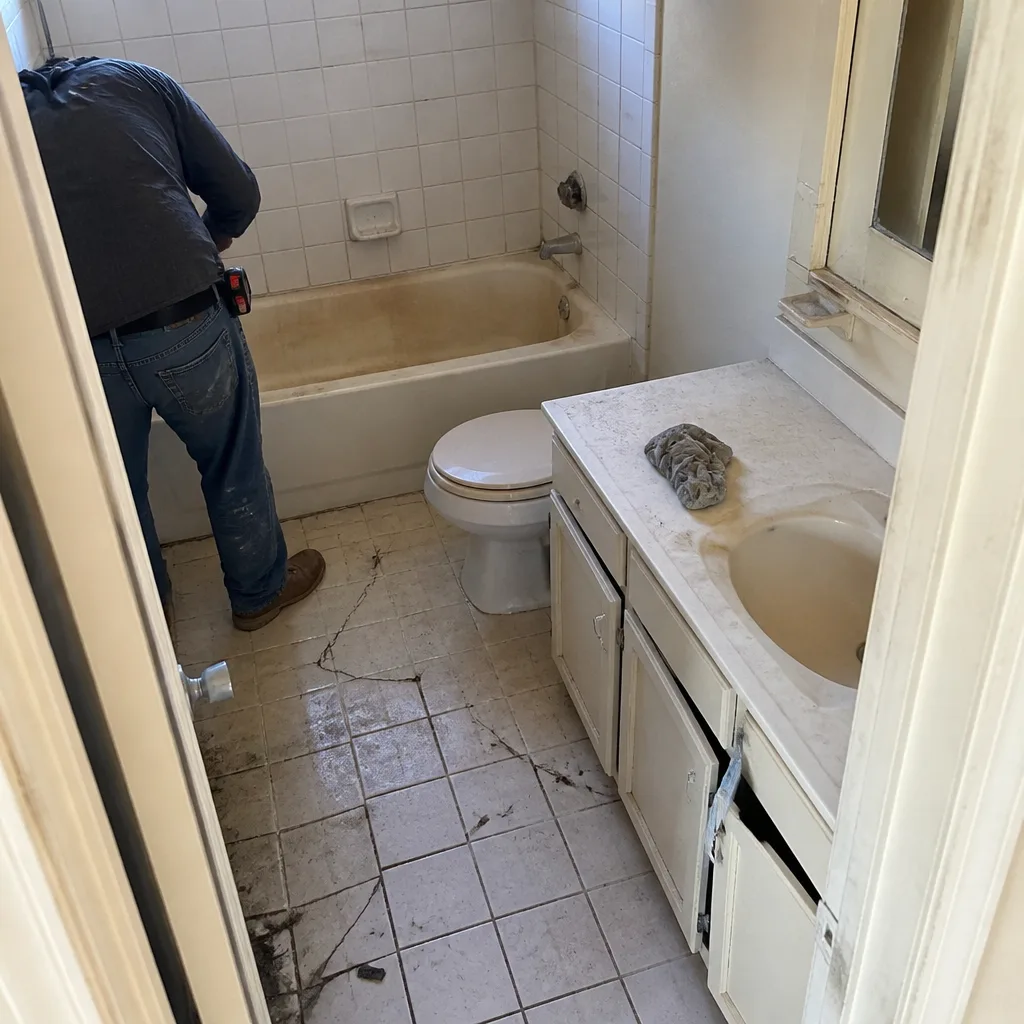 Before
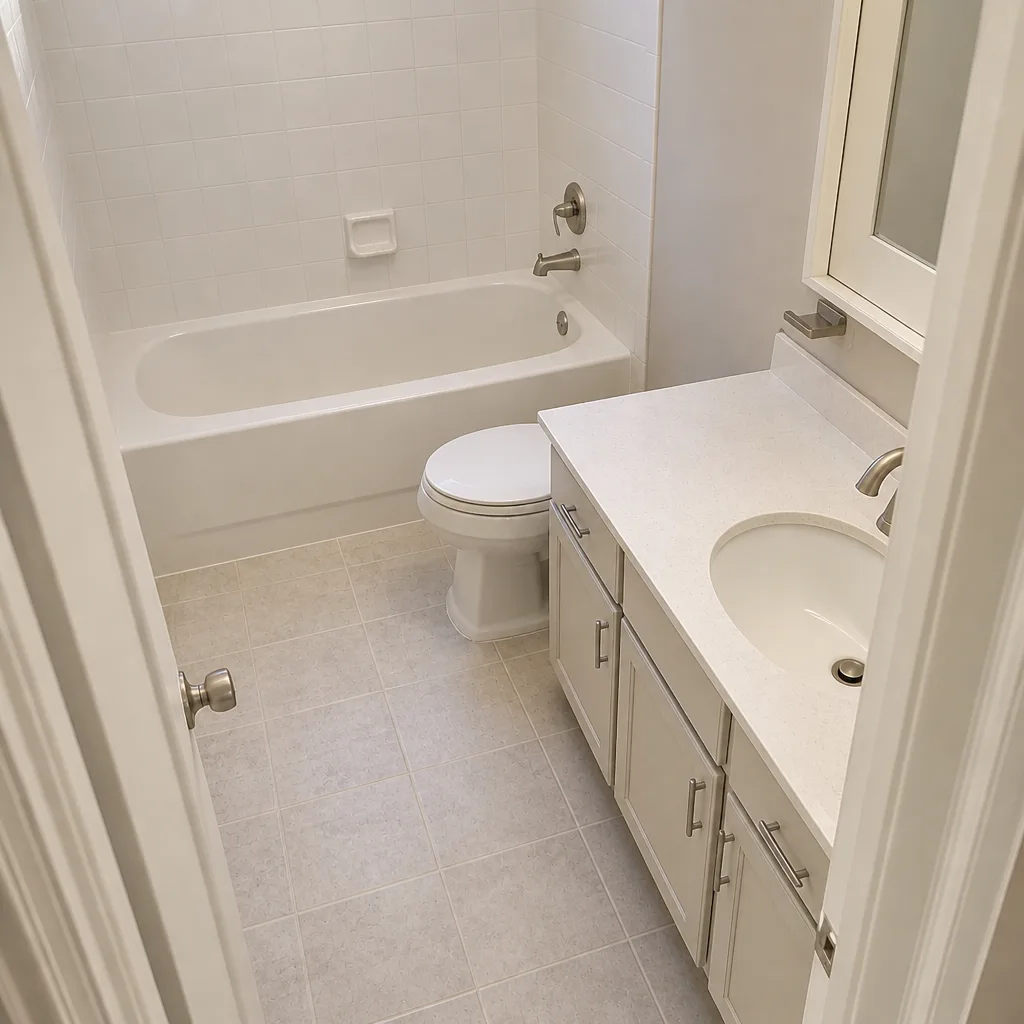 After
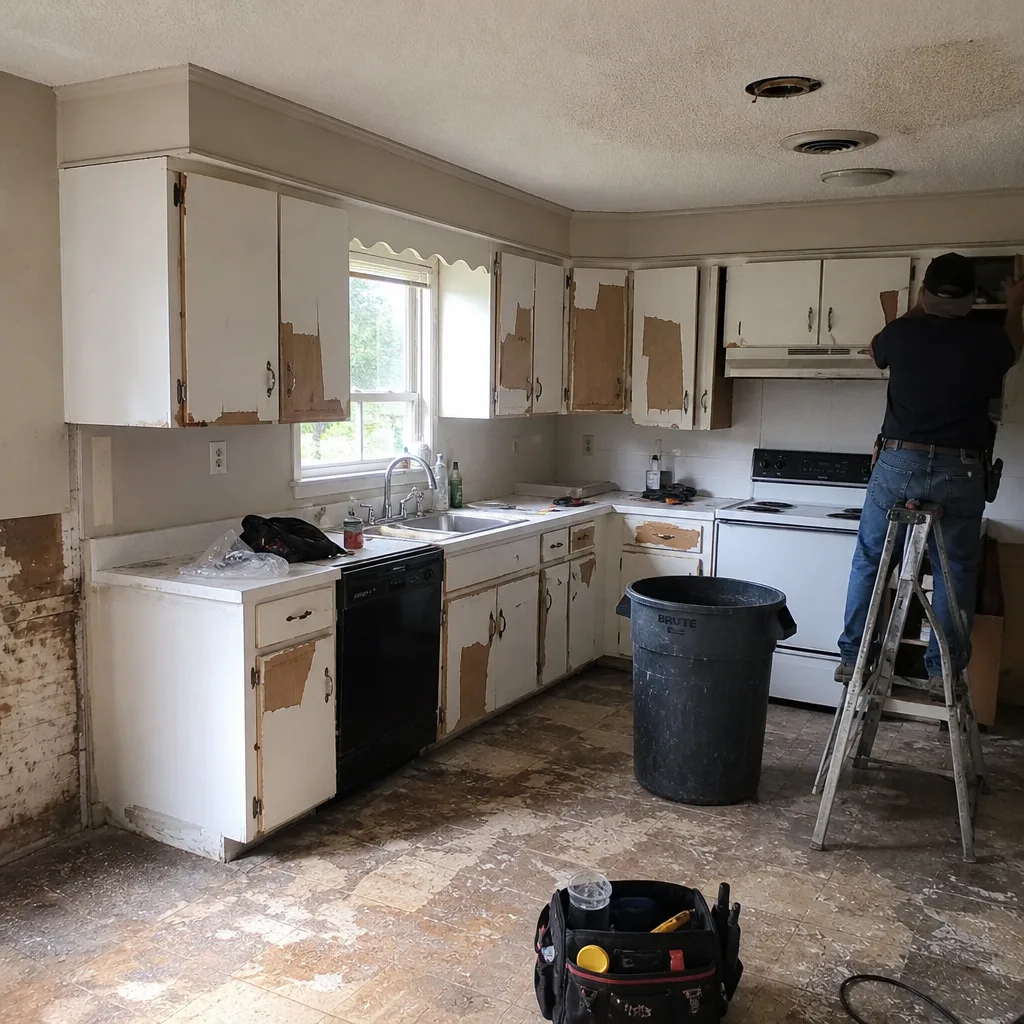 Before
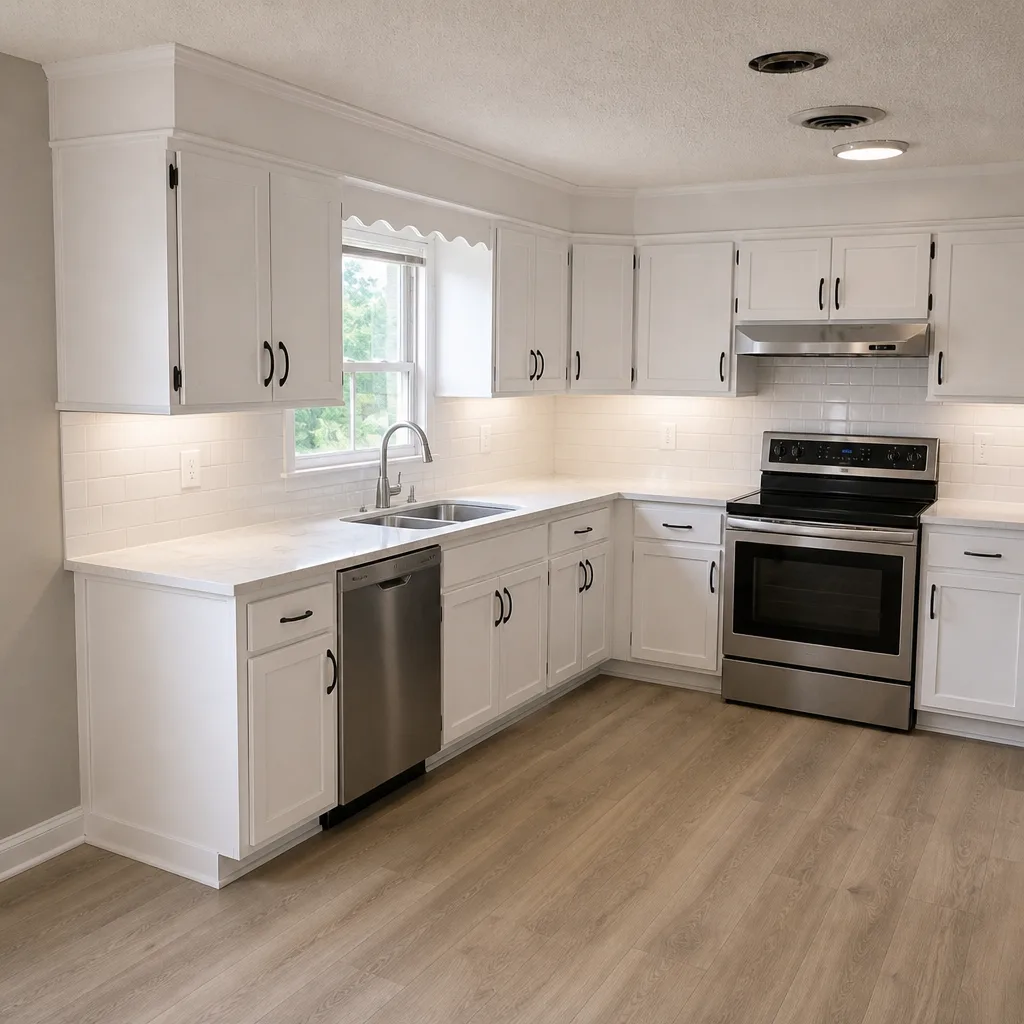 After
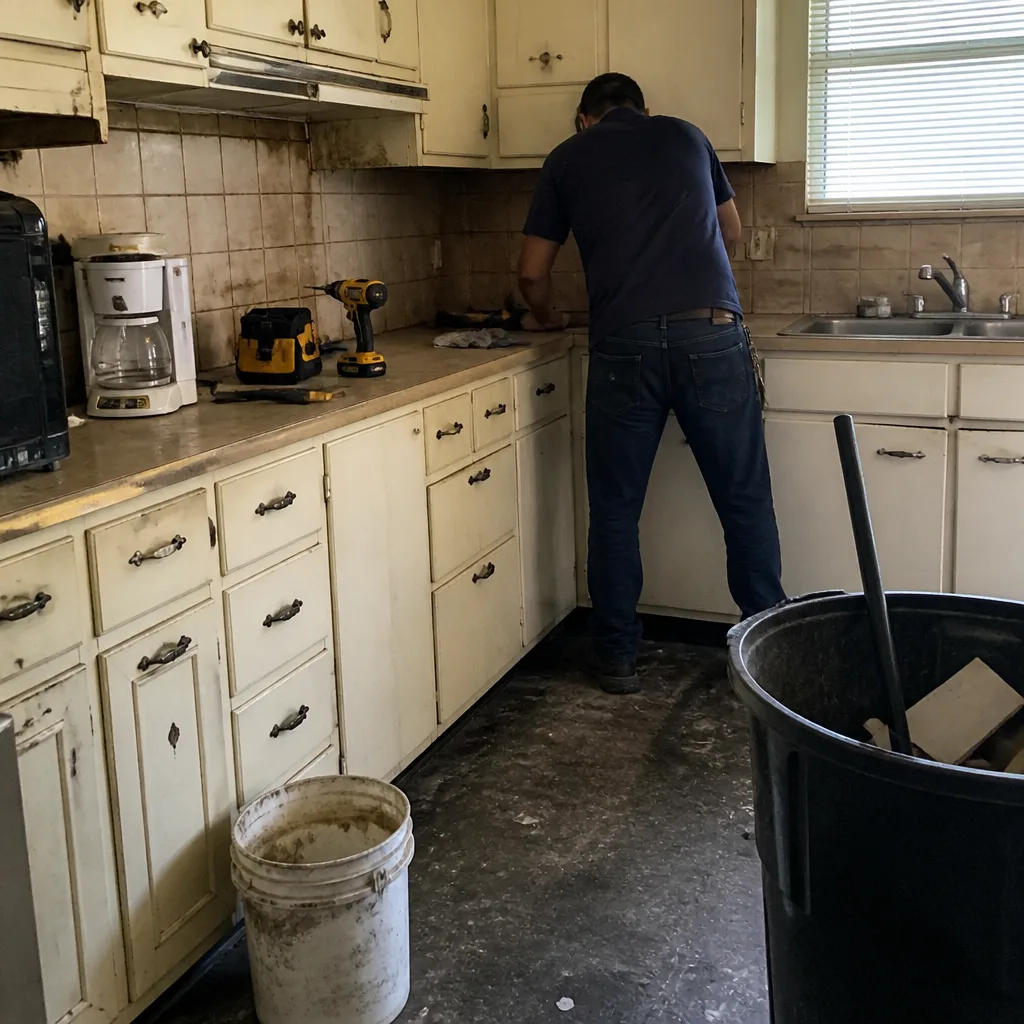 Before
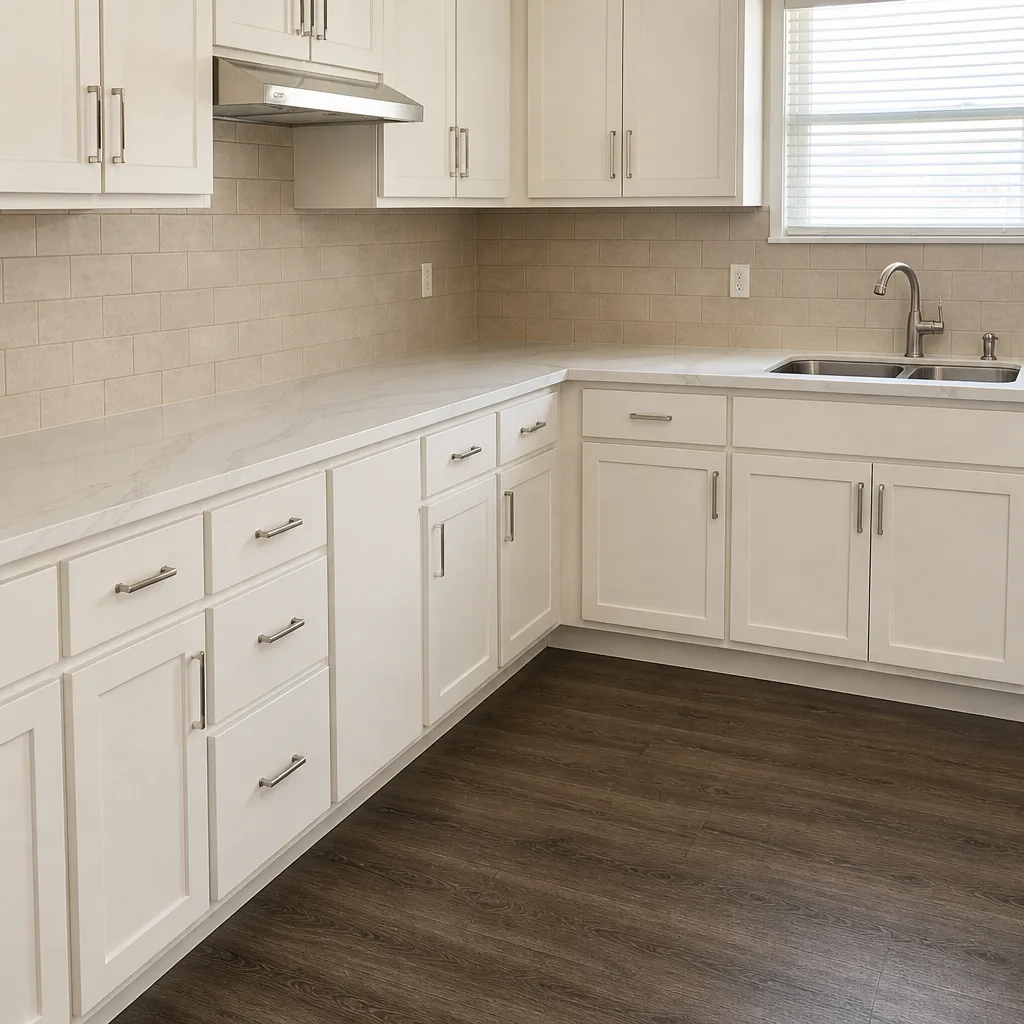 After
When to Call a Professional
Call a pro when the symptom is water running behind a wall, when there’s a musty smell you can’t trace, when a shower pan holds water, or when a toilet leak has touched the subfloor. Those are the four that escalate. Grout cracks along a corner might be a small caulk repair or the first sign of a pan failure, and a professional can tell you which within an hour. Same for a fan that isn’t moving air, or a tile floor that’s hollow in more than a couple of spots. In Allen, we see these behind finished tile and inside closed walls, so the work is a discovery as much as a repair, and pretending otherwise leads to surprise costs. Groundwork Construction Co. of Allen offers free estimates in Allen. Call (888) 343-9048 and a live person answers, 24 hours a day, seven days a week, so you’re not leaving a message into a void.
Our technicians have up to 12 years of experience diagnosing and repairing the installation failures covered in this guide, and every project is backed by the 730-Day Done Right Promise. When we quote a repair, it’s upfront pricing, no surprises. Background-checked, uniformed technicians walk the job with you before any work begins.
The same care applies to the rest of the property. If a failing walkway or paver surface is part of the picture, our Driveway & Pavers in Allen work uses the same waterproofing and drainage standards. And our Fence Installation in Allen projects are graded the same way, because a remodel that fails in the envelope usually fails next in the exterior.
Frequently Asked Questions
Usually yes, if it appears within the first year and traces to a seam that should have been caulked or a substrate that’s moving. Document it with photos, note when the cracks first appeared, and contact the contractor who did the work. In Allen, if the original contractor is unresponsive, a repair estimate from a second contractor is worth having before you authorize anything. Call (888) 343-9048 for a free inspection and we’ll tell you what we see.
Three signs are reliable: efflorescence on the lower tile, a musty smell that returns after cleaning, and a soft or discolored patch of drywall on the other side of the shower wall. Any of those alone is worth a moisture assessment. Together, they almost always mean a waterproofing failure. A moisture meter on the wall in five minutes gives you an answer a visual inspection can’t.
That’s usually a ventilation problem, not a tile problem. The exhaust fan is undersized or venting into the attic, so moisture sits in the wall cavity and pushes through the drywall. Check the duct first, then the fan’s rated CFM, then the timer. That order saves money on unnecessary tile work. Call (888) 343-9048 if you’d like a technician to test the fan and look for a duct termination in the attic.
No. The caulk hides a wax ring that isn’t sealing, and in Allen’s slab homes that means the subfloor around the flange is at risk. The correct fix is a flange extension, a new wax ring, and shimming the toilet to sit flat. The caulk should only run around the front two-thirds of the base as a visual cue.
A wax ring and flange fix is a single visit. A localized regrout or caulk repair is one to two days. A shower pan repair or a tile tear-out for a waterproofing failure runs four to eight working days depending on size and what’s found behind the tile. A full bathroom remodel in Allen typically runs two to four weeks, but we’ll give you a written scope before we start.
Sometimes yes, because the cause is in the assembly and not just the surface. Grout repair runs a few hundred dollars; a shower pan rebuild can run several thousand because it’s demolition and re-tile. The preventive answer is to diagnose once, not patch repeatedly. For a written line-item quote on your Allen bathroom, call (888) 343-9048. Estimates are free, and our upfront pricing means the number you see is the number you pay.
The Bottom Line
Almost every bathroom remodel problem that shows up after the job traces back to one hidden layer: the waterproofing, the ventilation, or the flange height. Grout cracks, efflorescence, musty smells, peeling paint on the wrong wall, and rocking toilets are the surface signals. Read them as symptoms and you’ll fix the cause. Patch the surface and you’ll be back in the same spot inside two years. Document the problem, ask for a moisture reading, and know whether you’re in warranty territory or looking at a new repair. If you’re in Allen and ready to stop guessing, Groundwork Construction Co. of Allen is here to help. Call (888) 343-9048 for a free estimate and a straight read on what’s actually going on. Our brand partners across every trade, from KraftMaid and Kohler in bathroom finishes to Therma-Tru on the doors, are part of the reason our work is built to last and backed in writing.
Written by the team at Groundwork Construction Co. of Allen.