Last updated November 18, 2026




Free written scope consultation - allowances, timeline, and change-order rules on paper before a single trade is scheduled
Fence Installation Troubleshooting: Common Problems and How to Fix Them
A leaning fence in Allen is almost never a wind damage problem. It’s a post depth or concrete anchoring problem that was always going to fail, and North Texas wind just revealed it on schedule. We’ve pulled posts in Allen that looked like they’d been knocked over by a storm and found them set 14 inches deep in a clay hole with no concrete collar at all. The wind didn’t break that fence. The installation did. This guide teaches you to diagnose which part of the system actually failed before you spend a dollar on the wrong fix, because a leaning post and a rotting rail can look identical from across the yard and cost wildly different amounts to correct.
Quick Answer
Most fence failures are post installation problems, not material defects: posts set too shallow, anchored without proper concrete, or placed in Allen’s expansive clay without accounting for how that soil moves. Diagnose by checking post movement at the base, probing for rot below grade, and measuring board spacing before assuming you need a full rebuild. In-place correction is often possible if the post is sound below grade; if it’s loose or rotted at the base, extraction and reset is the only fix that lasts.
Styles & brands we work with
- Kitchen remodeling
- Bathroom remodeling
- Home additions & ADU
- Roofing
- Windows & doors
- Driveway & pavers
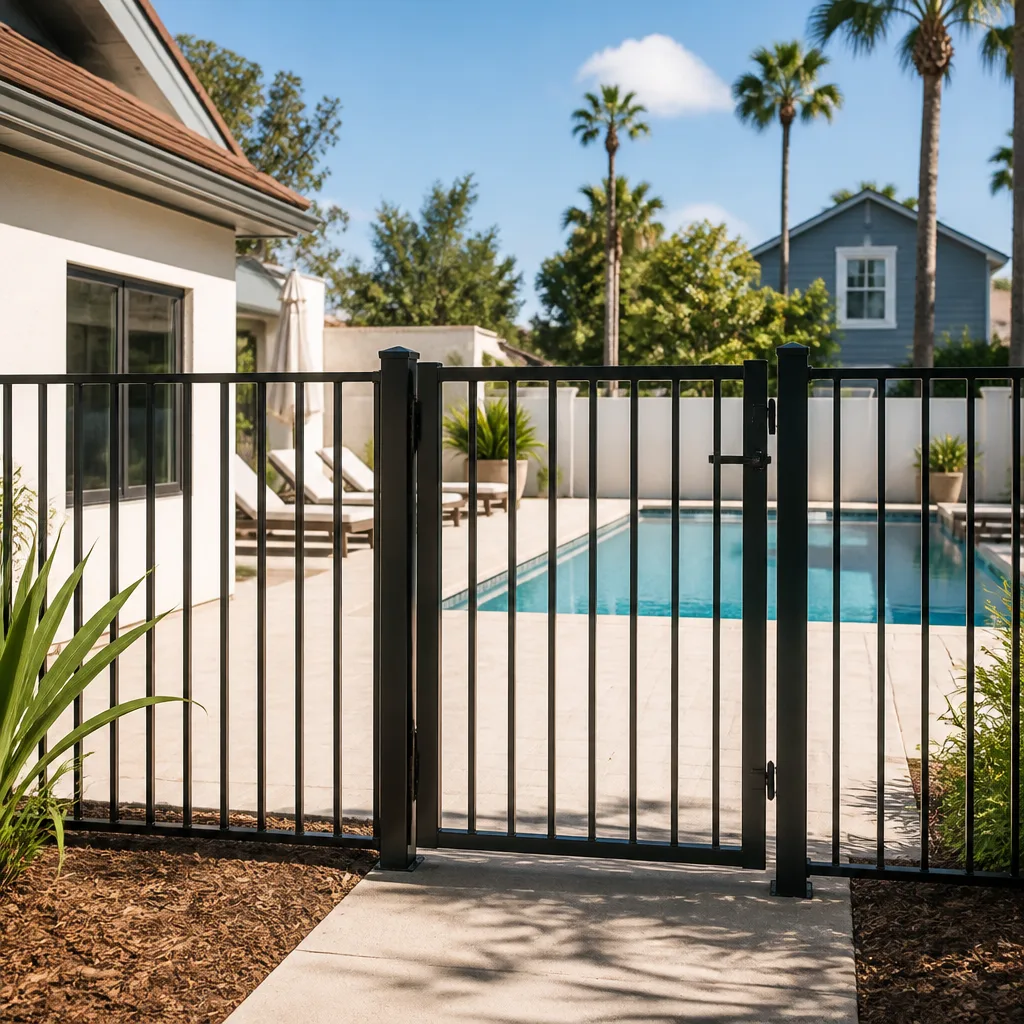
- Fence
Table of Contents
- Why Is My Fence Post Leaning, and Can It Be Fixed in Place?
- Clay Soil Heaving in Allen: When the Ground Pushes Up, Not Down
- Gate Alignment Problems: Sagging Gate or Post Movement?
- Surface Weathering vs. Structural Rot: How to Tell the Difference
- Board Warping and Separation: Installation Spacing vs. Normal Wood Movement
- Cracking at the Concrete Collar and What It Signals
- Repair or Rebuild? The Decision Framework
- What Allen’s Climate Does to a Fence Over Time
Why Is My Fence Post Leaning, and Can It Be Fixed in Place?
Whether a leaning post can be corrected in place comes down to one question: is the post still solid below grade, and is there concrete anchoring it, or is the whole thing loose in a clay hole? If the post is sound and the concrete collar is intact but tilted, you can often correct it in place by excavating one side, straightening with a brace, and re-packing the soil or adding concrete. If the post wobbles when you push it at knee height, the base is compromised and no amount of bracing will hold it through a North Texas storm season.
Here’s how we diagnose a leaning post in Allen:
- Push test at the base. Grip the post about two feet off the ground and push firmly. Any visible movement at the soil line means the anchor failed, not just the wood above it.
- Dig down six to eight inches on the leaning side. Look for concrete. A properly anchored post has a concrete collar around the base. A bare clay hole with a loose post is a failed installation.
- Probe the wood below grade. Push a screwdriver into the post where it meets soil. If it sinks easily or comes out with dark, wet wood, you have structural rot and the post must come out.
- Check the neighbors. A single leaning post surrounded by straight ones usually means that one failed early. A whole fence line leaning the same direction points to a shared installation problem, often shallow depth across the run.
In our experience across Allen, most in-place corrections we see attempted fail within two seasons because the underlying anchor problem was never solved. If the concrete was never there, straightening the post just delays the next lean. When we install a fence, we set posts at a depth and anchor spec that accounts for our clay, and we back the work with the 730-Day Done Right Promise, so a lean that shows up after we leave gets fixed on us. If you’re weighing a repair against a new run, our Fence Installation in Allen page lays out what a proper build includes.
Clay Soil Heaving in Allen: When the Ground Pushes Up, Not Down
Here’s the counterintuitive part most homeowners miss: a post that looks like it’s settling is often being pushed upward, not sinking. Allen sits on expansive clay that swells when wet and shrinks when dry. During a wet spring, that clay can lift a shallow-set post an inch or more, and when it dries out the post stays right where the ground left it. What you see as “settling” is the ground heaving, and it happens on a seasonal rhythm that fools a lot of people into replacing perfectly sound wood.
Heaving leaves specific fingerprints:
- The post sits higher than its neighbors. Measure from a string line pulled tight across the run. A post riding high is being pushed up.
- The concrete collar is exposed. If you can see more than a few inches of concrete above the soil, the ground dropped or the post rose. Either way the anchor is being worked loose.
- It happens after heavy rain. Watch the fence through a wet stretch in April and May. Heaving shows up then and eases as the clay dries.
- Rails pull away or push in. As one post moves and its neighbors don’t, the rails attached to it flex and the fasteners start to work.
The fix for heaving is depth and drainage, not extra concrete. A post set below the active clay layer stays put regardless of how the surface soil moves. Shallow posts ride the clay up and down like a boat on a tide. When we build in Allen, we set posts deep enough to get below the seasonal movement zone and we manage water at the base so the clay doesn’t get a chance to swell against the post. If your whole fence line is rising and falling with the seasons, that’s an installation depth issue, and it’s worth a professional look before you spend money patching individual posts. A related problem shows up on hardscape, where the same clay heaves pavers and slabs; our Driveway & Pavers in Allen page covers how we handle it there.
Gate Alignment Problems: Sagging Gate or Post Movement?
A gate that drags, sticks, or won’t latch looks identical whether the gate itself is sagging or the post it hangs from has moved. From across the yard you can’t tell. Diagnose it in two minutes with a level and a tape measure, and you’ll know which fix you actually need.
- Check the hinge post for movement. Open the gate and push the hinge post firmly. If it moves, the post is the problem and adjusting the gate won’t fix anything.
- Check the post for plumb. Hold a level against the hinge post on two faces. A post that’s out of plumb by more than a half inch over its height has moved.
- Check the gate for square. Measure corner to corner diagonally. If the two measurements differ by more than half an inch, the gate frame itself has racked and sagged.
- Check the latch side. If the latch post has moved but the hinge post is solid, you have a single-post problem. If both moved, the whole gate assembly has shifted.
A sagging gate on a sound post is usually a bracing or hinge problem, and it’s a straightforward fix. A gate that’s out of alignment because a post moved is a post problem wearing a gate costume, and adjusting the hinges on a moving post just buys you a few weeks. Allen gates take extra abuse because our wind gusts grab a wide gate like a sail, and that load transfers straight into the hinge post. If that post is shallow, the gate will find out. We size and brace gate posts for wind load, not just for the weight of the gate, and we install gates as part of the same build spec as the rest of the fence so nothing is underbuilt. For bigger property changes where fence and structure planning overlap, our Home Additions & ADU in Allen team coordinates the whole project.
Surface Weathering vs. Structural Rot: How to Tell the Difference
Every wood fence in Allen greys and weathers. That’s not rot, and it’s not a reason to replace boards. Structural rot is a different animal, and the difference matters because replacing weathered boards is cosmetic while ignoring structural rot below grade means the post is quietly failing while the fence looks fine above ground.
Use this test to separate the two:
- The screwdriver probe. Push a screwdriver into the wood at the soil line. Surface weathering resists; structural rot gives way and the wood feels soft or spongy.
- Look at the color and texture. Weathered wood is grey and dry with a tight grain. Rot is dark, crumbly, and often holds moisture or shows white fungal growth.
- Check below the soil line. This is where the real answer lives. A post can look solid six inches up and be half rotted at grade, because that’s where water sits and oxygen feeds the decay.
- Press the base with your thumb. If your thumb sinks into the wood at grade level, the post has lost structural integrity and needs to come out.
The failure point in almost every rotted fence post is the soil line, the transition zone where wood meets wet earth and air. Posts that were set with a concrete collar that sits proud of the soil trap water at the joint and rot faster than posts set flush. Our clay makes this worse because water pools against the post during wet stretches and the clay holds it there. When we set posts, we detail the base so water sheds away rather than sitting against the wood. If you’re finding rot on several posts through a run, that’s not surface weathering, it’s a base detail problem, and it’s worth having someone assess whether the whole run was built the same way.
Board Warping and Separation: Installation Spacing vs. Normal Wood Movement
Wood moves. It swells in humidity and shrinks in dry heat, and here in Allen that swing happens across a single season. Some board movement is normal. But there’s a pattern that tells you the boards were spaced wrong at installation, and it shows up as wide, uneven gaps or boards that cup and twist toward each other while their neighbors sit flat.
Here’s how to read the pattern:
- Normal movement: Gaps open and close slightly over the year, boards cup gently, and nothing touches or binds. The fence still lines up.
- Improper spacing at install: Boards were butted tight against each other. When they swell, they push and buckle; when they shrink, you get gaps wide enough to see through in a run that should be private.
- Wild grain installation: Boards installed with the grain facing different directions cup inconsistently, so the run looks wavy even on a straight frame.
- Over-fastened boards: Two tight fasteners top and bottom with no room to move cause the board to split around the fastener as it swells.
Boards butted tight are the most common spacing mistake we correct in Allen. A correctly spaced board run gives the wood room to move, and you won’t see the seesaw of gaps opening in summer and buckling in the wet season. If a run was installed tight, the fix is re-spacing or replacing the affected boards rather than living with the gap pattern. If the whole fence was installed that way, it’s an installation problem across the run, not a random board defect. If you’re rebuilding and want a material that doesn’t move like wood, we work in brands like James Hardie and Belgard for exterior projects and set the spec to match the exposure.
Cracking at the Concrete Collar and What It Signals
A cracked concrete collar at the base of a post doesn’t always mean failure, but it’s telling you something. Small hairline cracks are normal as concrete cures and as the clay moves against it. Wide cracks, a collar that’s separated from the post, or concrete that’s tipped to one side are signals that the anchor has lost its grip and the post is working loose underneath.
A collar fails in one of three ways:
- It cracked during cure. Mix too wet, or poured against wet clay, and the collar cures weak and cracks early. The post may still hold, but the anchor has less strength than it should.
- It broke from post movement. If the post starts to rock, the concrete collar cracks around it because the wood is moving inside a rigid shape. That cracking is a symptom of the post moving, not the cause.
- It separated from the soil. When the clay shrinks in a dry spell, the collar can lose contact with the surrounding soil and the whole anchor loosens.
The collar should sit below the soil line where moisture and temperature stay stable, not proud of it where it traps water. When we build in Allen, we set collars at the right depth for our clay and manage the soil contact so the anchor stays locked. A collar sitting high and cracked is a detail worth having checked, because a post that loses its collar in a spring storm is a fence section waiting to go down. For ongoing exterior upkeep on the home itself, our Groundwork Construction Co. of Allen home page covers the trades we handle.
Repair or Rebuild? The Decision Framework
Homeowners in Allen ask us all the time whether their fence is worth repairing or should be replaced, and the honest answer depends on how many posts have failed and whether the frame underneath is sound. Repair makes sense when the failure is isolated. Rebuild makes sense when the installation itself was wrong across the run, because patching one post after another gets expensive fast.
Run this check:
- One or two failed posts, sound frame, sound boards: Repair. Extract and reset the failed posts, check the rails they carry, and move on.
- Three or more failed posts in a single run: Lean toward rebuild. That pattern points to a systemic installation problem, and you’ll be back for the next one in six months.
- Rot in the rails or stringers where they meet the posts: This is structural and usually means a section rebuild, even if the posts look fine.
- Boards sound, posts sound, only gate or alignment off: Repair. This is the smallest fix of all.
- Widespread board warping and tight-spaced boards across the run: Rebuild the section. The boards are going to keep fighting the frame.
One rule we hold to: don’t throw good money after a bad install. If the posts were set shallow and under-anchored, every repair just resets the clock on the same failure. A proper rebuild fixes the cause and holds for the long haul. When we build, we set depth and anchor to Allen’s clay from the start so you’re not troubleshooting the same failure two seasons in, and the 730-Day Done Right Promise means a workmanship problem comes back to us, not to your wallet. Upfront pricing means the number you see on the quote is the number you pay, with no surprises when the job is done.
What Allen’s Climate Does to a Fence Over Time
A fence in Allen lives through more than most homeowners realize. The U.S. Department of Agriculture puts our region in a warm, humid zone with hot summers and wet springs. That combination drives the clay heave we’ve described, feeds wood rot at the base, and loads every post and gate with wind that a shallow anchor can’t handle. A build that would survive in a stable sandy soil can fail here in a couple of seasons if the depth and anchoring aren’t right.
The seasonal pattern we plan around:
- Spring: Heavy rain swells the clay. Shallow posts heave, collars crack, and rot feeds at the soil line. This is when most Allen fence calls happen.
- Summer: Dry heat shrinks the clay, opens board gaps, and cracks exposed collars. Posts with weak anchors loosen as the soil pulls away.
- Fall: The nicest window to build, and the best time to correct a failing fence before winter.
- Winter: Wind and cold test every anchor. A fence that made it through one spring is not out of the woods yet.
Understanding this cycle changes how you spend on your fence. A repair timed for fall, before the wet season, holds better than the same repair in May. A build done with the right depth and base detail handles all four seasons instead of just surviving one. We build for the conditions Allen actually has, not the conditions in a spec sheet written for a different climate. That’s how a fence stays standing when the clay, the rot, and the wind all come at it in the same year.
Common Mistakes to Avoid
- Assuming a lean is wind damage. It almost never is. Push the post at the base before you blame a storm, because the wind only revealed a shallow install that was always going to fail.
- Straightening a post without fixing the anchor. Bracing a leaning post without digging down to check for concrete and rot means the post leans again the next wet spring. The lean is a symptom; the anchor is the problem.
- Setting posts too shallow for Allen’s clay. A post that rides the clay heave will keep moving no matter how much concrete you pour around it at the top. Depth is the fix, and it’s set at install.
- Butting boards tight during a summer build. Boards swell. Butting them tight means the run buckles when the humidity comes back and opens gaps when it dries. Space them for movement.
- Setting the concrete collar proud of the soil. A collar that sits above grade traps water at the wood-soil joint and rots the post faster than a flush base. Set it below grade.
- Treating every fence call as a full replacement. One failed post in an otherwise solid run is a repair. If a contractor jumps straight to a rebuild quote, ask why, and ask what a reset would cost.
- Adjusting a gate on a moving post. Hinge adjustments on a post that’s out of plumb buy you weeks at most. Fix the post, then the gate.
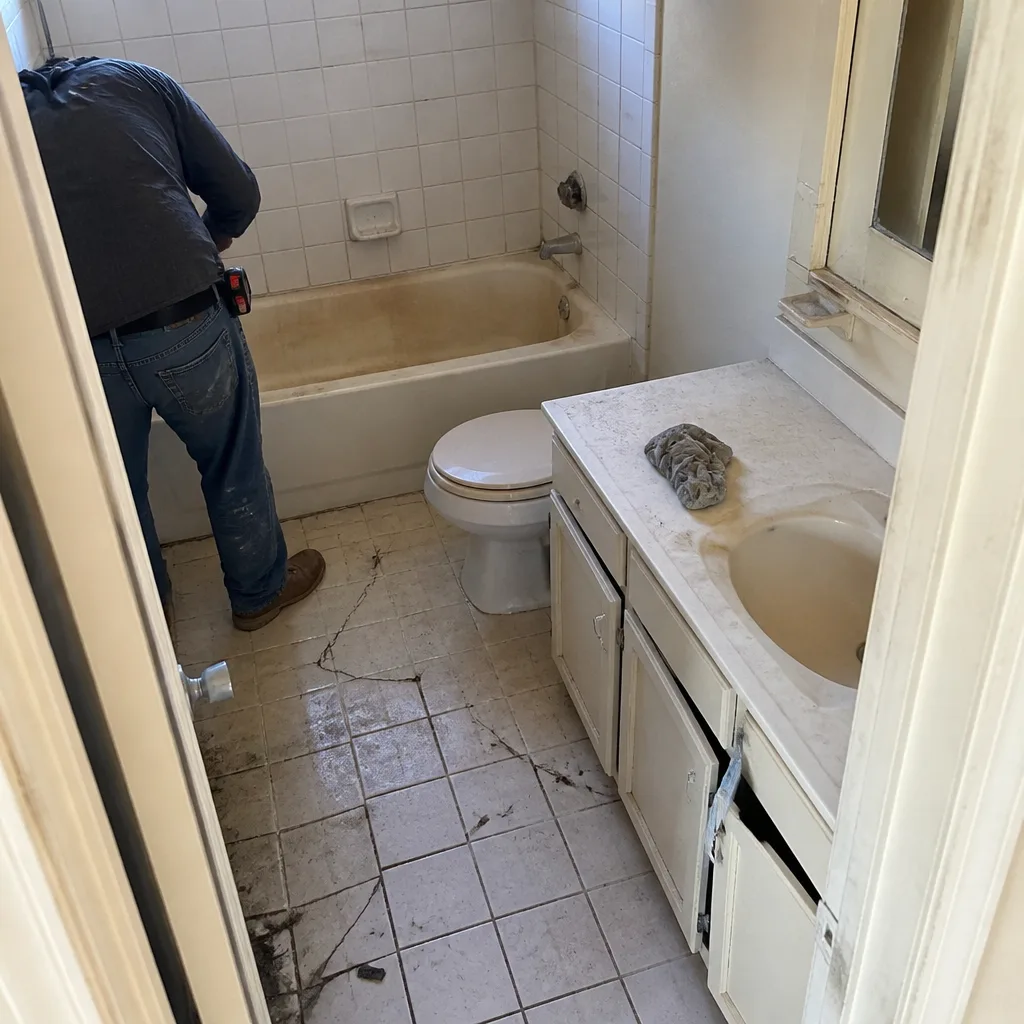
See the difference
 Before
 After
 Before
 After
 Before
 After
When to Call a Professional
There’s a level of fence troubleshooting that belongs in the homeowner’s hands and a level that doesn’t. Checking a post for movement, reading a gap pattern, and running the square test on a gate are all things you can do in ten minutes with a level and a screwdriver. But extracting and resetting a post set deep in Allen’s clay, pouring a collar at the right depth, and sizing a gate assembly for wind load are not weekend projects. Post extraction and reset carries real risk of striking buried utilities, and a fence rebuilt on the same shallow spec will fail on the same schedule.
Call a professional when a post is loose at the base, when rot runs below the soil line, when three or more posts have failed in a run, or when you can’t tell what failed and you don’t want to spend on the wrong fix. Groundwork Construction Co. of Allen offers free estimates in Allen. Call (888) 343-9048 and a live person will pick up, day or night, so you can get a straight assessment before you spend on a repair that won’t hold.
Frequently Asked Questions
Repairing a leaning or failed fence post in Allen typically runs in the low hundreds per post for a reset or extraction, and it climbs if rot has spread to rails or adjacent posts. A full section rebuild costs more but fixes the cause. Call (888) 343-9048 for an exact quote – estimates are free and the pricing is upfront with no surprises.
A leaning post can be straightened in place if the wood below grade is sound and the concrete collar is intact. If it wobbles at the base, the anchor has failed and the post needs extraction and reset. The push test at knee height tells you which one you have in about ten seconds.
In Allen, a post that appears to rise is usually being pushed up by expansive clay swelling in wet weather. Shallow posts ride that seasonal movement and stay high when the clay dries. The fix is proper depth below the active clay layer, not more concrete at the surface.
A gate that won’t line up is either sagging on its own frame or hanging from a post that has moved. Test the hinge post for movement and check for plumb; if the post is moving, adjusting the gate won’t hold. If the post is solid, the gate frame has likely racked and needs bracing.
Push a screwdriver into the wood at the soil line. Surface weathering resists the probe; structural rot gives way and feels soft. If the wood at grade is soft, the post has lost integrity and needs replacing, regardless of how solid it looks higher up.
Not with us. We price upfront, and the number on the quote is the number you pay, with no change orders added after the crew starts. If a repair uncovers something serious, we show you before we touch it. Call (888) 343-9048 to schedule a free estimate – the assessment comes first.
The Bottom Line
Diagnose the part of the system that failed before you spend on a fix. A leaning post is a depth and anchoring problem, not wind damage. A post that looks like it’s settling in Allen’s clay is often being heaved upward and needs more depth, not more concrete. A misaligned gate is either the gate or the post, and a two-minute test tells you which. Rot at the soil line is different from surface weathering, and tight-set boards that buckle are an installation spacing mistake. Get the diagnosis right, and you’ll know whether your fence needs an afternoon repair or a section rebuild. Groundwork Construction Co. of Allen builds fence depth and base detail for the conditions we actually have, backed in writing by the 730-Day Done Right Promise. Call (888) 343-9048 for a free estimate and we’ll tell you straight what your fence needs.
Written by the team at Groundwork Construction Co. of Allen.