Last updated November 18, 2026







Free written scope consultation - allowances, timeline, and change-order rules on paper before a single trade is scheduled
Construction Emergency Preparedness Guide for Allen Homes
After a severe hail event or an ice storm rolls through Collin County, the first contractors knocking on doors in Allen are rarely the ones you want. Storm chasers with out-of-state plates work Allen’s neighborhoods within hours of major weather events, targeting homeowners who don’t have a plan or a trusted name already saved in their phone. The homeowners who come out ahead aren’t the ones who react fastest. They’re the ones who prepared before the sky turned green. This guide maps Allen’s specific hazard patterns – the hail corridor, the flash-flood pockets, the freeze months – so you can make clear decisions in the first 48 hours instead of panic ones. You’ll learn what to document, how to vet a crew in under ten minutes, and which damage is cosmetic versus urgent.
Quick Answer
Construction emergencies in Allen follow predictable patterns tied to the city’s clay soil, spring hail season, and winter freeze events – they aren’t random. The best preparation is pre-event: know your property’s drainage, tree proximity, and foundation moisture now, keep a documentation kit ready, and have a vetted contractor’s number saved before you need it. In the first 48 hours after damage, photograph everything before you touch it, verify any contractor’s credentials in under 10 minutes, and triage damage into cosmetic, 72-hour assessment, and immediate-action categories.
Styles & brands we work with
- Kitchen remodeling
- Bathroom remodeling
- Home additions & ADU
- Roofing
- Windows & doors
- Driveway & pavers
- Fence
Table of Contents
- Allen’s Specific Hazard Profile: Hail, Flood, and Freeze
- What to Document Immediately After Storm or Structural Damage
- How to Evaluate Contractor Legitimacy in Post-Storm Chaos
- The Structural Triage Sequence for Allen Homes
- Pre-Event Preparedness: The Site Conditions That Decide Your Outcome
- Season-by-Season Readiness Calendar for Allen
- Common Mistakes to Avoid
- When to Call a Professional
Allen’s Specific Hazard Profile: Hail, Flood, and Freeze
Allen sits squarely in North Texas’s hail corridor, one of the most active stretches in the country. That’s not marketing language – it’s a pattern that shows up in insurance loss data year after year. The city sees its heaviest hail risk from March through June, when supercell thunderstorms form west of the Metroplex and track northeast across Collin County. A single April hailstorm can move through Allen’s western neighborhoods, pummel roofs and siding, and leave the eastern side of town untouched. That’s why two neighbors on the same street can have wildly different damage.
Flood risk in Allen is more localized than most homeowners assume. The city isn’t flat – it has creek corridors and low-lying pockets where heavy rain concentrates fast. Areas near Watters Creek and the natural drainage channels that feed it can pond water within an hour of a hard storm. Newer subdivisions built on graded pads handle runoff better than older neighborhoods where lot drainage was designed decades ago. If your street slopes toward your foundation, a two-inch rain event can do more damage than a five-inch one that falls evenly.
Freeze events are the sleeper hazard. Allen typically sees its highest freeze probability from late December through mid-February, and a hard freeze after a warm spell is worse than a normal one. Pipes in exterior walls, hose bibs, and irrigation lines are the usual casualties. The 2021 winter storm showed how quickly a prolonged freeze can turn into widespread water damage across Allen – and how long repairs take when every plumber in Collin County is booked.
- Hail: Peak risk March through June; roof and siding damage most common
- Flash flooding: Concentrated near creek corridors and low-lying lots; fast onset
- Freeze: Highest probability late December through mid-February; burst pipes and ice damning
- Wind: Straight-line gusts common in spring; fence and tree damage
- Clay soil movement: Year-round; foundation and driveway cracking after wet-dry cycles
What to Document Immediately After Storm or Structural Damage
The single biggest mistake Allen homeowners make after damage is cleaning up before they document. Insurance adjusters work from evidence, and once debris is hauled away or a tarp covers the damage, the claim gets harder to prove. Your photo and notation protocol in the first hours protects both your insurance claim and your conversation with any contractor.
- Photograph wide, then close. Start with a wide shot of the whole elevation – the whole roof slope, the whole fence line, the whole room. Then move in for close-ups. Adjusters need context to understand scale.
- Capture a timestamp and a reference object. A photo with a ruler, a coin, or a hand next to hail dents or cracks tells the adjuster the size. Your phone’s metadata stamps the time.
- Photograph before you move anything. Fallen limbs, displaced shingles, water stains – shoot them exactly as found.
- Write a damage log. Note the date, time, and what you saw in each area. A simple notebook entry (“April 12, 4pm – north roof slope, missing shingles near ridge, water stain on ceiling in back bedroom”) is worth more than a dozen undated photos.
- Keep receipts for any emergency mitigation. Tarps, fans, dehumidifiers, temporary repairs – all of it is potentially reimbursable. Save every receipt.
- Don’t sign anything from a door-knocker. A signature on a “contingency contract” or “assignment of benefits” can hand your claim to a stranger. Document first, decide later.
Store everything in one place – a folder on your phone or a cloud album. When you call your insurer or a contractor, you’ll have it ready, and the conversation moves faster and cleaner. Our technicians have up to 12 years of experience and see firsthand how much smoother a claim goes when the homeowner documented properly.
How to Evaluate Contractor Legitimacy in Post-Storm Chaos
Within 24 to 48 hours of a major hail or wind event in Allen, out-of-state crews descend on the neighborhoods hardest hit. Some are legitimate. Many aren’t. The good news: you can filter out the predatory ones in under ten minutes with four checks. Do these before you let anyone on your roof or sign a single document.
- Verify the state license and registration. In Texas, roofing contractors aren’t licensed at the state level the way plumbers and electricians are, but legitimate companies still carry a physical business address, a verifiable local phone number, and a registered business name. Ask for the company’s legal name and look it up. If they only give you a first name and a cell number, walk away.
- Ask for proof of insurance – and actually read it. A legitimate contractor carries general liability and workers’ comp. Ask to see the certificate of insurance and confirm the policy is current. If a worker gets hurt on your property and the crew isn’t insured, that liability can land on you.
- Check the address and the phone number. A local business has a local presence. A storm chaser has a hotel room and an 800 number that goes dead in three weeks. Ask where the company is based and whether they’ll be here after the job is done.
- Never pay the full amount upfront – and never pay cash only. Legitimate contractors work from a deposit and progress payments. A demand for full payment before work starts, or a cash-only requirement, is a red flag. Get a written, line-item quote before anything begins.
One more test that takes thirty seconds: ask what warranty they offer in writing. If the answer is vague, or it only covers materials and not labor, that tells you how they’ll handle a callback. Groundwork Construction Co. of Allen backs every project with our 730-Day Done Right Promise – if it’s not done right, we make it right – one of the longest workmanship guarantees in the residential construction space. Ask any contractor you’re considering what their written warranty actually says. The ones who can’t answer clearly aren’t the ones you want on your roof.
The Structural Triage Sequence for Allen Homes
Not all damage is an emergency. After a storm, sorting what you’re looking at into the right urgency tier keeps you from panicking over cosmetic issues and keeps you from ignoring something serious. Here’s the triage sequence we walk Allen homeowners through.
Tier 1: Cosmetic (handle within weeks)
Dented siding, scuffed paint, a downed fence panel with the posts still solid, minor shingle granule loss. These matter for your insurance claim but aren’t urgent. Document them, then schedule repairs on a normal timeline.
Tier 2: Professional assessment within 72 hours
Missing or lifted shingles, cracked caulking around windows, water staining on a ceiling, a fence leaning but still standing, hairline cracks in a driveway or foundation that appeared after the storm. These need a trained eye within a few days – not because they’ll collapse tomorrow, but because small water intrusion becomes rot and mold fast in North Texas humidity. Call and get an assessment scheduled.
Tier 3: Immediate action
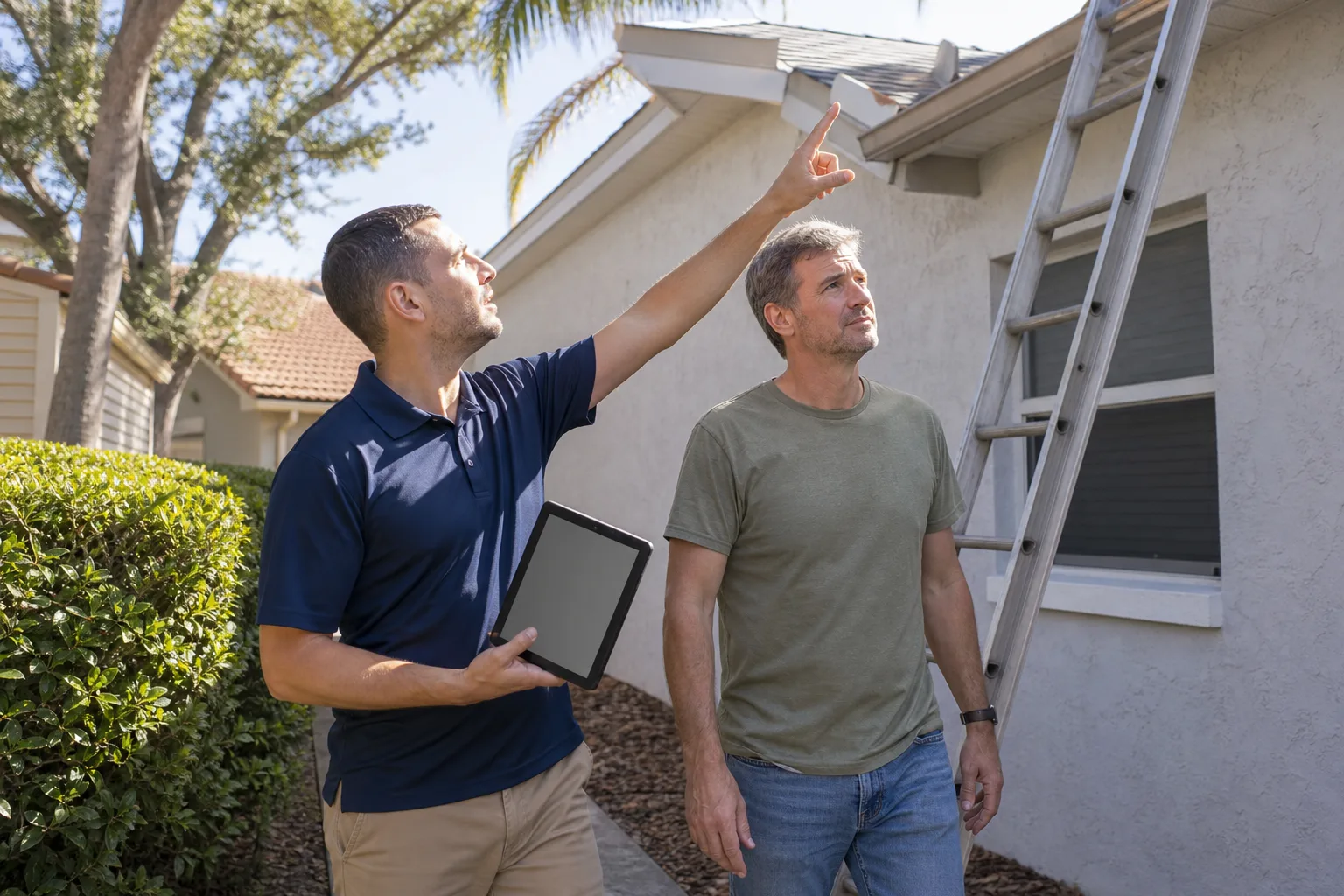
Active water coming into the house, a hole in the roof, a tree through a wall or window, structural sagging, or a gas smell. These require immediate mitigation – tarping, shutting off water or gas, and getting a professional out the same day. Do not climb on a damaged roof to “take a look.” Wet shingles and compromised decking are a fall hazard, and one wrong step onto a damaged slope can turn a repair into a hospital visit. Stay off the roof and call a trained professional.
If you’re dealing with a full addition, garage conversion, or rebuild after major damage, our Home Additions & ADU in Allen team can walk the scope with you from foundation to finish line.
Pre-Event Preparedness: The Site Conditions That Decide Your Outcome
This is the section most storm guides skip, and it’s the one that matters most. Whether your Allen property weathers a storm or generates an emergency call is largely determined before the storm ever forms. Three site conditions do most of the deciding.
Drainage
Walk your property during a hard rain (from inside, safely) and watch where water goes. Does it pool against the foundation? Does it run off the roof and dump right next to the slab? Allen’s clay soil doesn’t absorb water quickly, so grading and downspout placement matter more here than in sandy-soil markets. Extend downspouts several feet from the foundation, keep gutters clear, and correct any spot where the ground slopes back toward the house. A few hours of grading work can prevent a flooded foundation.
Tree proximity
North Texas storms bring down limbs and whole trees. Any large limb overhanging your roof is a future claim. Have a certified arborist assess trees within falling distance of the house or fence line before storm season, not after. Dead limbs and weak forks are the ones that fail first.
Foundation moisture
Allen’s expansive clay soil swells when wet and shrinks when dry, and that movement is hard on foundations and driveways. Consistent watering during dry spells keeps the soil moisture even and reduces the cracking that shows up after a wet-dry cycle. If your driveway or pavers are already showing movement, our Driveway & Pavers in Allen team can assess the base and drainage before the next freeze widens the cracks.
Add a small preparedness kit: a folder with your insurance policy number, a phone charger, a few tarps, and the saved contact for a vetted contractor. That’s the difference between chaos and a plan.
Season-by-Season Readiness Calendar for Allen
Allen’s threat calendar is predictable, which means it’s plannable. Here’s how to spread preparation across the year instead of scrambling after each event.
- Late winter (Jan-Feb): Freeze prep. Insulate exposed pipes, disconnect hoses, know where your water shutoff is. Check that your roof and gutters are clear of debris that traps ice.
- Early spring (Mar): Pre-hail inspection. Get your roof and siding inspected and photographed so you have a “before” record. Trim overhanging limbs. Confirm your insurance coverage and deductible.
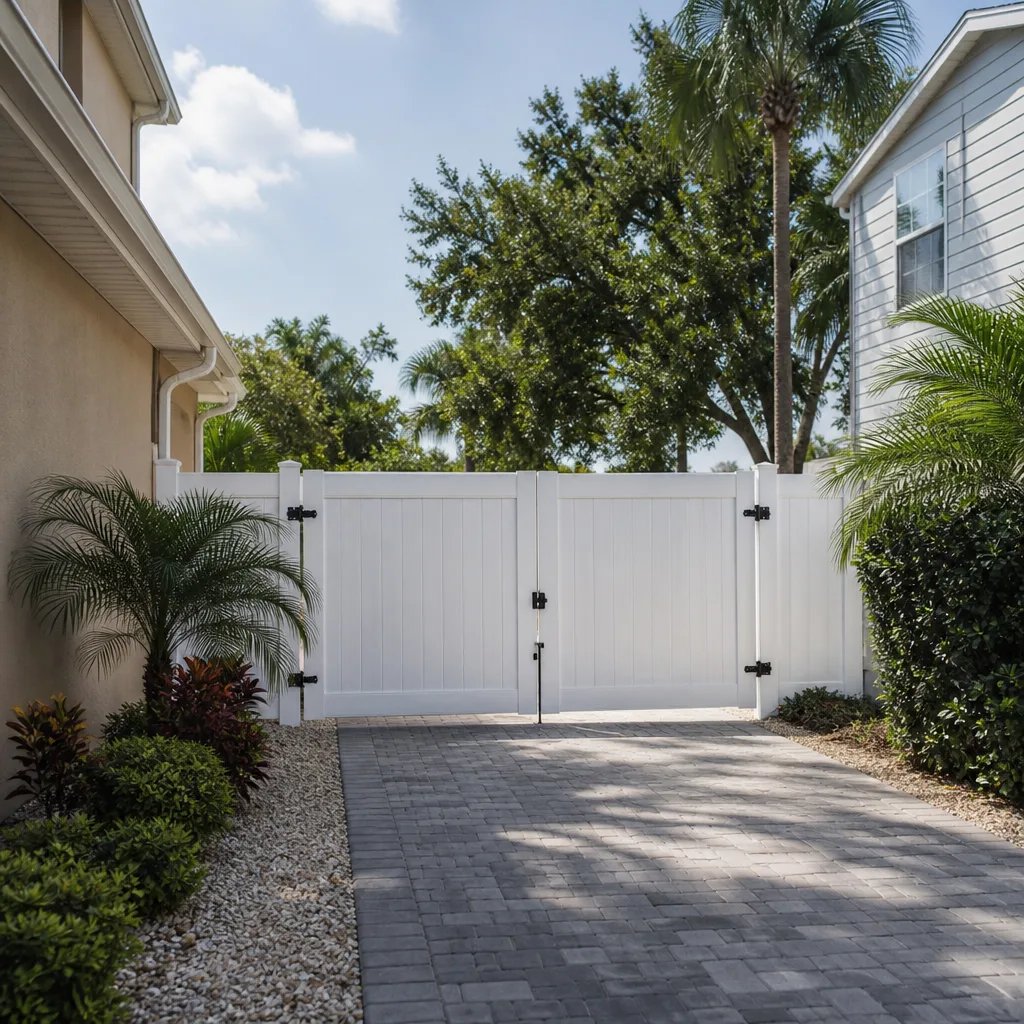
- Peak storm season (Apr-Jun): Active monitoring. Keep the documentation kit ready. After any hail event, document before cleanup. If you need fence repair after a wind event, our Fence Installation in Allen team can rebuild with materials rated for North Texas weather.
- Summer (Jul-Sep): Heat and drought. Watch foundation moisture and water consistently. Good time to plan larger projects – additions, roof replacement, window upgrades – before the fall rush.
- Fall (Oct-Dec): Pre-winter prep. Clean gutters, inspect the roof one more time, seal gaps around windows and doors, service the HVAC, and check drainage before the first freeze.
Planning a larger project after the storm passes? Start at the Groundwork Construction Co. of Allen home page to see the full range of trades we cover under one roof.
Common Mistakes to Avoid
- Cleaning up before you document. Hauling away debris or tarping damage before photos makes your insurance claim harder to prove. Photograph everything first, then mitigate.
- Signing a door-knocker’s contract on the spot. Post-storm Allen sees crews chasing claims with contingency contracts and assignments of benefits. Never sign at the door – document, verify, then decide.
- Climbing on a damaged roof to inspect it yourself. Wet shingles and compromised decking are a serious fall hazard. Stay on the ground and let a trained professional assess the slope.
- Chasing the lowest bid without reading the warranty. A cheap quote that covers materials but not labor leaves you paying for the callback. Ask what the written workmanship warranty actually says.
- Ignoring small water stains. A ceiling stain after a storm is water intrusion that will rot wood and grow mold in North Texas humidity. Get it assessed within days, not months.
- Letting foundation moisture swing all year. Allen’s clay soil punishes inconsistent watering. Watering evenly during drought prevents the cracks that a freeze then widens.
- Waiting until the storm to find a contractor. The best time to vet a contractor is when you don’t need one. Save the number, check the credentials, and know who you’re calling before the sky turns green.
When to Call a Professional
Some Allen storm damage is a weekend project. Much of it isn’t. Call a professional when you see active water intrusion, missing or lifted shingles across a roof slope, a tree against the structure, structural sagging, or any damage near gas or electrical components. Call for foundation cracks that appeared suddenly and are wider than a hairline, for a fence whose posts are compromised, and for any damage a thorough inspection would require getting on the roof to confirm. When the scope is bigger than a repair – a kitchen rebuild after water damage, an addition after a loss – that’s a conversation about a full project and a real budget. Our technicians have up to 12 years of experience, arrive background-checked and in uniform, and back every job with the 730-Day Done Right Promise. Groundwork Construction Co. of Allen offers free estimates in Allen and no-hassle upfront pricing – the number you see is the number you pay, with 0% financing for 18 months available. Call (888) 343-9048 to schedule your free estimate.
See the difference
 Before
 After
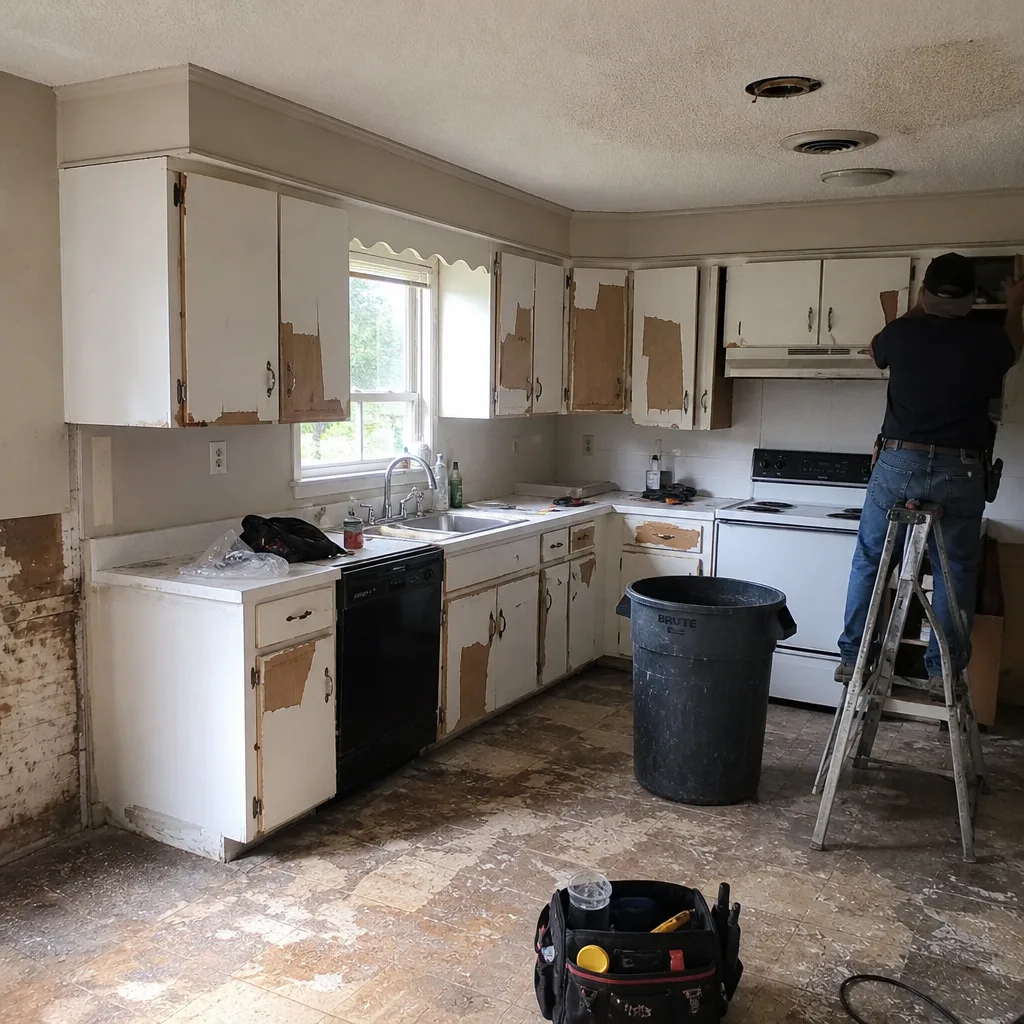 Before
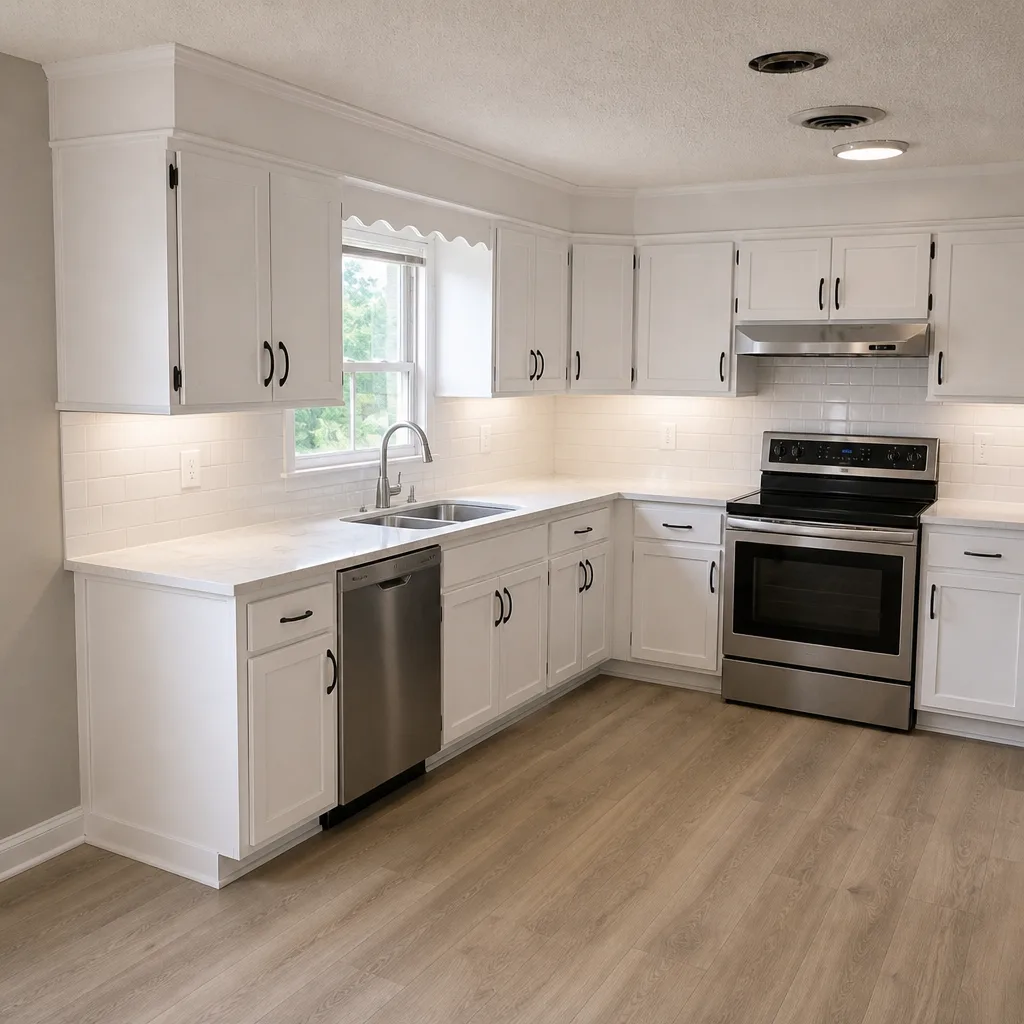 After
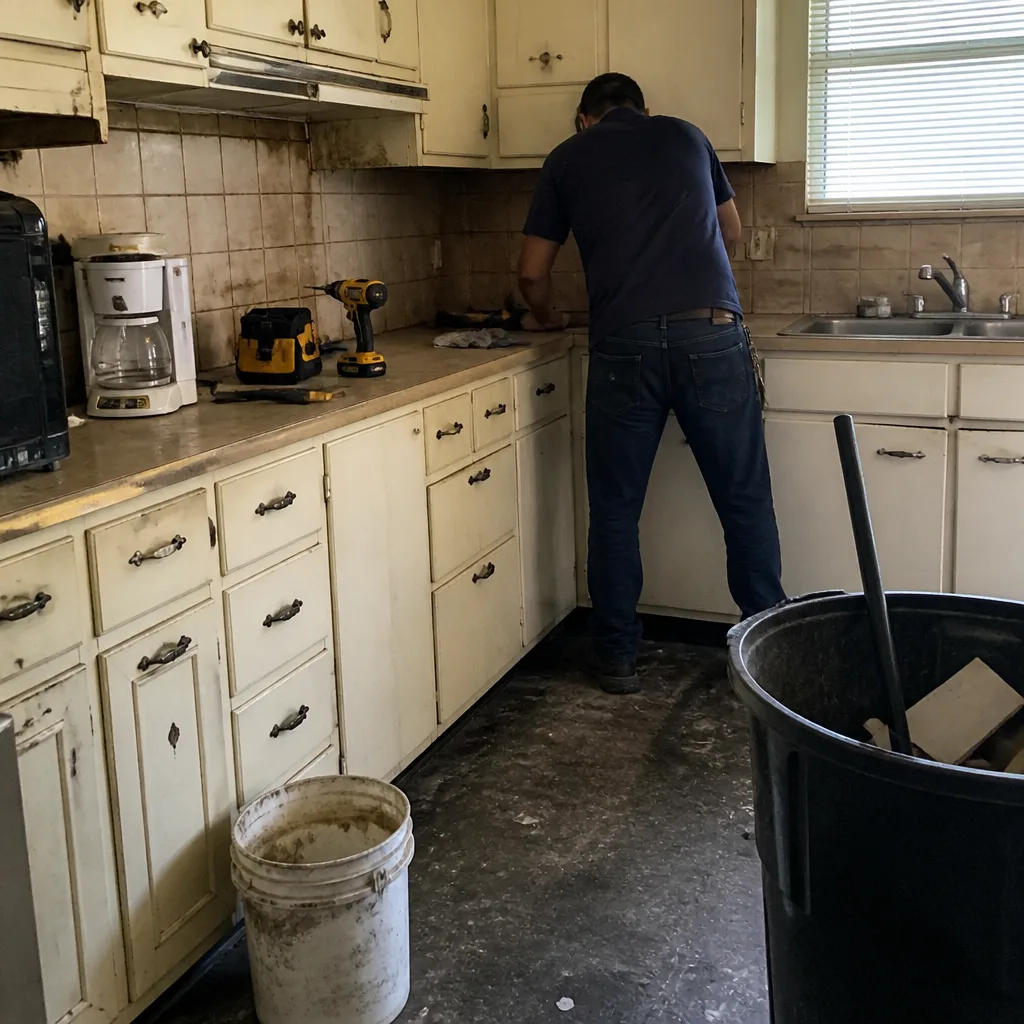 Before
 After
Frequently Asked Questions

Document before you cleanup: photograph wide shots and close-ups, write a dated damage log, and save receipts for any emergency mitigation. Don’t sign anything from a door-knocking contractor. After documenting, triage the damage – active water intrusion or structural damage needs same-day help; missing shingles or ceiling stains need a professional assessment within 72 hours. Call (888) 343-9048 for a free estimate once you’ve documented.
Verify their business name and local address, ask to see a current certificate of insurance for general liability and workers’ comp, confirm they have a local phone number and will still be around after the job, and insist on a written line-item quote with a real workmanship warranty. Never pay the full amount upfront or in cash only. If they can’t answer these in under 10 minutes, walk away. Call (888) 343-9048 to talk to a real person about your situation.
Active water coming into the house, a hole in the roof, a tree against a wall or window, structural sagging, or a gas smell requires immediate action. Missing shingles, water stains, leaning fences, and new hairline cracks need a professional assessment within 72 hours. Dented siding, scuffed paint, and displaced fence panels are cosmetic and can be scheduled on a normal timeline. Our live team answers 24/7 if you’re unsure – call (888) 343-9048.
Yes. Allen’s expansive clay swells when wet and shrinks when dry, so foundations, driveways, and patios move with the seasons. Heavy rain after a dry spell can shift soil fast and open cracks that surface within days. Keeping soil moisture even and correcting drainage before storm season reduces the movement. If you’re seeing new cracks after a storm, call (888) 343-9048 for a free assessment.
Three things matter most: fix drainage so water moves away from the foundation, trim or remove any large limb within falling distance of the house, and keep foundation moisture consistent through dry spells. Add a small kit with your insurance info, a few tarps, and a saved contractor contact. The best preparation happens before the first hailstorm, not after.
Yes. We pull the permits and pass the inspections on projects that require them, quote upfront with line-item pricing so the number you see is the number you pay, and back every job with our 730-Day Done Right Promise – if it’s not done right, we make it right. We also offer 0% financing for 18 months and $1,000 off projects over $10,000. Call (888) 343-9048 for a free estimate and design consult.
The Bottom Line
Allen’s construction emergencies aren’t random – they track the city’s hail corridor, its flash-flood pockets, its clay soil, and its freeze months. The homeowners who come out ahead map those patterns before the storm, document damage carefully in the first 48 hours, and know exactly who to call because they vetted that contractor in advance. Preparation isn’t panic; it’s the plan that makes the first day after damage calm instead of chaotic. This guide is your pre-event tool. Use it now, before you need it.
When you’re ready to schedule a free estimate on a repair or a larger project, Groundwork Construction Co. of Allen answers calls with a live person 24/7 – no voicemail, no delays. Call (888) 343-9048 to get started.
Written by the team at Groundwork Construction Co. of Allen.