Last updated November 18, 2026
Free written scope consultation - allowances, timeline, and change-order rules on paper before a single trade is scheduled
DIY vs Professional Bathroom Remodeling: What’s Safe to Do Yourself
Painting a bathroom yourself saves money. Rerouting a drain line yourself can violate the International Residential Code and make your homeowner’s insurance claim unenforceable after a water loss. Those two facts sit at opposite ends of the same project, and most homeowners never learn where the line falls until something goes wrong. We’re writing this guide from the middle of that line. Here’s what you can genuinely handle on your own in an Allen bathroom, what requires a licensed trade, and how to tell the difference before you tear out the first tile.
Quick Answer
In an Allen, TX bathroom, you can safely DIY cosmetic work: painting, swapping a vanity, replacing a faucet, changing light fixtures and hardware, and installing a new mirror. You should not DIY anything that touches the drain-waste-vent system, moves or adds electrical circuits, requires a permit, or involves tile substrate and waterproofing. Those tasks need licensed plumbers, electricians, and tile setters – and in Allen, most of them trigger a city permit that unpermitted work will fail at resale.
Styles & brands we work with
- Kitchen remodeling
- Bathroom remodeling
- Home additions & ADU
- Roofing
- Windows & doors
- Driveway & pavers
- Fence
Table of Contents
- The DIY Line: Capability vs. Liability
- Permit Reality in Allen, TX
- Task-by-Task: What’s Safe and What Isn’t
- Why Tile Is the Most Regretted DIY Bathroom Task
- How Bathroom Mistakes Compound
- The Honest Math: Labor Cost vs. Real DIY Cost
- Common Mistakes to Avoid
- Frequently Asked Questions
The DIY Line: Capability vs. Liability
Here’s the distinction that changes the whole conversation. The question isn’t whether you’re capable of doing a task in your bathroom. Many homeowners in Allen are perfectly capable of setting a tile or running a supply line. The question is whether that specific task sits inside or outside the boundary where amateur work creates liability, code violations, or damage that costs more to fix than hiring a pro from the start.
We’ve walked into Allen bathrooms where a homeowner replaced a toilet on a Saturday and did a clean job – no complaints. We’ve walked into others where the same task went wrong because the flange was cracked and nobody checked. The work looked identical for the first three months. Then the subfloor started to give.
That’s the line. Capability is about whether you can physically do the task. Liability is about whether the task, done imperfectly and discovered months later, ends up damaging the structure of your home or the resale value of your property.
We think of it in three tiers:
- Cosmetic tier: Painting, hardware, mirrors, surface-level swap-outs. No permit, no moisture risk, no structural consequence. Do it yourself with confidence.
- Fixture tier: Vanity replacement, faucet changes, light fixtures on existing circuits, towel bars, shower heads. Doable, but with real caveats – you’re touching water and electricity, so screw up carefully.
- Systems tier: Anything in the drain-waste-vent (DWV) system, anything that moves or adds electrical, anything that opens a wall and touches waterproofing, framing, or subfloor. This tier needs licensed trades. In Allen, it also needs permits.
Nearly every costly bathroom mistake we’ve repaired in Allen started with a homeowner crossing from the fixture tier into the systems tier without realizing they’d crossed. The task “just replacing the toilet” became “shimming on a rotten subfloor.” The task “adding a second shower head” became “cutting into a supply line in the wall.” Both began as small weekend jobs.
For a broader look at how these decisions fit into a whole-home renovation plan, our Groundwork Construction Co. of Allen home breaks down which scopes fit which budget ranges.
Permit Reality in Allen, TX
Allen requires a building permit for most bathroom work beyond a like-for-like cosmetic swap. If you’re replacing a fixture in the same location – a new vanity over the old plumbing, a new toilet on an existing flange – you’re usually in the clear. But the moment you move plumbing, add a fixture, relocate a drain, extend an electrical circuit, or open up a wall to change the layout, you’re in permit territory.
The city inspects a permit for one reason: to confirm the work meets the code adopted at the time of installation. That means every inspection sign-off becomes part of your property’s public record. And that record follows the house, not you.
Here’s why that matters more than most homeowners realize. When you sell a house in Allen, the buyer’s inspector pulls the permit history for the property. Any recent bathroom work without a matching permit becomes a title problem. In practice, that means one of three things happens:
- You disclose and negotiate. The buyer asks for a credit to cover the cost of tearing out and redoing the unpermitted work. That credit often exceeds what a pro would have charged.
- You retroactively permit the work. That means opening the wall for the inspector, correcting whatever the code review flags, and paying permit and inspection fees on top of the original work.
- The deal falls apart. Some buyers won’t touch a house with unpermitted plumbing or electrical, particularly if it appears on a lender’s appraisal.
Insurance follows the same pattern. If a supply line fails and floods the floor below, and your carrier determines the plumbing was installed without permit or inspection, that claim can be contested or denied. The bathroom you saved $2,000 on can become the reason a $30,000 water-loss claim goes sideways.
There’s also a code angle specific to older Allen homes. Properties built in the 1990s and early 2000s around the Watters Crossing and Bethany Ridge areas may have venting and drain configurations that were compliant when installed but don’t match current code the moment you open the wall. A like-for-like replacement is grandfathered. A moved fixture usually isn’t. That’s fine – but you need a permit to do it correctly, and you need a licensed plumber to pass the inspection.
Task-by-Task: What’s Safe and What Isn’t
Below is the breakdown we give homeowners in Allen when they ask what they can legitimately tackle. It’s not exhaustive, but it covers what 90% of DIY-bathroom conversations turn out to be about.
Safe DIY tasks in an Allen bathroom
- Painting walls, ceiling, and trim. No permits, no systems risk. Use a bathroom-grade paint and don’t skip the primer over patched drywall.
- Replacing a mirror or medicine cabinet. As long as you’re hanging on existing studs and not moving an electrical box, this is a straightforward swap.
- Swapping faucets and shower heads on existing supply lines. You’re touching water, but not the DWV system. Use plumber’s tape, snug – don’t torque – and check for drips after 24 hours.
- Replacing a vanity over existing plumbing. If the cabinet footprint and drain location match, you’re installing a cabinet, not moving plumbing.
- Changing hardware and fixtures on existing fixtures. Towel bars, toilet paper holders, robe hooks, cabinet pulls.
- Replacing light fixtures on existing circuits. Turn the breaker off. Test with a non-contact voltage tester before you touch a wire. If the box is missing, unsafe, or has no ground, stop and call an electrician.
- Regrouting existing tile. A careful regrout with the right epoxy grout can add years to an older shower. Catching this before water gets behind the tile is the entire game.
- Adding a new shower curtain rod, bath mat, or freestanding storage. Cosmetic tier.
Tasks that need a licensed trade
- Moving or adding a drain, supply line, or vent. This is DWV work. It requires a licensed plumber and a permit in Allen. There’s no DIY path that keeps your insurance intact.
- Adding an electrical circuit, moving a switch or outlet, adding a GFCI that didn’t exist, or wiring a heated floor. All require a licensed electrician and inspection.
- Rerouting or adding HVAC exhaust. Bathroom fans must vent to the exterior per code, and the ducting matters. We regularly find fans in Allen venting into the attic – a problem that shows up as organic growth and rotted sheathing within two winters.
- Rebuilding a shower pan or wet area. This is the waterproofing job. See the tile section below.
- Structural changes. Moving a wall, enlarging a window, or re-framing for a larger shower footprint.
- Gas work of any kind. Even a gas log lighter. There is no safe DIY path here.
- Replacing a toilet where the flange is damaged, the subfloor is soft, or the drain is being moved. If the flange is fine and the location is unchanged, the swap itself is DIY-safe. If anything is off, stop and call a plumber.
A quick reference table
- Paint: DIY-safe. Permit: no. Typical pro cost in Allen: $400 – $900 per room.
- Vanity swap (same footprint): DIY-safe. Permit: usually no. Pro cost: $300 – $700 labor, cabinet separate.
- Faucet or shower head: DIY-safe. Permit: no. Pro cost: $120 – $250 each installed.
- Tile shower rebuild: Not DIY-safe. Permit: yes (plumbing and waterproofing). Pro cost: $4,500 – $11,000 depending on size and material.
- Moving a drain: Licensed plumber only. Permit: yes. Pro cost: $600 – $1,800 depending on run length.
- Adding a GFCI or new outlet: Licensed electrician only. Permit: yes. Pro cost: $250 – $550.
- Full bathroom remodel: Not DIY. Permit: yes. Pro cost in Allen: $14,000 – $32,000 for a mid-grade renovation.
If you’re planning a larger scope that touches more than the bathroom, our Home Additions & ADU in Allen page covers how to sequence multi-room projects without triggering a second round of permits mid-job.
Why Tile Is the Most Regretted DIY Bathroom Task
Tile is the single most commonly attempted and most commonly regretted DIY bathroom task we see in Allen homes. There’s a reason. Tile itself is straightforward – set it level, space it consistently, grout it clean. What defeats most DIYers isn’t the tile. It’s everything under it.
A tile shower or floor is a system, and the tile is the least important part of that system. The waterproofing, the substrate, the slope, and the movement accommodation do the actual work. When any of those are compromised, water gets behind the tile, and the failure isn’t visible until the subfloor rots or mold blooms inside the wall cavity.
Most tile tutorials online skip these steps, or mention them in a sentence without explaining the consequence of getting them wrong:
- Cement backer board, installed per manufacturer spec. Not drywall. Not green board. Not plywood with a membrane stuck over it. The correct backer board, correctly fastened, with the correct fastener pattern and joint treatment.
- Waterproofing membrane on all surfaces. Rolls over the curb, wraps the corners, extends up the wall to at least the shower head height. The weak points are corners, curbs, and the drain – and tutorials often show only the flat walls.
- Presloped shower pan. The floor slope has to direct water to the drain at roughly a quarter-inch per foot. A flat pan means standing water. Standing water means membrane failure. Membrane failure means the subfloor underneath.
- Correct thinset. Modified or unmodified, chosen to match the membrane. Not mastic. Mastic is fine for dry-area backsplash and fails in wet areas.
- Movement accommodation. Expansion gaps at the perimeter, caulk at inside corners rather than grout. Skip this and the tile cracks along the corners within a couple of seasons, particularly in North Texas where humidity swings are wide.
- A flood test before tile. Fill the pan with water and leave it 24 hours to confirm it holds. This one step alone catches almost every pan failure before tile hides it.
If the shower pan went wrong, the fix isn’t regrouting. It’s demoing back to the studs, replacing the rotted subfloor, reframing if the joists are compromised, and starting over. We’ve had Allen homeowners call us for what they thought was a loose tile. The tile was the least of it by the time we opened the wall.
Bathroom floors are less punishing than showers, but the same rules apply. A tile floor laid directly over plywood with thinset won’t survive a Texas summer. A proper tile floor needs a backer, a membrane, and the right thinset – and the subfloor has to be stiff enough not to flex underfoot.
How Bathroom Mistakes Compound
This is the part DIY guides rarely cover. Bathroom failures are not isolated events. They cascade. One small error becomes a much larger repair, usually discovered months after the work was done.
Here’s a real pattern we see in Allen homes:
- The toilet flange goes in slightly off. The wax ring doesn’t seal completely. Not enough to leak visibly – just enough to seep.
- Slow seepage wicks into the subfloor for months. Particle board or OSB softens and swells. Tile starts to feel spongy. Grout lines crack. Nobody thinks it’s a toilet problem, so nobody checks the flange.
- The softened subfloor loses its structural role. Tile cracks along a stress line. The homeowner reseals the grout. The problem gets worse.
- Water reaches the floor joists. Now you’re not replacing tile. You’re scabbing in joist repairs, replacing a 4-foot section of subfloor, and re-doing the entire bathroom floor.
- The problem is now visible in the room below. Ceiling stains or a sagging floor below send the homeowner looking for the cause.
A $60 wax ring installed incorrectly becomes a $2,500 repair, or a $6,000 repair if the joists are involved. This isn’t hypothetical. It’s the single most common “how did this happen” call we get.
Shower failures cascade the same way. Membrane failure at a curb corner, unnoticed for six months, wicks into the adjacent bedroom wall’s baseplate. Now you’re opening two rooms.
HVAC and venting mistakes follow a third pattern. Bathroom fans vented into the attic (which we find in a surprising number of Allen homes) push warm, moist air into an unheated attic space. In a North Texas summer, that moisture hits a cooler deck and condenses. Over one or two seasons you have mold on the sheathing, an attic that smells, and a remediation job. It’s not a bathroom problem anymore.
These cascades are why we tell Allen homeowners the line isn’t “can you do this task” – it’s “what does the failure of this task cost in three months, in a basement, an attic, or a bedroom wall.” If the answer is “a lot,” the DIY math stops making sense.
The Honest Math: Labor Cost vs. Real DIY Cost
Every DIY comparison we’ve seen undersells the real cost of doing it yourself. The comparison is almost always “pro labor rate vs. cost of materials,” which ignores four things that turn a $300 savings into a $400 loss.
Here’s the four-part calculation we think is honest:
- Tool cost. If you don’t already own the tools, they count. A tile saw, a wet saw blade, notched trowels, a mixing paddle, a hole saw for the shower valve, a pry bar, a level, a membrane roller. A one-time tile job in Allen typically requires $300 – $900 in tooling you won’t use again. Resale value of that tooling, if you sell it, is a fraction of what you paid.
- Time, honestly counted. A tile shower takes a competent, experienced installer 40 to 60 hours of labor. For a first-time DIYer, double it, then add the rework. If your weekend rate as a homeowner is $50 an hour (a low estimate for most Allen households), a 100-hour job is $5,000 in time. That’s before tools or materials.
- Rework probability. Not every DIY job needs rework, but a meaningful percentage do. The honest way to count it is to add the realistic expected cost of rework, not just the best-case outcome. If there’s a 25% chance you’ll redo the shower pan at $1,400 in materials and another 40 hours of time, that’s an expected cost of roughly $350 in materials and 10 hours before you’ve started.
- The resale and insurance penalty. Unpermitted work in Allen is a real number. Home inspectors flag it. Buyers negotiate it. Insurance may deny it. This cost isn’t guaranteed, but it’s not zero, and it belongs on the DIY side of the ledger.
When we run these four factors on a mid-grade Allen bathroom, the picture looks like this:
- Full bathroom remodel, pro: $14,000 – $32,000 depending on size and material. Includes permits, inspection, warranty, and finished work.
- Full bathroom remodel, DIY: $8,000 – $14,000 in materials and tools, at least 200 to 300 hours of labor, high rework risk, no permit (illegal on the systems side), no warranty, and a documented resale penalty.
- Partial remodel (vanity and tile, plumbing stays put), pro: $6,500 – $11,000.
- Partial remodel, DIY: $2,800 – $5,500 in materials and tools, 60 to 100 hours, moderate-to-high rework risk on tile.
The gap narrows considerably once you count hours honestly. And the risk-adjusted gap – the version that accounts for rework probability and permit exposure – often inverts. For cosmetic work, DIY wins every time. For tile and wet areas, DIY frequently loses money once you count what you spent in time and rework.
If you’re comparing budgets across projects – bathroom now, driveway or pavers later – our Driveway & Pavers in Allen page shows how we structure multi-phase pricing so you’re not juggling separate contractor relationships mid-project.
Common Mistakes to Avoid
- Assuming “like-for-like” means no permit. In Allen, moving a fixture even a few inches or changing its type usually triggers a permit. The permitting rule is based on the fixture configuration, not just the plumbing location. Confirm with the city before you swing a hammer.
- Laying tile over plywood. This is the single most common tile failure we see. Plywood moves with humidity and temperature, and tile doesn’t. North Texas humidity swings are enough to crack grout within a season. Backer board and membrane are not optional.
- Venting a bathroom fan into the attic. We find this in Allen homes regularly, especially in older construction around Bethany Ridge. Attic venting doesn’t fix moisture; it moves it into a space where you can’t see it rotting until it costs real money.
- Skipping the flood test on a new shower pan. A pan that holds water for 24 hours is a pan you can trust. A pan that doesn’t is a pan you’re going to demo in a year. The flood test is free and non-negotiable.
- Replacing a toilet without inspecting the flange and subfloor. If the flange is cracked, the subfloor is soft, or the drain is slightly below the finished floor, replacing the toilet makes the leak worse. Inspect the flange before you buy the new fixture.
- Ignoring GFCI requirements in wet areas. Current code in Allen requires GFCI protection for bathroom receptacles. If your older bathroom doesn’t have it, adding it is a licensed electrician job, not a swap.
- Assuming a contractor quote equals a fixed price. A vague bid with “TBD” line items is not a fixed price. Ask for line-item pricing in writing, with allowances clearly defined. A good contractor in Allen will put the number down, and it should be the number you pay.
If you’re also planning a fence or exterior work alongside the bathroom, our Fence Installation in Allen page covers how premium brands like Barrette and Master Halco hold up in North Texas heat and wind.
See the difference
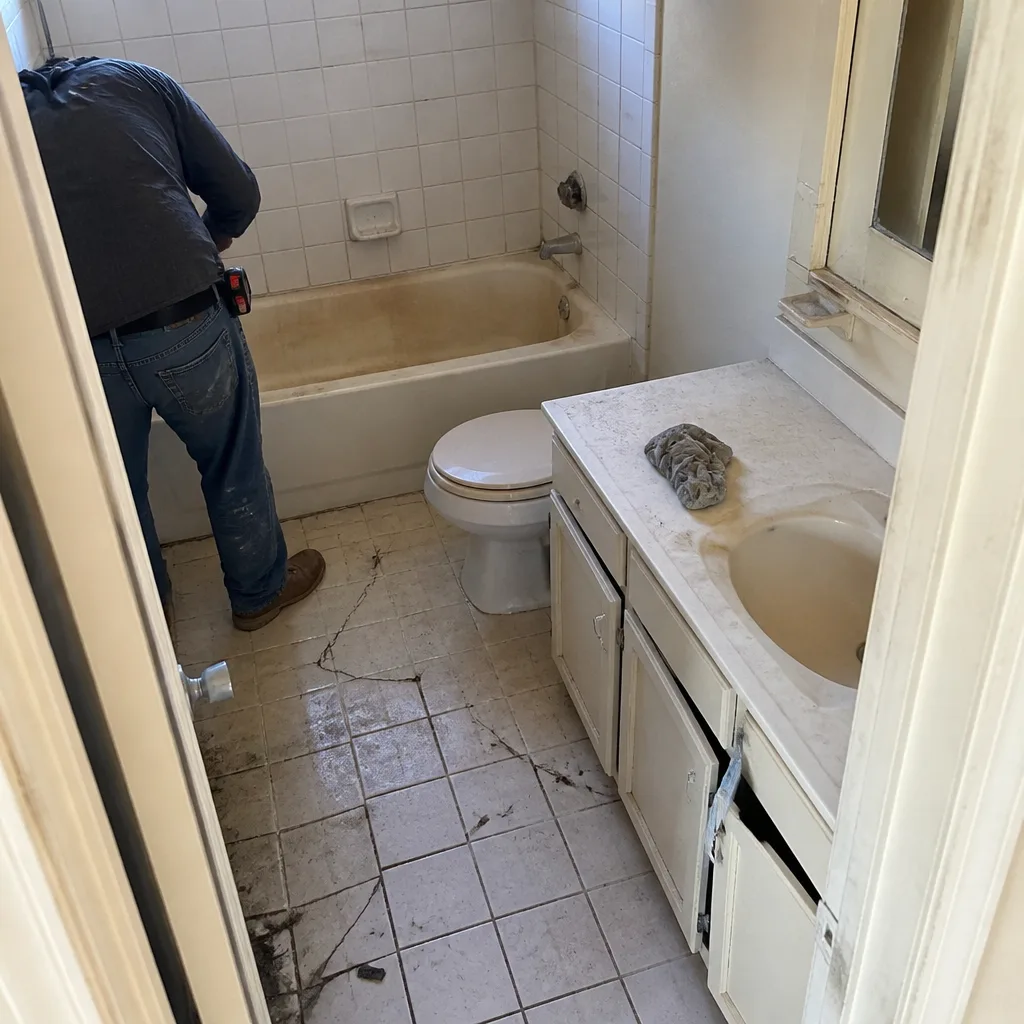 Before
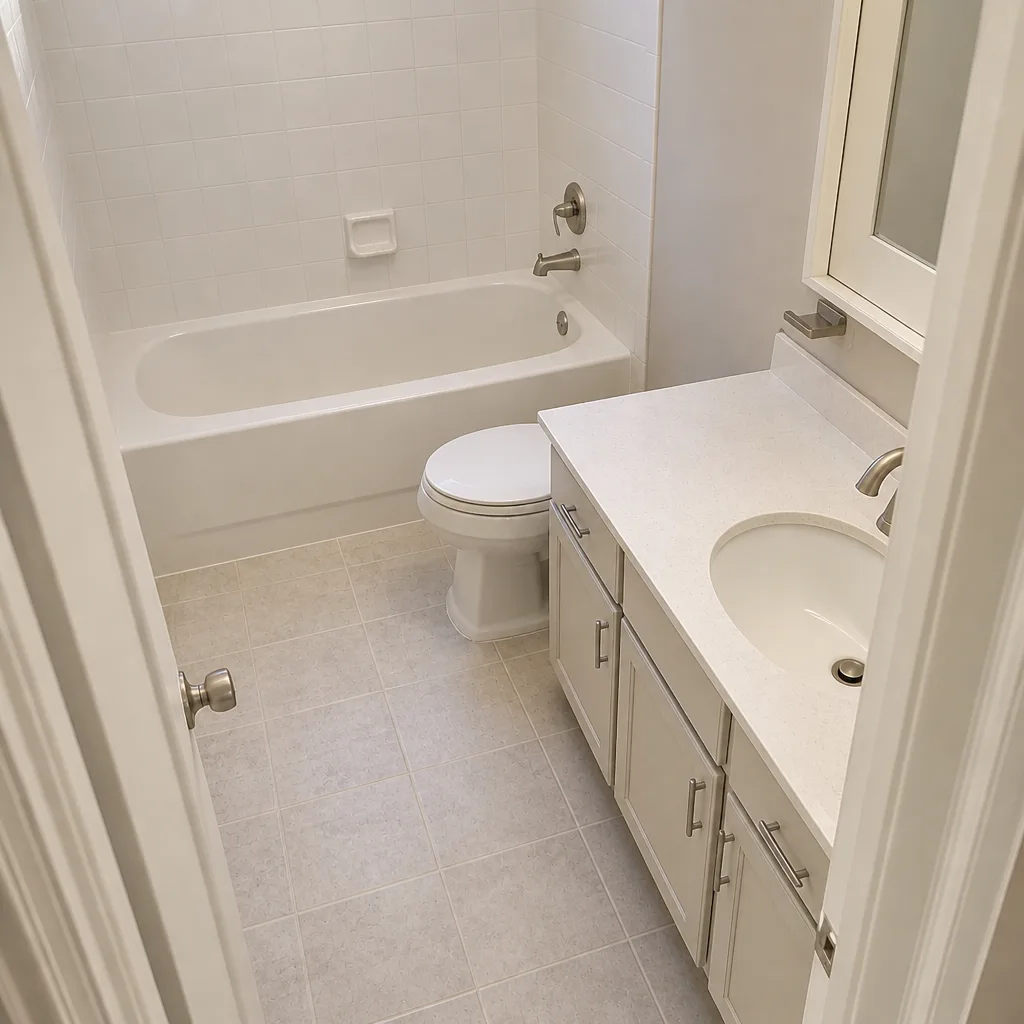 After
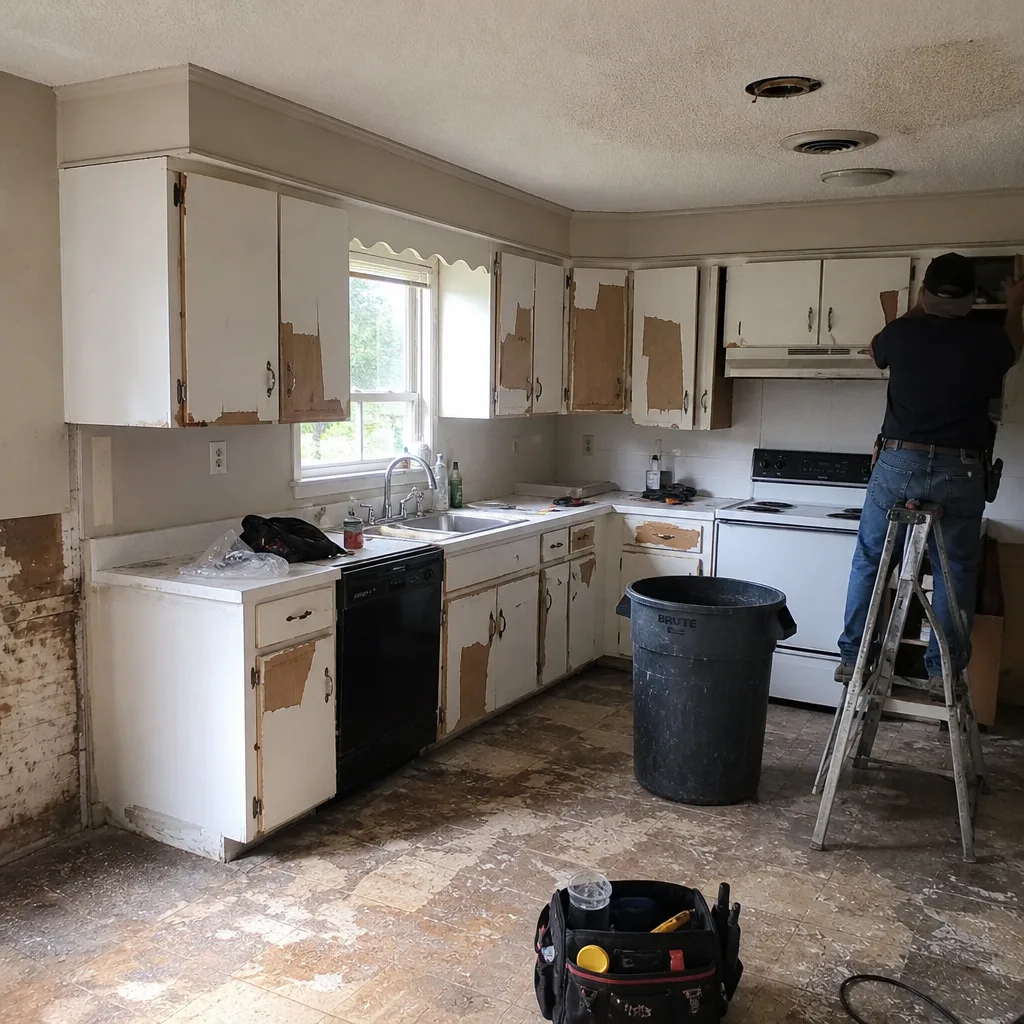 Before
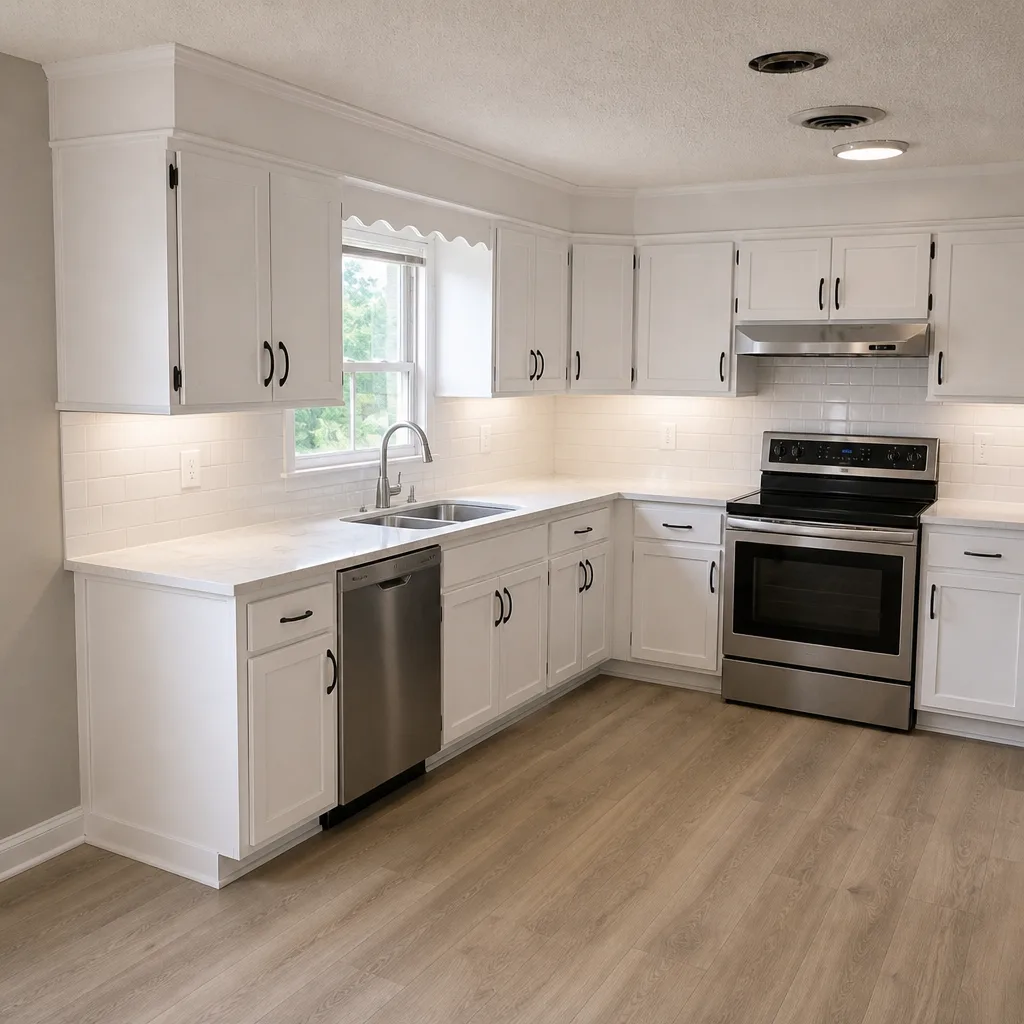 After
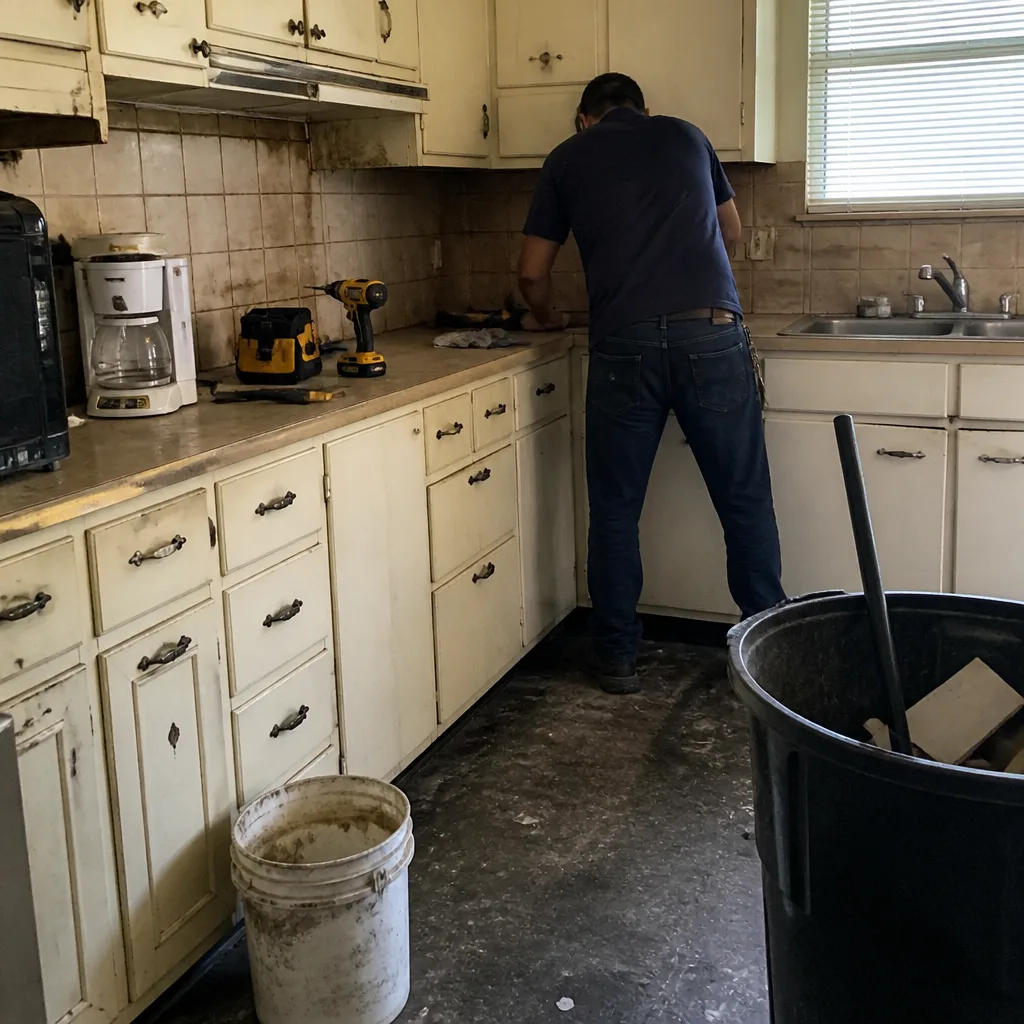 Before
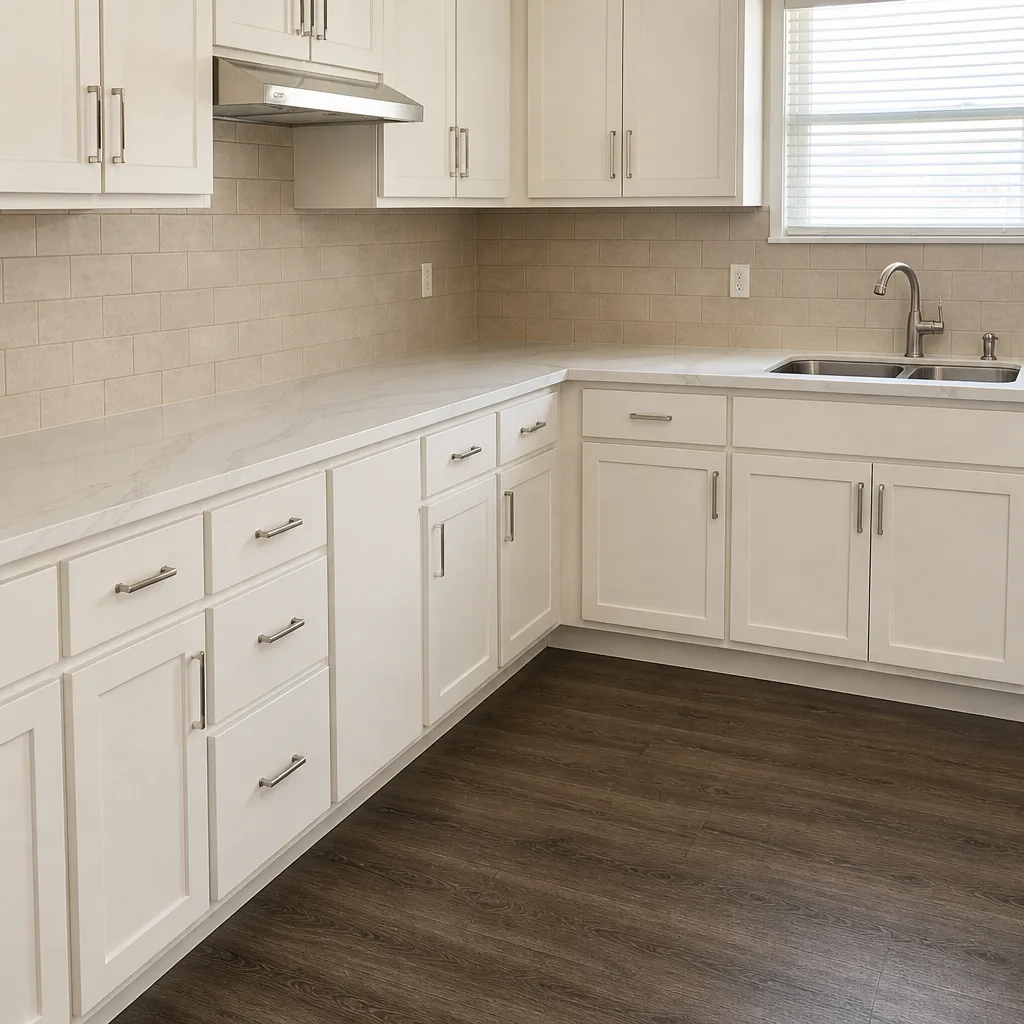 After
When to Call a Professional
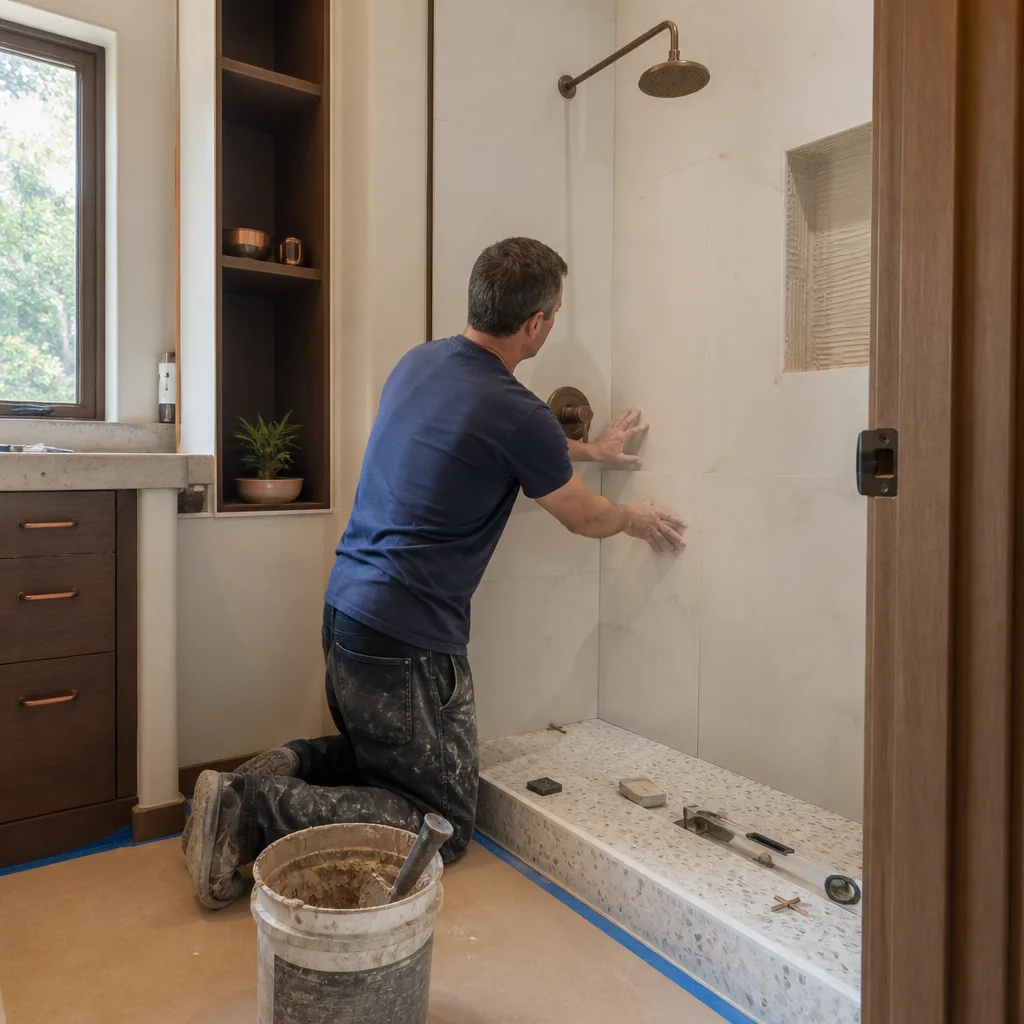
Call a professional the moment your bathroom plan crosses any of these thresholds: moving or adding plumbing fixtures, extending or adding electrical, opening a wet wall, rebuilding a shower, or moving any fixture that could trip a permit in Allen. Also call if your home is older than about 25 years, or if you found soft spots under tile or around the toilet – those are rarely simple fixes.
We’re also the call to make if you’ve already started the work and discovered something unexpected. Soft subfloor, a cracked flange, water damage inside a wall, or a fan venting into the attic are all things we’ve walked into and sorted quickly. Knowing at the right moment is the whole point of knowing the line.
Groundwork Construction Co. of Allen offers free estimates in Allen – call (888) 343-9048. We answer live, 24 hours a day, and every estimate comes as a written line-item quote with no hidden allowances. Our technicians have up to 12 years of experience, arrive background-checked and in uniform, and every project is covered by the 730-Day Done Right Promise: if it’s not done right, we make it right.
Frequently Asked Questions
You can legally do cosmetic and fixture-level work without a permit, and most homeowners do. You cannot legally do permitted plumbing or electrical work yourself in Allen – that requires a licensed trade and inspection. The dividing line is whether the task involves moving or adding a fixture, extending a circuit, or opening a wet wall. If any of those apply, you need the trade license.
In most cases no, as long as the new vanity sits over the existing plumbing footprint and you’re not moving the drain or supply lines. If the vanity requires a plumbing move, that triggers a permit. Keeping the same footprint means you avoid both the permit and the licensed plumber on that part of the job. Call (888) 343-9048 if you want to walk through your specific setup – estimates are free.
A mid-grade full bathroom remodel in Allen runs $14,000 to $32,000 depending on size and material. A partial remodel – vanity and tile, plumbing in place – runs $6,500 to $11,000. Tile showers alone run $4,500 to $11,000. Those numbers include permits and inspection. Call (888) 343-9048 for an exact quote on your bathroom; estimates are free.
It’s cheaper on paper for cosmetic work, but not for tile or wet areas once you count tools, time, and rework probability honestly. A DIY tile shower typically costs $3,000 to $6,000 in materials and tools plus 80 to 120 hours of labor at high rework risk, against $4,500 to $11,000 professionally installed with a warranty. The gap narrows, and often inverts, once you count the time.
You have three paths: disclose and give the buyer a credit for the cost of redoing the work, retroactively permit the work by opening walls for inspection, or lose the sale. In practice most Allen homeowners end up crediting more than the professional installation would have cost. The insurance exposure is a separate and often larger risk if the unpermitted work later fails and causes a claim.
Often not, and always with complications. Most policies don’t cover damage caused by faulty workmanship – and unpermitted work is often treated as faulty workmanship by definition. If a shower fails and floods the floor below, and the carrier determines the shower was installed without permit or inspection, that claim can be denied. Repairing the source with permitted work keeps your policy intact.
The Bottom Line
Paint, swap the vanity, replace the faucet – do those yourself. Sell the DIY dream the moment the work touches the drain-waste-vent system, electrical circuits, tile substrate and waterproofing, or anything that triggers an Allen permit. The line exists because bathroom failures don’t stay contained. They cascade from a flange to a subfloor to a joist, or from a membrane corner to two adjoining rooms. Once you know where the line falls, the rest is arithmetic – and the arithmetic favors a pro on everything in the systems tier. If you’re in Allen and want a straight answer on your specific bathroom, call us.
Ready to price your actual project instead of guessing? Groundwork Construction Co. of Allen offers a free estimate and design consult on every bathroom remodel in Allen, backed by upfront pricing that puts the number in writing before work starts, 0% financing for 18 months, and $1,000 off projects over $10,000. Call (888) 343-9048 to schedule your free estimate – we answer live, 24 hours a day, and every project is covered by the 730-Day Done Right Promise.
Written by the team at Groundwork Construction Co. of Allen.