Last updated November 18, 2026



Free written scope consultation - allowances, timeline, and change-order rules on paper before a single trade is scheduled
Driveway & Pavers Warning Signs Every Homeowner Should Know
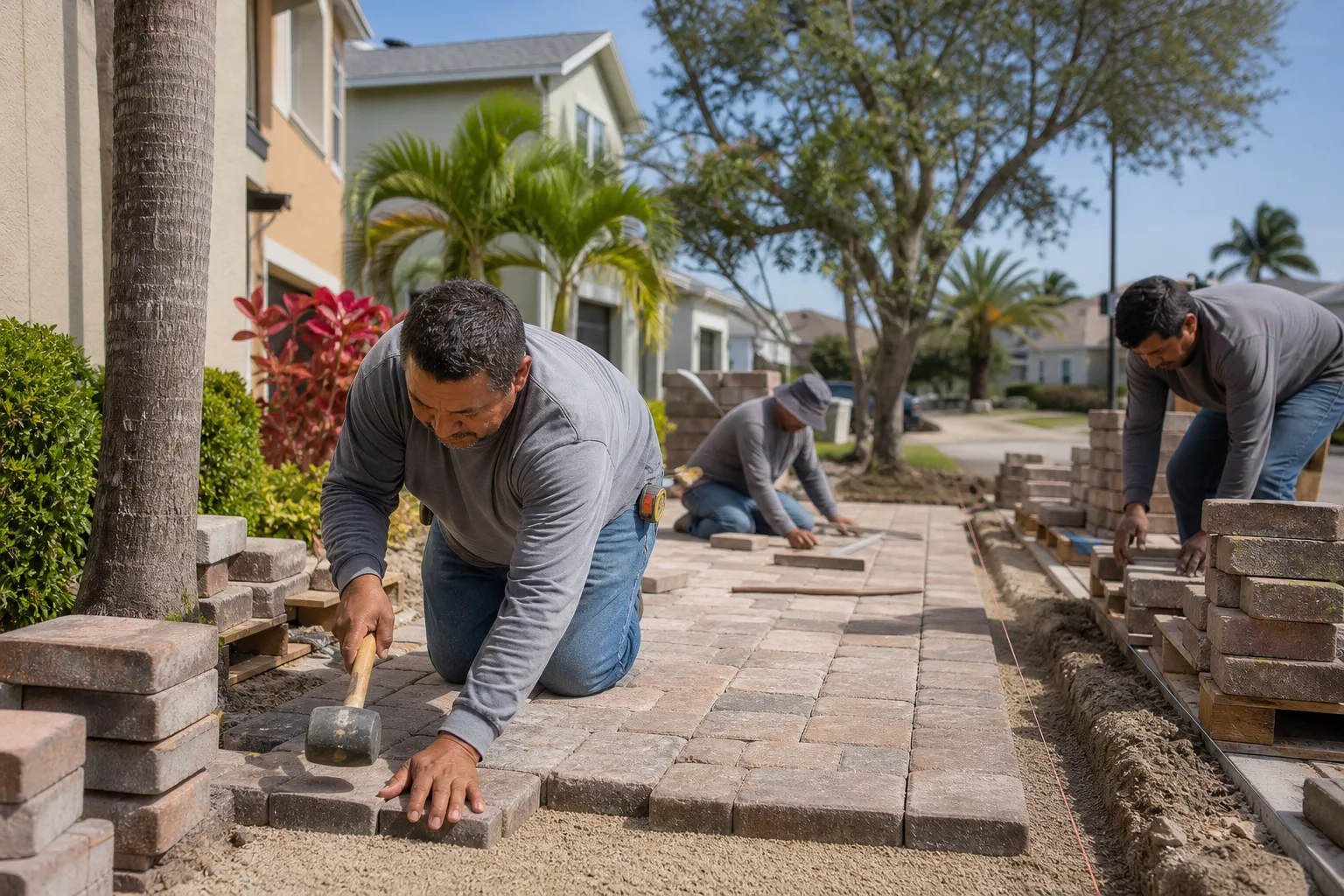
A single rocking paver is a nuisance. Five rocking pavers in the same section is a base failure in progress. The difference between catching that early and rebuilding a third of your driveway often comes down to one missed inspection. In our experience across Allen, the driveways that reach the four-figure rebuild stage almost always showed visible, telltale warnings for weeks or months before they failed. This guide translates those physical symptoms into plain-language diagnoses, so you know what you’re looking at, when it’s cosmetic, and when it’s the early edge of an expensive problem.
Quick Answer
The most serious paver driveway warning signs are rocking pavers clustered in one area, white mineral deposits coupled with damp joints, edge restraints pulling away from the pavement, weeds pushing up from deep within joints, and low spots that pool water after rain. These point to base or drainage failure rather than surface wear. Catching them early keeps the repair in the few-hundred-dollar range instead of a full section rebuild.
Styles & brands we work with
- Kitchen remodeling
- Bathroom remodeling
- Home additions & ADU
- Roofing
- Windows & doors
- Driveway & pavers
- Fence
Table of Contents
- Normal Settling vs. Active Soil Movement: How to Tell the Difference
- Efflorescence: When White Deposits Are Cosmetic and When They Signal Moisture Trouble
- Edge Restraint Failure: The First Sign of Paver Migration
- What Weed Growth Patterns in Your Joints Actually Tell You
- The Drainage Warning Sign Most Homeowners Miss
- How to Use a Level to Quantify What You’re Seeing
- Sealing and Jointing Sand: What They Do and Don’t Prevent
- Repair or Replace? Reading the Severity of Your Warnings
Normal Settling vs. Active Soil Movement: How to Tell the Difference
All paver driveways settle a little, and a level of movement is not a call to action. The confusion happens because normal settlement and active soil movement can look similar on a quick walkover. They behave differently.
Normal settling is gradual, uniform, and stable over time. The pavement may dip a quarter-inch across a broad area over the first season or two. Your car doesn’t notice. It doesn’t get worse next year.
Active soil movement is progressive and localized. It clusters. A section shifts more each season. You can watch it happen month to month. In Allen, our black clay soils are expand-contract soils that swell when wet and shrink when dry. That cycle is the single biggest driver of paver base failure we see, and it tends to show up in specific spots: near downspouts, along the edge closest to the foundation, and anywhere drainage collects.
Watch for these movement patterns:
- Rocking pavers. One or two is wear. Five in the same section means the bedding layer or base beneath them has lost support.
- Ponding near the foundation. Settlement that directs water toward the house is not cosmetic; it’s a moisture problem already happening.
- Steps and lips between pavers. A gradually rising lip within one area is active differential movement, not uniform settling.
- Movement that follows a seasonal rhythm. Wetter winters and dry summers widening a gap each year is the signature of clay soil working against the base.
If you can see movement getting worse from one year to the next, it’s active. That’s your cue to look closer at the base and drainage before the repair scope grows.
Efflorescence: When White Deposits Are Cosmetic and When They Signal Moisture Trouble
Efflorescence is the chalky white deposit that appears on the surface of pavers. It happens when moisture moves through the paver and evaporates at the surface, leaving mineral salts behind. Homeowners often assume it’s a sign of damage, but efflorescence is sometimes completely cosmetic and sometimes a window into chronic moisture infiltration below.
Here’s how to read it:
- Cosmetic efflorescence is powdery, scrubs off easily, and reappears lightly after rain but fades with weather. It’s common on newer pavers while the material finishes curing, and it usually stops.
- Chronic-moisture efflorescence is stubborn, reappears in the same spot, and surfaces along with damp joints, dark patches that never dry, or visible settling nearby. That combination is the tell: it means water is getting into the base and staying there, and the surface is where it’s breathing out.
In our experience, a homeowner who sees efflorescence clustered near an edge or a joint line, plus a low spot that holds a puddle after rain, is looking at the surface symptom of a drainage problem underneath. The paver itself is rarely the culprit. The base, the slope, or a broken drain line is.
A quick test: scrub the area, note where it returns, and watch for any dark, never-drying patches within a few feet. If the efflorescence keeps coming back next to a damp spot, treat it as a moisture signal instead of a cleaning chore. That’s when we recommend a professional look before resealing or resetting anything.
Edge Restraint Failure: The First Sign of Paver Migration
Every paver driveway has an edge restraint, the hidden border that holds the field pavers in place and resists lateral pressure as cars turn and tires push outward. When the restraint starts to fail, the pavers nearest it are the first to migrate. This is one of the earliest warnings we see, and one of the easiest to miss because the restraint itself is nearly invisible.
What to check along your driveway edge:
- Visual gap or lean. The edge course pulls away from the field pavers, or the border leans outward instead of standing square.
- Spreading joints. Joint gaps at the edge grow wider than joints in the middle of the driveway.
- Edge-course walkout. The border pavers push out beyond the original line of the driveway and sit slightly proud.
- Soil or vegetation encroachment. Grass and roots creeping over the edge, or a soft, sunken strip of soil right where the restraint should be anchored.
In Allen, we see restraint failure most around driveways that meet soil without a proper concrete curb-lock or spiked edge. Once the restraint gives way, the whole field loses its boundary. Pavers start to migrate, joints open, and jointing sand washes out faster. Catching it at the restraint stage is a small fix. Catching it after the field has moved is a section reset.
Walk your driveway edge with a flashlight and check the border course for any of these four signs. If any of them are there, don’t wait for the pavers behind them to move.
What Weed Growth Patterns in Your Joints Actually Tell You
Weeds in paver joints are normal maintenance. Weed patterns are diagnostic. Where they grow, how dense they come back, and whether they’re coming up from the sand or from deeper down all point to different problems.
- Scattered surface weeds between pavers you can pull easily? That’s normal. Jointing sand has thinned and wind or rain deposited seed. Refill with fresh jointing sand and it’s handled.
- Weeds in a dense line along one joint is a jointing sand failure in progress. The sand has washed or vibrated out of a specific joint track, leaving a continuous seed bed. That happens when the base isn’t holding the pavers tight, or when water channels through that joint.
- Weeds pushing up from deep inside, with loosened pavers nearby is the real warning. That means the joint has opened enough for soil and roots to establish, and the paver is no longer restrained. It’s a base and jointing problem, not a surface-weeding problem.
- Weeds concentrated at one edge or in one dip usually tie back to the restraint failure or low spot we covered earlier. Fix the water and the movement, and the weeds dry up.
In Allen, where our summers dry the soil and our wet springs refill it, the shrink-swell cycle stresses jointing sand and opens joints over time. Weed patterns show you where that stress is highest. If you re-sand a joint and the weeds return inside a season, don’t just re-sand again. Have someone check the base under that section.
The Drainage Warning Sign Most Homeowners Miss
Pooling is the warning sign homeowners see and dismiss because the water “goes away.” It doesn’t go away. It drains into the base, and that’s the problem.
Watch after the next heavy rain, and note these patterns:
- A subtle dip that holds a thin puddle that dries slower than the rest of the driveway. That’s a low spot creating a small reservoir over the base.
- A ring of darker, damp paver color that lingers hours after the surface dries. Moisture is coming up from below, not just sitting on top.
- Water tracking toward the house or garage instead of the street. That means the driveway slope has shifted, and water is being directed at your foundation, not away from it.
- Puddle lines that follow the same shape every storm. Consistent puddling is a base compaction failure under that low spot, not a one-time drainage quirk.
Base compaction failure starts as a dip that holds water, long before the pavers visibly sink. By the time a homeowner notices the pavers dropping, the base has usually already lost its density underneath. In our experience in Allen, driveways that pool along the same low spot for two seasons are the ones that show rocking and joint movement a season later. If you see a persistent puddle, don’t wait for the pavers to move. Check the base under it.
How to Use a Level to Quantify What You’re Seeing
You don’t need to guess whether your driveway is moving. A 4-foot or 6-foot level, a straight edge, and a little chalk will tell you exactly what you’re looking at. This isn’t a DIY repair; it’s a measurement to decide whether you need a real inspection.
- Place the level across the pavers in the area that’s in question, running the direction of the slope. If you don’t have a long enough level, set a straight board on the pavers and lay the level on the board.
- Slide a shim or a piece of paper under the level end until the bubble centers. Measure the shim gap. A gap up to about 1/8 inch across a 4-foot span is normal settling. A gap of 1/4 inch or more, or an inconsistent gap that changes between visits, is active movement.
- Mark the spot with chalk and repeat the test in two weeks and again in a month. If the gap is growing, you have movement, not settling.
- Check the slope away from the house. The level tells you if water is running toward the foundation. A driveway that drops toward the garage door is a drainage problem even if the pavers aren’t moving yet.
Be careful with step 4. A change in how you set the level, or a level that isn’t long enough, will change your reading. Note the exact spot and the exact direction so your readings are comparable. The trick is measurement over time, not one snapshot. That’s how we judge whether an Allen driveway has an active problem or a stable, acceptable dip.
Sealing and Jointing Sand: What They Do and Don’t Prevent
Sealing and jointing sand are maintenance, not repairs. Homeowners often believe that resealing every year and topping off jointing sand will prevent any paver problem, but that belief can actually mask a failing base. Here’s what these materials do:
- Jointing sand fills the joints between pavers and helps lock them against lateral movement. When it thins, joints open and pavers loosen. It protects against normal wear and rain washout, but it can’t fix a base that has lost compaction.
- Sealer reduces water infiltration into the surface and helps hold jointing sand in place. It also makes efflorescence harder to spot, which is one reason a stubborn white deposit is a signal to look deeper, not a signal to reseal over it.
In our experience, sealing a driveway with active base movement just covers the symptom. The pavers keep moving under a fresh seal, and the jointing sand keeps washing into the failing base. If your joints are opening and weeds are coming back after resealing, don’t keep sealing. Get the base and drainage checked first. A sealer and a fresh sand fill are the right move on a stable driveway, and the wrong move on a moving one. The warning signs come first; the maintenance comes after the diagnosis.
Repair or Replace? Reading the Severity of Your Warnings
Once you’ve identified the warning signs, the question is how big the problem really is. In our experience across Allen, most of what looks like “replace the driveway” is actually a localized repair. The task is figuring out how localized.
Use these stages to sort out what you’re seeing:
- Stage 1: Settling and jointing sand wear. A single rocking paver, slightly thinning sand, scattered surface weeds. Repair is re-sanding and resetting a few pavers. This is a small, single-visit fix.
- Stage 2: Localized base or restraint failure. Rocking pavers clustered in one section, edge restraint pulling away, a persistent low spot. Repair means lifting that section, restoring the base, resetting the pavers, and re-sanding. Scope is a section, not the whole driveway.
- Stage 3: Field-wide or foundation-adjacent movement. Multiple sections of movement, drainage running toward the house, chronic moisture signs across a wide area. This is where you get a full professional assessment, because the repair scope and cost escalate quickly from here.
Stage 1 and 2 still have a base and drainage problem involved in most cases, and that’s the piece a homeowner can’t safely judge from the surface. A paver reset is straightforward; the base inspection underneath is where a trained eye earns its keep. For an Allen homeowner watching a warning sign on a driveway that’s four to six years old, we usually recommend a professional check before resealing or resetting, because the earlier we get to the base, the smaller the repair stays.
Common Mistakes to Avoid
- Resealing over a moving section. Sealer hides the warning signs and locks in the appearance of a stable driveway while the base keeps failing. Get the base checked before you seal.
- Ignoring pooled water because it “drains in a few hours.” Slow-draining puddles are draining into your base. That’s the problem, not the solution, and in Allen’s shrink-swell clay it’s the leading cause of base compaction failure.
- Top-dressing jointing sand without fixing the joint that keeps opening. If one joint line keeps losing sand, the paver is loose. Re-sanding it a third time is the sign to look at the base, not buy more sand.
- Pulling weeds and calling it done. Deep-rooted weeds in the same line season after season mean the joint and the paver under it have lost stability. Weeds are a symptom, not the problem.
- Ignoring a leaning edge restraint until pavers push out. Restraint failure is the earliest and least expensive warning. By the time the field pavers migrate, the fix grew into a section reset.
- Assuming efflorescence is just cosmetic without checking. White deposits that keep returning in the same spot next to a damp joint or a low area are a moisture signal. Don’t reseal over them.
- Judging movement from one walk-across. A single visit tells you nothing about movement over time. Mark the spot and measure again next month; that comparison is what tells you whether it’s settling or a problem.
See the difference
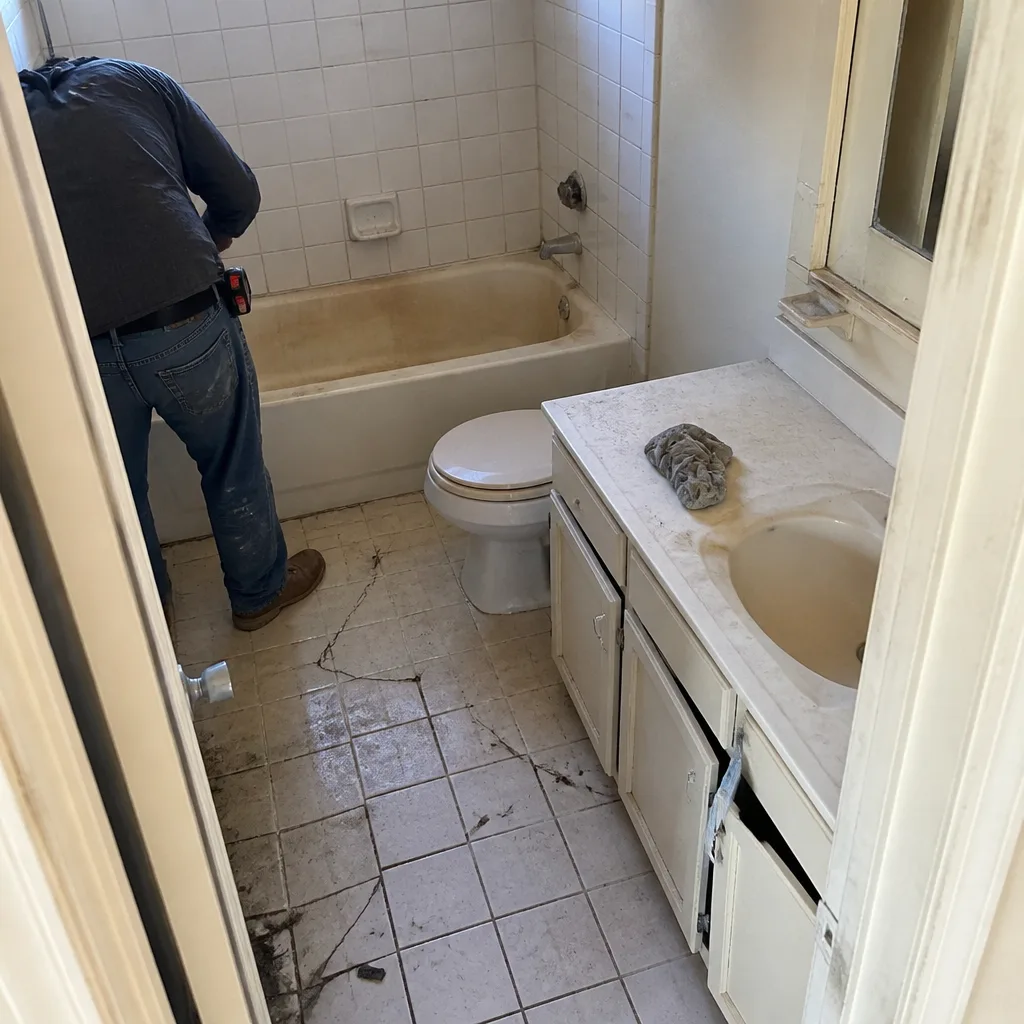 Before
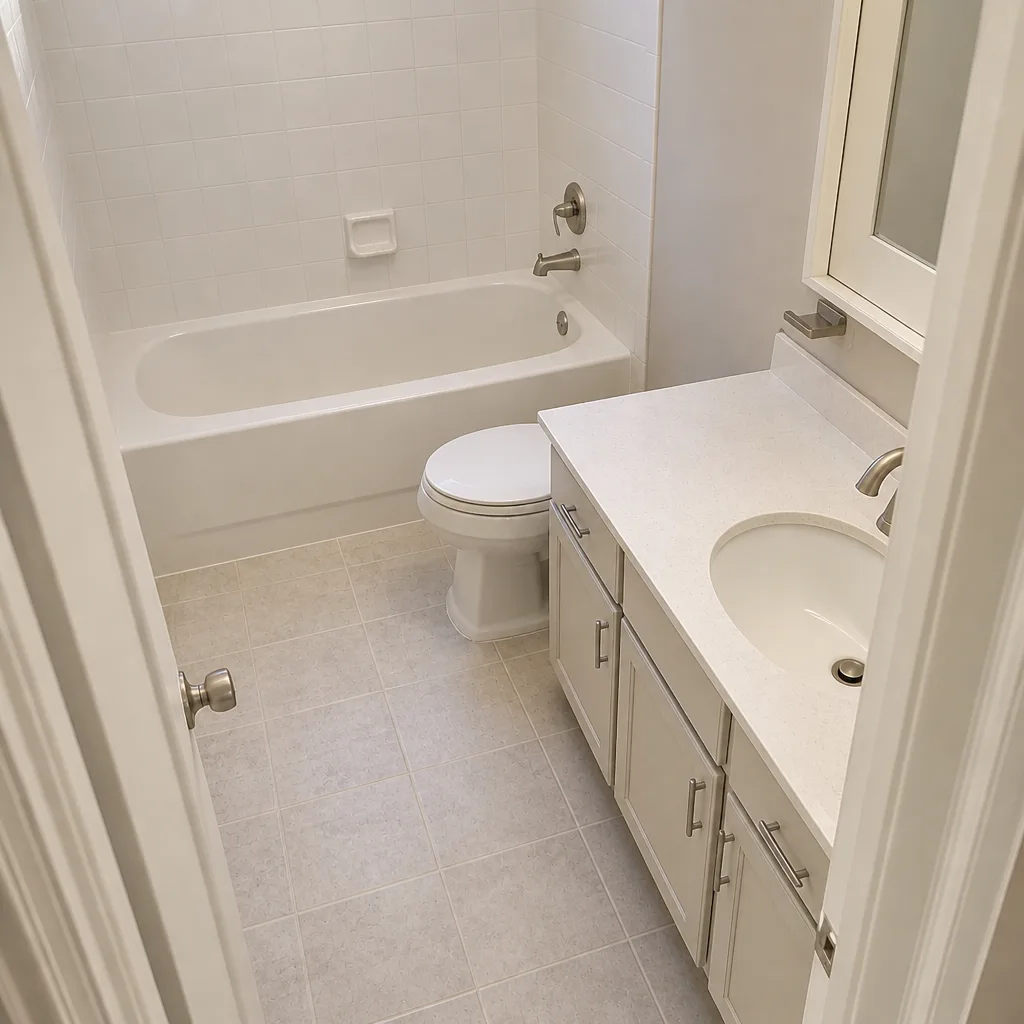 After
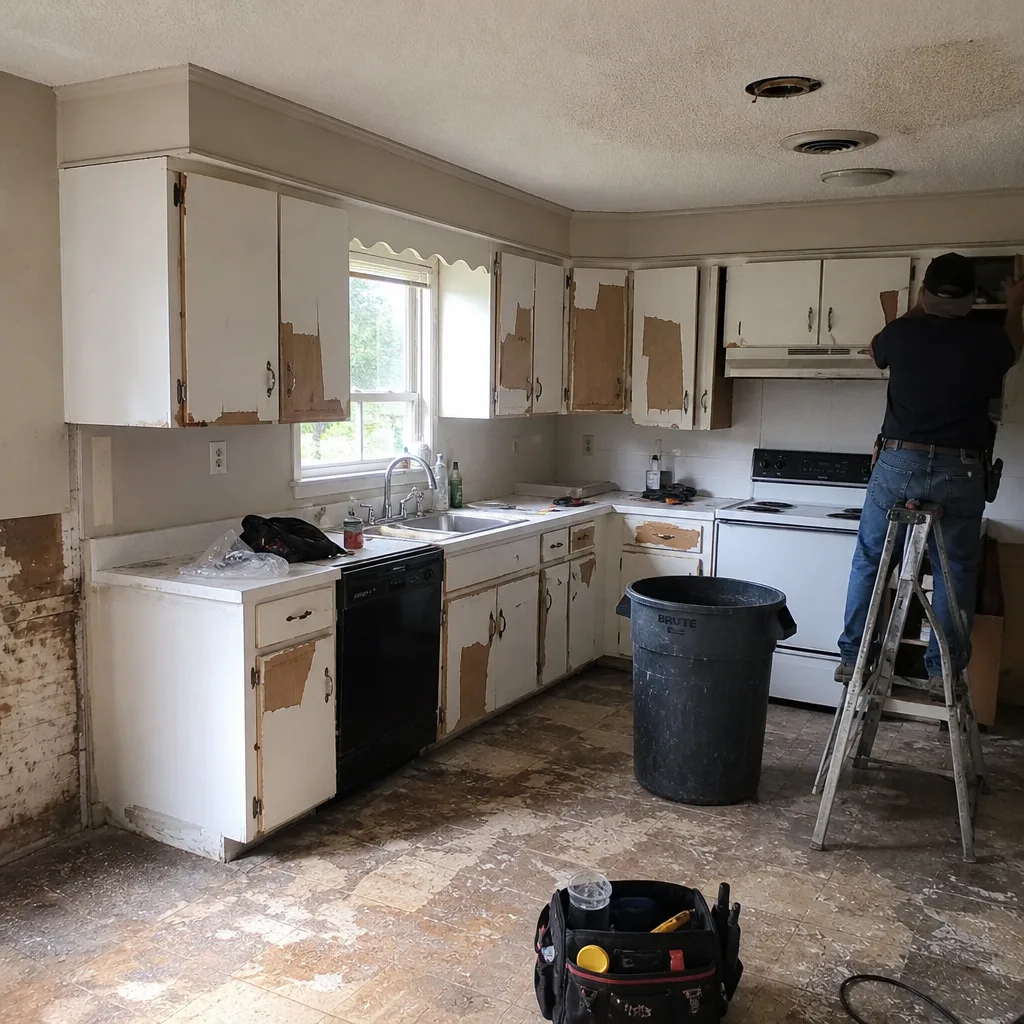 Before
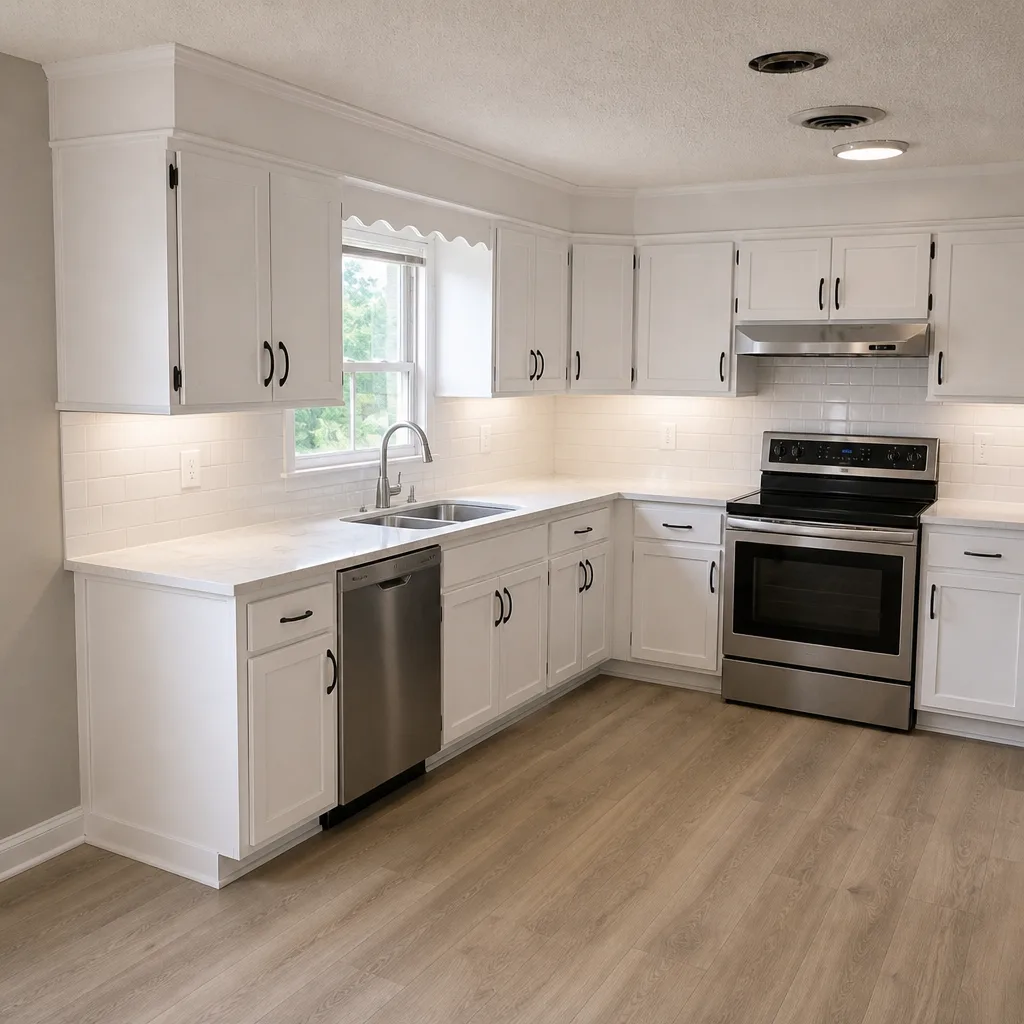 After
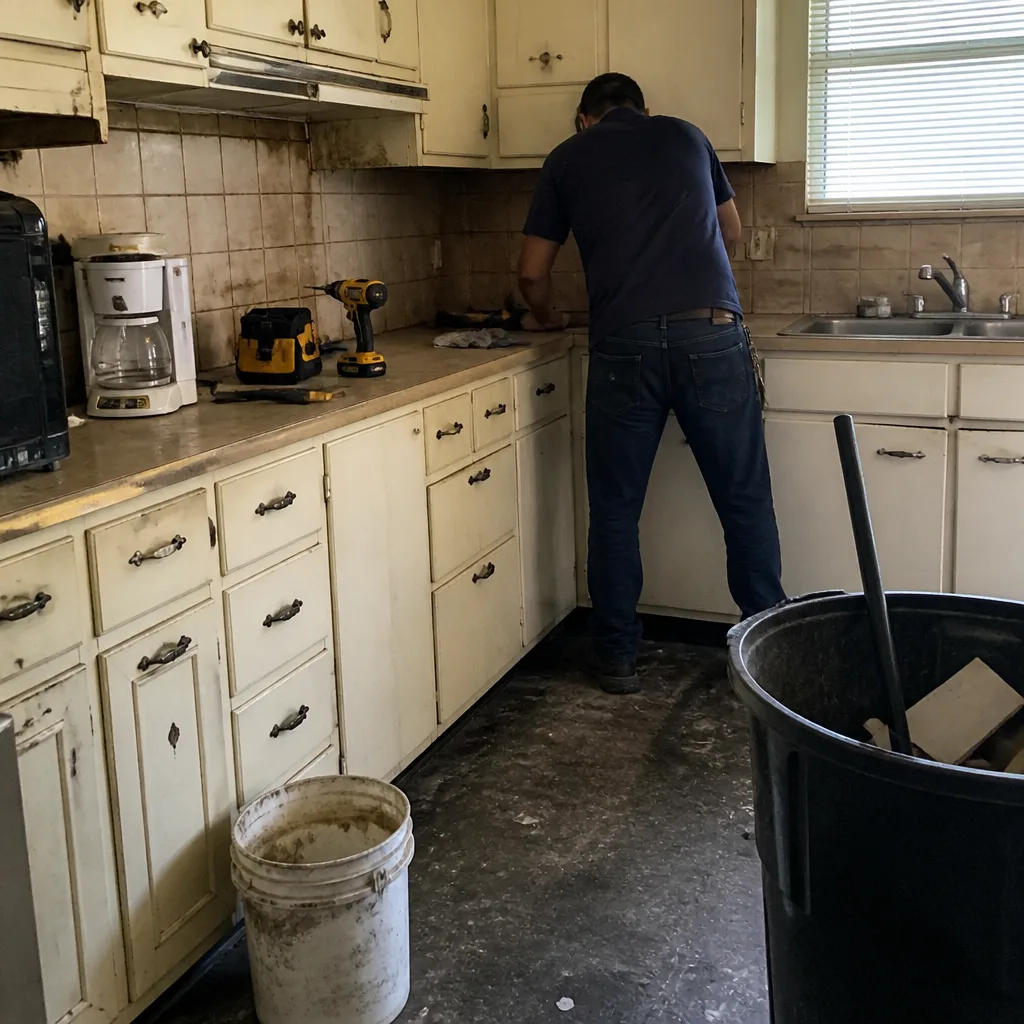 Before
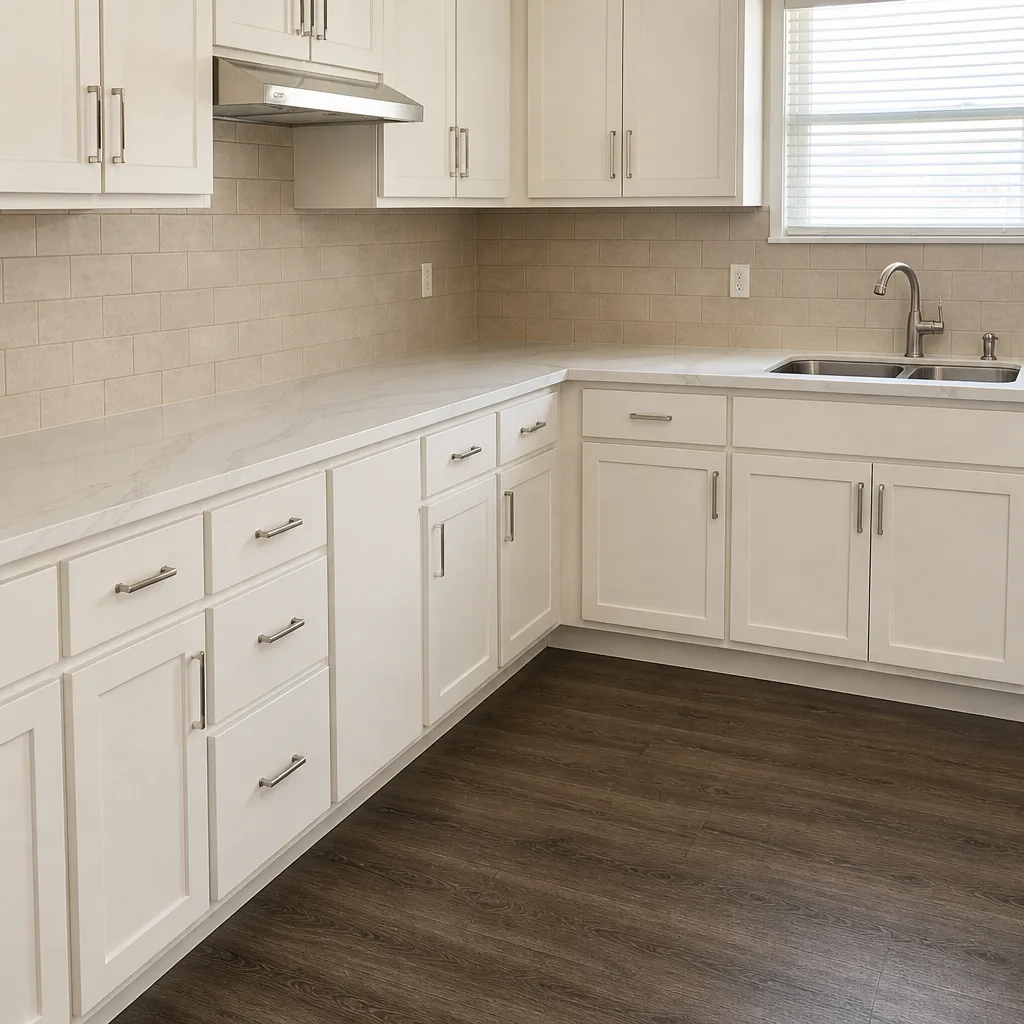 After
When to Call a Professional
Call a professional when any of these is true: you have five or more rocking pavers clustered in one section, the driveway holds water along the same low spot after every storm, the edge restraint has pulled away or leans outward, water is being directed toward the house or garage, or you’ve re-sanded the same joint more than twice and it keeps opening. Those signs point to base, restraint, or drainage failure, which a homeowner can’t judge safely from the surface. Groundwork Construction Co. of Allen offers free estimates in Allen – call (888) 343-9048 to schedule one. We walk the driveway with you, mark the areas we’re concerned about, and give you an upfront, line-item price on the repair scope before any work begins, so you know exactly what you’re paying for and why.
Frequently Asked Questions
Normal settling is gradual and uniform, while failure is progressive and localized, escalating year over year. If you’re seeing five or more rocking pavers clustered in one area, a low spot that pools in the same place every rain, or a joint gap that widens each season, that’s movement, not settling. Mark the spot and measure it again in a month with a level; a growing gap means the base needs a professional look. Call (888) 343-9048 for a free Allen estimate.
It depends on the pattern. Powdery efflorescence that scrubs off and fades with weather is cosmetic, especially on newer pavers. But white deposits that keep returning in the same spot next to a damp joint or a low area mean chronic moisture is moving through the base, and that’s worth a professional check before you reseal anything. Call (888) 343-9048 for a free estimate in Allen.
Local repair costs depend on the scope, and that’s why a professional assessment matters before you commit to a number. A small reset of a few pavers or a re-sand is a single-visit fix, while restoring a section of base and re-laying the pavers in it is a larger scope. We give an upfront, line-item quote with no surprises once we’ve seen the driveway. Call (888) 343-9048 to schedule your free estimate.
Sometimes. Scattered surface weeds you can pull easily are normal maintenance and go away with fresh jointing sand. But weeds in a dense line along one joint, or weeds pushing up from deep inside with loosened pavers nearby, mean the joint has opened and the paver has lost stability. That’s the pattern to have a professional look at. Call (888) 343-9048 for a free estimate in Allen.
Sealing is maintenance, not a repair, and applying it over a moving section hides the warning signs without fixing the base. Seal a stable driveway; don’t seal one that’s rocking, pooling, or losing edge restraint. If you’re unsure which one you have, get a professional check first. Call (888) 343-9048 for a free estimate in Allen.
A properly installed paver driveway with a correctly compacted base and working drainage should hold up for decades, but Allen’s shrink-swell clay soil is hard on any driveway base, so installation quality and drainage matter more here than in most places. That’s why we inspect the base and drainage whenever we’re looking at a driveway in Allen, not just the paver surface. Call (888) 343-9048 for a free estimate.
The Bottom Line
Paver driveways don’t fail overnight. They rock, pool, shed minerals, push out at the edge, and grow weeds in the same line for months before they reach the rebuild stage. The warning signs in this guide are learnable, and they’re worth the ten minutes it takes to walk your driveway and check them. In Allen, our clay soils make base and drainage checks the highest-value part of any inspection. When you spot a cluster rather than a single paver, or water that pools in the same spot, call a professional before gravity and water decide the scope for you.
Where to Go from Here

Groundwork Construction Co. of Allen treats a driveway problem as a full-scope job: base inspection, drainage, repair or full installation, and the trustworthy materials behind it. Our technicians have up to 12 years of experience, arrive background-checked and in uniform, and every project is backed by our 730-Day Done Right Promise – if it’s not done right, we make it right. When you’re replacing rather than repairing, our installation uses trusted brands including Belgard pavers and covers the full scope from base to edge restraint. If your project involves a wider backyard rebuild, see our work on fence installation in Allen and home additions & ADU in Allen, or start with a look at our main driveway & pavers in Allen service page.
Ready to get a straight answer on what’s happening under your pavers? Call (888) 343-9048 for a free estimate and design consult in Allen. Our team answers calls with a live person 24/7, walks your driveway with you, and gives you an upfront, line-item price before any work begins. New customers can also take advantage of our standing offers: $1,000 off projects over $10,000 and 0% financing for 18 months on qualifying projects. And when you’re thinking bigger than a driveway, our team handles the whole property from foundation to finish line, from our Groundwork Construction Co. of Allen home base to every trade in between.
Written by the team at Groundwork Construction Co. of Allen.